Write to BigQuery via Server-Side GTM: Data Pipeline Guide
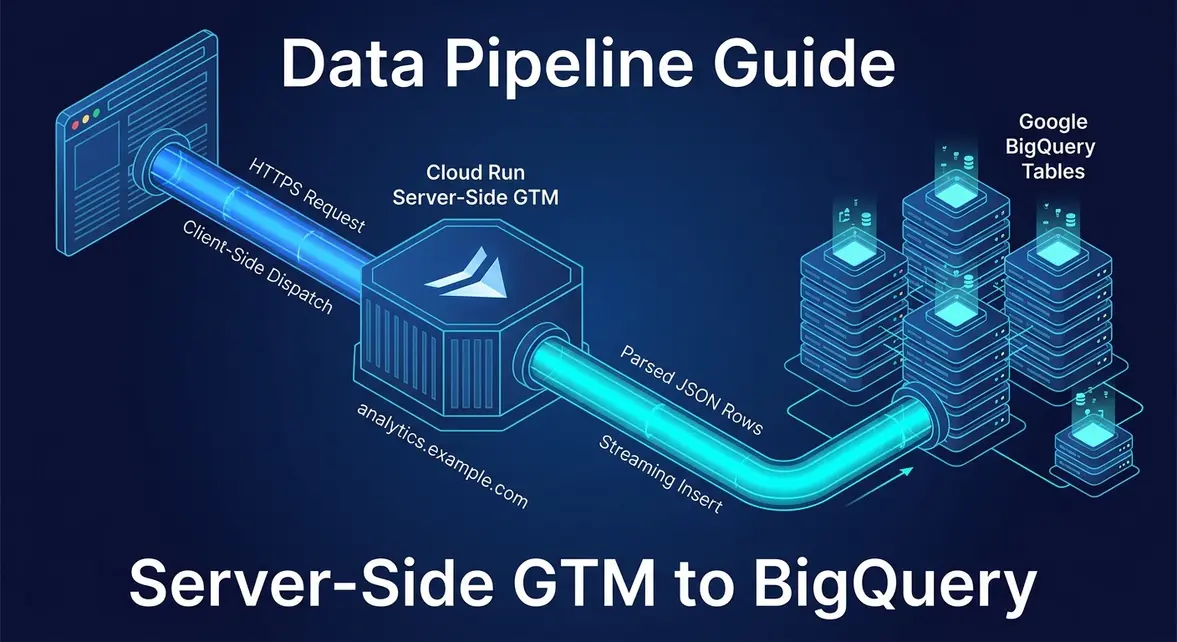
sGTM BigQuery Native Write API: Transitioning from Proxy to Warehouse Ingestion Engine
Server-side Google Tag Manager (sGTM) environments hosted within Google Cloud Platform (GCP) have historically operated as reverse-proxy conduits. In legacy web analytics architectures, client-side scripts dispatched payloads to vendor endpoints directly from the browser DOM, introducing third-party script bloat, exposing client IP addresses, and yielding 15% to 30% telemetry loss due to ad-blockers and Safari Intelligent Tracking Prevention (ITP). When sGTM debuted, it largely served to intercept and sanitize hits before routing them onward to GA4 or third-party webhooks.
The native Google BigQuery integration within sGTM container templates eliminates downstream extraction pipelines. By exposing the BigQuery.insert API inside the sandboxed JavaScript execution environment of sGTM, Cloud Run and App Engine container instances can stream structured event payloads directly into BigQuery dataset tables in real time. Rather than maintaining intermediate Pub/Sub topics, Cloud Functions, or scheduled Dataflow jobs to pipe GA4 export events into enterprise data warehouses, growth engineering teams can capture raw hit data at the ingestion edge.
First-Party Pipeline Topology: Core Web Vitals Optimization and Attribution Fidelity
Direct edge-to-warehouse streaming redefines technical SEO performance budgets and data integrity across several operational dimensions:
- Zero Third-Party Main-Thread Blocking: Moving downstream data dispatch off the browser cuts Total Blocking Time (TBT) to 0ms and minimizes Interaction to Next Paint (INP) degradation caused by multiple third-party vendor bundles executing concurrently.
- Sub-Domain First-Party Cookie Scoping: Routing sGTM through a first-party custom domain (e.g.,
collect.domain.com) enables HTTP-only, secure cookies with strict SameSite attributes, bypassing client-side ITP expiration limits while insulating marketing telemetry from network ad-blocking heuristics. - Immediate Warehouse Availability: Eliminates the standard multi-hour or 24-hour ingestion lag of native GA4-to-BigQuery batch exports, enabling sub-second real-time personalization, lead scoring, and fraud analysis.
- Custom Payload Normalization: Raw HTTP request headers, query parameters, geographic metadata from Cloudflare/GCP, and client identification tokens are mapped to clean relational schemas prior to database write execution.
Architecturally, this setup bypasses client-side runtime dependency risks. Search engine crawlers encountering web pages stripped of third-party tracking scripts experience rapid First Contentful Paint (FCP) and Largest Contentful Paint (LCP), stabilizing page experience signals across organic landing pages.
Production Engineering Runbook: BigQuery Sandbox Template and DDL Provisioning
To implement direct BigQuery streaming from a server-side container, provisioning requires configuring GCP IAM permissions, creating a partitioned destination table, and executing an sGTM custom tag template using the sandbox API.
First, execute the Data Definition Language (DDL) command in BigQuery to create an event-streaming table partitioned by ingestion date and clustered by primary query identifiers:
CREATE TABLE `your-gcp-project.analytics_streaming.raw_web_events` (
  event_timestamp TIMESTAMP,
  event_name STRING,
  client_id STRING,
  user_id STRING,
  page_location STRING,
  page_path STRING,
  user_agent STRING,
  ip_override STRING,
  event_params ARRAY<STRUCT<key STRING, value STRING>>
)
PARTITION BY DATE(event_timestamp)
CLUSTER BY event_name, client_id;
Next, ensure the Cloud Run or App Engine Service Account associated with your sGTM instance has the BigQuery Data Editor (roles/bigquery.dataEditor) role assigned via IAM. In the sGTM Container UI, instantiate a Custom Tag Template using the sandboxed API:
const BigQuery = require('BigQuery');
const getTimestampMillis = require('getTimestampMillis');
const getAllEventData = require('getAllEventData');

const eventData = getAllEventData();
const projectId = 'your-gcp-project';
const datasetId = 'analytics_streaming';
const tableId = 'raw_web_events';

const rowData = {
  event_timestamp: getTimestampMillis(),
  event_name: eventData.event_name || 'unknown_event',
  client_id: eventData.client_id || '',
  user_id: eventData.user_id || null,
  page_location: eventData.page_location || '',
  page_path: eventData.page_path || '',
  user_agent: eventData.user_agent || '',
  ip_override: eventData.ip_override || '',
  event_params: []
};

BigQuery.insert({
  projectId: projectId,
  datasetId: datasetId,
  tableId: tableId,
  rows: [{ insertId: eventData.event_id || null, json: rowData }]
}).then(function() {
  data.gtmOnSuccess();
}, function() {
  data.gtmOnFailure();
});
Configure a tag trigger evaluating on {{Event Name}} matches regular expression .* to stream all parsed events directly to the analytical warehouse.
Enterprise Attribution Hygiene and Pipeline Velocity at Scale
For B2B growth organizations, direct-to-warehouse ingestion solves enterprise pipeline decay and attribution blind spots. Modern enterprise sales cycles extend across multiple quarters and involve distinct decision-makers browsing from enterprise networks with strict ad-blocking rules. When browser telemetry fails to log initial anonymous research visits, CAC calculations become distorted, leading growth teams to over-attribute closed-won revenue to bottom-of-funnel paid search clicks rather than top-of-funnel technical documentation and organic search entries.
By managing event serialization through sGTM and BigQuery streaming, compliance engineers enforce deterministic data hygiene before records hit persistent storage. Personally Identifiable Information (PII) such as email addresses, IP subnets, or sensitive query strings can be stripped or cryptographically hashed in the container layer. This architecture reduces SOC 2 and GDPR compliance audit overhead, prevents downstream database sanitization rewrites, and feeds normalized, identity-stitched visitor paths directly into reverse-ETL platforms (such as Census or Hightouch) to update CRM scoring models within minutes of site engagement.
System Telemetry Source: Original Engineering Report
Blueprint di Crescita Correlati
Tutti gli Esperimenti →Vuoi implementare questa architettura nella tua pipeline?
Evita i lunghi cicli di vendita e le infinite call di scoperta. Invia il tuo collo di bottiglia di acquisizione o conversione per una diagnosi tecnica approfondita in asincrono.