Automated AI Document Extraction Pipeline with n8n
The Signal
Enterprise teams hoard industry reports, but nobody reads them because manual extraction takes an hour per document. This engineering build log details an automated ingestion pipeline using n8n and PDF Vector. It reduces processing time from 60 minutes to 20 seconds per document.
The Architecture Shift
Moving from manual document review to an automated, parallelized AI extraction pipeline fundamentally changes knowledge management. It transforms static file repositories into active intelligence feeds.
- Systems Impact: Replaces siloed local reading with a centralized, searchable Google Sheets database and automated Slack broadcasts.
- Performance: Achieves a 99.4% reduction in processing time, dropping from 45-60 minutes to just 18-22 seconds per document.
- Scalability: Parallel processing architecture allows simultaneous structured data extraction and executive summary generation without bottlenecking.
- Accuracy: Maintains high fidelity with ~97% accuracy on metadata and ~91% on main findings extraction.
Implementation Pattern
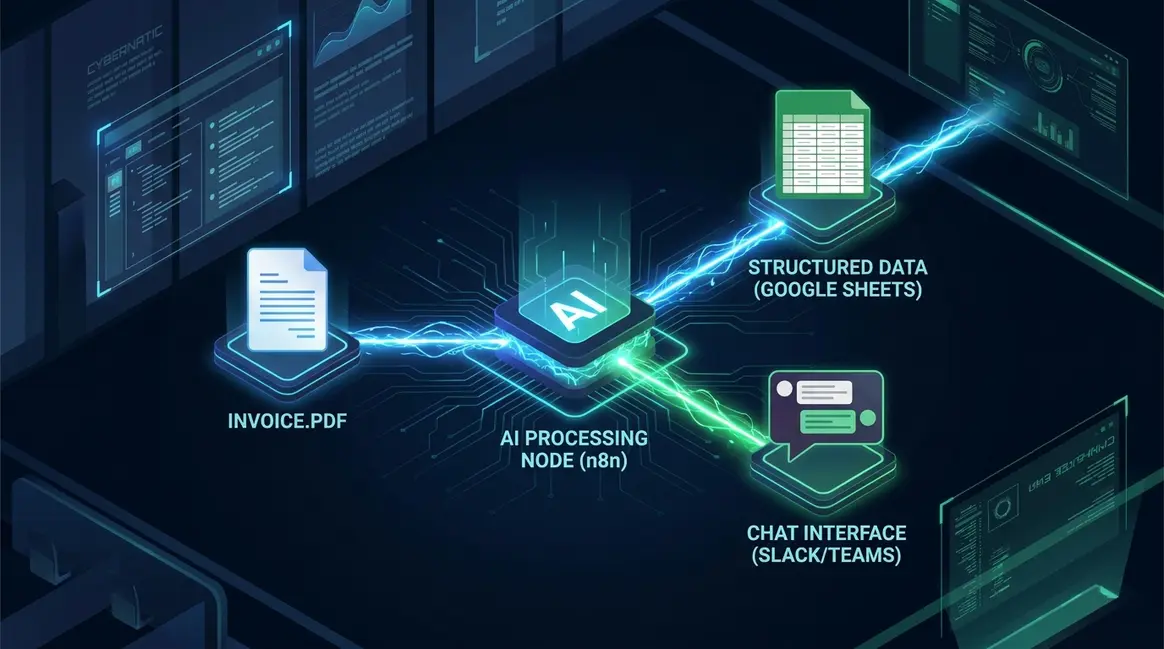
The workflow operates on an event-driven architecture triggered by file uploads. This ensures zero-touch processing once the initial configuration is deployed.
- Ingestion: A Google Drive trigger detects new document uploads in a designated folder.
- Parallel AI Processing: The document is routed to PDF Vector for two simultaneous passes: structured data extraction and executive summary generation.
- Data Persistence: Extracted structured data is appended as a new row in a centralized Google Sheets research library.
- Distribution: A formatted, highly readable briefing is pushed to a designated Slack channel for immediate team visibility.
Fractional CTO Perspective
Unread market intelligence is a sunk cost. By automating the extraction of actionable insights, you convert dormant data into active operational leverage. The OPEX reduction is massive when calculating the hourly rate of analysts or executives spending 45 minutes per report.
Furthermore, routing specific intelligence to targeted channels directly accelerates MRR-generating activities. For example, technical docs can be routed to engineering, while market analyses go straight to sales intelligence. This is a high-ROI automation that requires minimal maintenance.
System Telemetry Source: Original Engineering Report
Related Growth Blueprints
All Blueprints →Need this architecture deployed in your pipeline?
Skip the synchronous sales cycle and endless discovery calls. Submit your core acquisition or conversion bottleneck for a deep-dive asynchronous growth diagnostic.