ChatGPT Plugins Support Postgres & Supabase via pgvector
The Signal
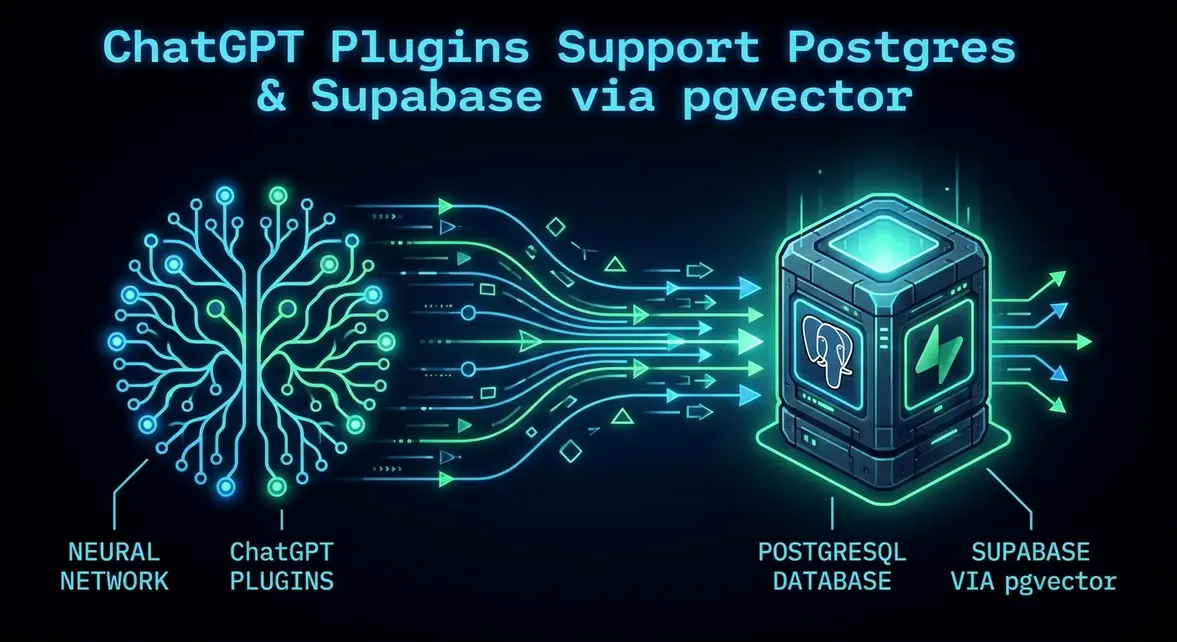
Supabase has officially contributed Postgres and Supabase implementations to the OpenAI Retrieval Plugin repository. This integration allows developers to seamlessly connect ChatGPT to their proprietary databases. By leveraging pgvector, engineering teams can now build highly contextual AI plugins with native vector search capabilities.
The Architecture Shift
This update fundamentally changes how enterprise applications handle semantic search and AI data retrieval. Moving vector storage directly into Postgres eliminates the need for isolated, purpose-built vector databases. This consolidation simplifies the data pipeline and reduces infrastructure complexity.
- Systems Impact: Unifies relational data and vector embeddings within a single Postgres instance, reducing data synchronization overhead.
- Performance: Enables low-latency similarity searches directly alongside traditional SQL queries using the
pgvectorextension. - Scalability: Leverages existing Postgres scaling strategies, allowing teams to handle massive embedding datasets without adopting new database paradigms.
Implementation Pattern
Deploying this architecture requires configuring your Postgres environment to handle vector embeddings. The OpenAI Retrieval Plugin acts as the bridge between your database and the LLM. Follow these core steps to establish the integration.
- Enable pgvector: Activate the
pgvectorextension within your Supabase or standard Postgres environment to support vector data types. - Deploy the Plugin: Clone and configure the OpenAI Retrieval Plugin repository, selecting the Postgres/Supabase datastore option.
- Index Data: Generate embeddings for your enterprise data using OpenAI's API and store them in the newly configured vector columns.
- Expose Endpoints: Register the plugin manifest with ChatGPT to allow the model to query your database securely during user interactions.
Fractional CTO Perspective
Consolidating vector search into Postgres is a massive operational win for B2B SaaS platforms. It drastically reduces OPEX by eliminating the licensing and maintenance costs of standalone vector databases. Furthermore, it accelerates time-to-market for AI features, directly driving MRR expansion through enhanced product capabilities.
System Telemetry Source: Original Engineering Report
Related Growth Blueprints
All Blueprints →Need this architecture deployed in your pipeline?
Skip the synchronous sales cycle and endless discovery calls. Submit your core acquisition or conversion bottleneck for a deep-dive asynchronous growth diagnostic.