Scaling Edge Functions with Cron & Queues
The Signal
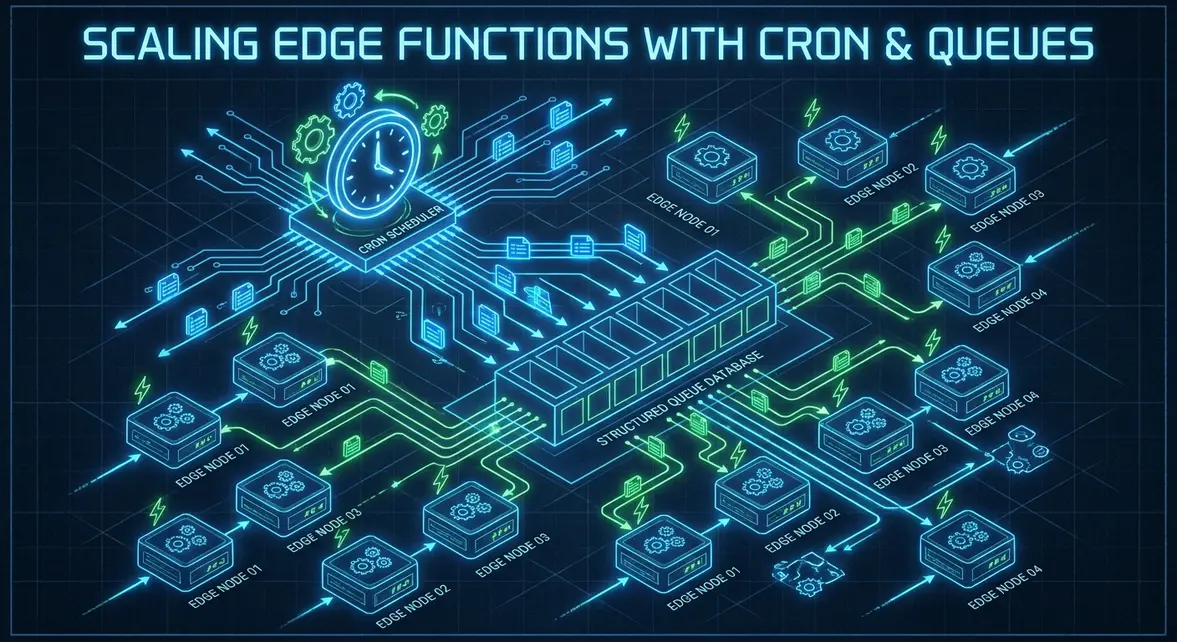
Handling massive data workloads at the edge often leads to timeouts and memory crashes. By decoupling job ingestion from execution, engineering teams can build highly resilient pipelines. This approach leverages Supabase Edge Functions, cron triggers, and database queues to process large jobs reliably.
The Architecture Shift
Traditional monolithic processing struggles with long-running tasks due to strict execution limits. Transitioning to an event-driven, queued architecture fundamentally changes how systems handle backpressure. This shift ensures high availability and predictable resource consumption.
- Systems Impact: Decouples the API layer from heavy compute tasks, preventing cascading failures during traffic spikes.
- Performance: Eliminates edge function timeouts by breaking massive payloads into asynchronous, bite-sized chunks.
- Scalability: Database queues allow horizontal scaling of worker functions without race conditions or data loss.
Implementation Pattern
Building this pipeline requires a clear separation of concerns between scheduling, queuing, and processing. The goal is to create a self-healing loop that manages state within the database.
- Job Ingestion: Use pg_cron to schedule recurring tasks or trigger them via webhook payloads.
- Queue Management: Insert job parameters into a dedicated PostgreSQL queue table with a pending status.
- Edge Execution: An Edge Function polls or listens to the queue, locking rows using FOR UPDATE SKIP LOCKED.
- State Resolution: Upon completion, the worker updates the row status to completed or failed to ensure idempotency.
Fractional CTO Perspective
Relying on serverless edge compute for heavy lifting is a massive OPEX advantage if architected correctly. It eliminates the need for dedicated, always-on EC2 instances or complex Kubernetes clusters for background jobs. This directly improves your MRR margins by aligning infrastructure costs strictly with actual compute usage.
System Telemetry Source: Original Engineering Report
Related Growth Blueprints
All Blueprints →Need this architecture deployed in your pipeline?
Skip the synchronous sales cycle and endless discovery calls. Submit your core acquisition or conversion bottleneck for a deep-dive asynchronous growth diagnostic.