Stripe Sync Engine for Supabase: Architecture
The Signal
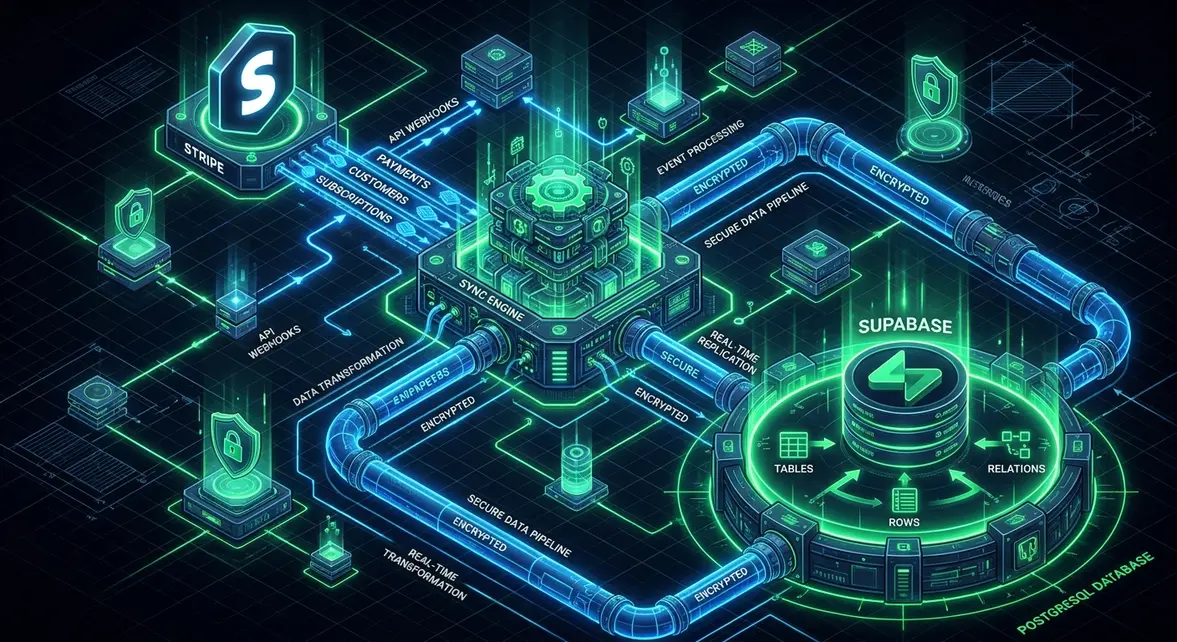
Supabase has officially integrated the Stripe Sync Engine directly into its dashboard.
This provides a one-click mechanism to mirror Stripe billing data directly into a Supabase PostgreSQL database.
Engineering teams can now bypass custom webhook handlers and cron jobs for subscription state management.
The Architecture Shift
Historically, syncing payment states required maintaining fragile middleware and complex webhook validation logic.
This native integration shifts the burden of data consistency from the application layer to the infrastructure layer.
Here is how this impacts core engineering metrics:
- Systems Impact: Eliminates the need for custom ETL pipelines and dedicated webhook processing workers.
- Performance: Reduces application-layer latency by querying local database tables instead of external Stripe APIs.
- Scalability: Leverages PostgreSQL's native replication and indexing capabilities to handle high-volume transaction data.
Implementation Pattern
Deploying this architecture requires minimal configuration within the Supabase ecosystem.
The process follows a declarative setup rather than imperative coding.
- Authentication: Connect your Stripe account via the Supabase Dashboard integration panel.
- Schema Provisioning: The engine automatically provisions a dedicated schema within your PostgreSQL instance.
- Data Hydration: Historical data is backfilled while real-time webhooks are automatically configured for ongoing synchronization.
- Query Execution: Applications query the local database using standard SQL or PostgREST endpoints for immediate billing state.
Fractional CTO Perspective
From an operational standpoint, this is a massive win for OPEX reduction.
Engineering hours previously spent debugging webhook idempotency can now be reallocated to core product features.
By treating billing data as local state, B2B SaaS platforms can accelerate MRR growth through faster, more reliable user experiences.
System Telemetry Source: Original Engineering Report
Related Growth Blueprints
All Blueprints →Need this architecture deployed in your pipeline?
Skip the synchronous sales cycle and endless discovery calls. Submit your core acquisition or conversion bottleneck for a deep-dive asynchronous growth diagnostic.