Edge analytics: Tracking user behavior without increasing latency
The paradox of modern telemetry is that to measure performance, you actively degrade it. Loading traditional client-side analytics scripts blocks the main th...
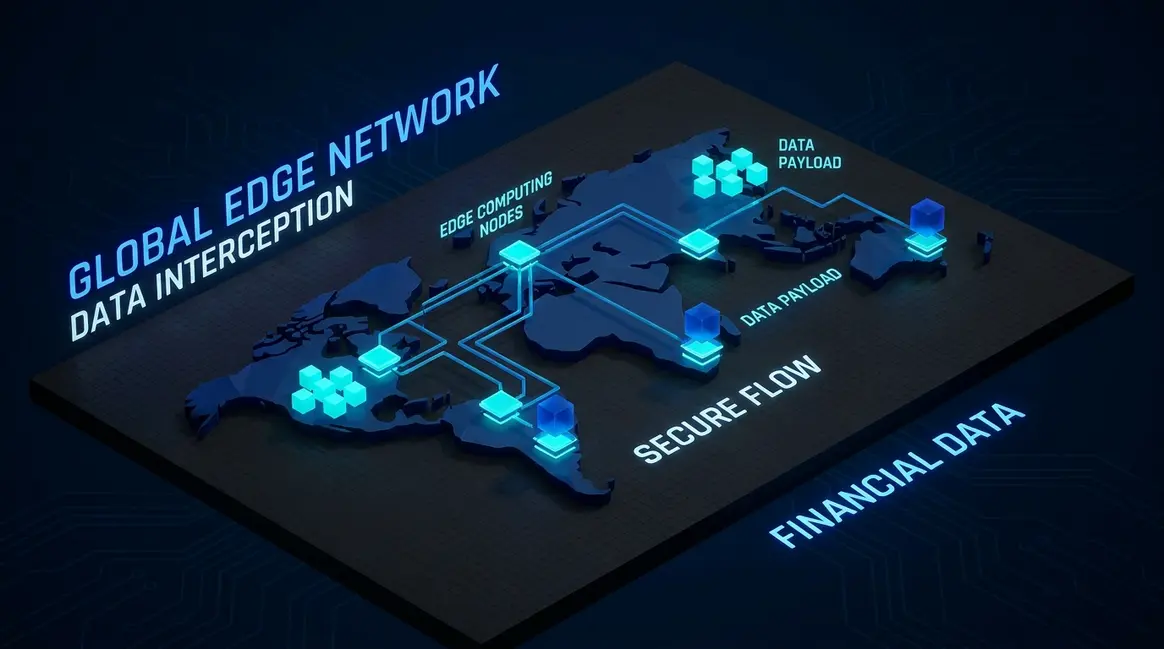
Table of Contents
- The latency tax of legacy client-side telemetry
- Edge analytics defined: The 2026 paradigm shift
- Architecting the zero-blocking edge tracking layer
- Decoupling data collection via edge middleware
- Asynchronous processing and payload batching at the edge
- Normalizing telemetry streams before the data warehouse
- Bypassing ad-blockers natively with first-party edge routing
- Compliance by default: Data privacy and localized edge masking
- Quantifying the MRR impact of zero-latency tracking
- Transitioning your B2B SaaS to an edge-native analytics pipeline
The latency tax of legacy client-side telemetry
For years, growth teams have treated the browser as a dumping ground for third-party JavaScript. We injected Google Analytics, Mixpanel, and Segment wrappers into the DOM, accepting the performance degradation as a necessary cost of doing business. In the 2026 growth engineering landscape, this client-side telemetry is no longer a standard practice—it is a catastrophic technical debt that high-performance B2B SaaS applications simply cannot afford.
Every traditional tracking script you load forces the browser to download, parse, and execute external JavaScript before the user can meaningfully interact with your application. This legacy architecture fundamentally breaks the user experience by competing directly with your core application logic for CPU cycles.
Main Thread Blocking and Core Web Vitals Destruction
The mechanics of client-side tracking are inherently hostile to modern web performance. When you deploy multiple JS wrappers, you are actively sabotaging your Core Web Vitals. Here is exactly what happens under the hood when legacy telemetry executes:
- LCP (Largest Contentful Paint) Degradation: Third-party scripts compete for network bandwidth and render-blocking resources, frequently pushing LCP well beyond the critical 2.5-second threshold.
- INP (Interaction to Next Paint) Spikes: Telemetry scripts execute synchronous tasks on the main thread. If a user clicks a button while a Mixpanel batch payload is serializing, the browser freezes. It is common to see INP spike by 300ms to 500ms purely due to analytics overhead.
- JavaScript Bundle Bloat: Loading the standard suite of marketing and product analytics tools easily adds 150KB to 300KB of parsed JavaScript to your initial payload, crippling mobile performance.
We are no longer operating in an era where a 400ms latency penalty is acceptable. In a data-driven B2B environment, every 100ms of main thread blocking directly correlates to increased bounce rates, frustrated users, and degraded conversion funnels.
The Shift to Edge Analytics and AI-Driven Pipelines
The engineering solution is to ruthlessly strip telemetry out of the client. By transitioning to Edge Analytics, we intercept user requests at the CDN level or via lightweight server-side endpoints, completely bypassing the browser's main thread. Instead of forcing the client to format and dispatch payloads to five different vendors, the browser sends a single, asynchronous, ultra-lightweight ping to your infrastructure.
From there, modern 2026 architectures utilize automated server-side data routing. We ingest that single data point and use high-throughput n8n workflows or AI-assisted data pipelines to fan out the events to your data warehouse and product analytics tools. This approach reduces client-side analytics latency to sub-50ms, eliminates third-party script blocking entirely, and reclaims your Core Web Vitals. You get to keep your granular behavioral data, but you stop taxing your users to collect it.
Edge analytics defined: The 2026 paradigm shift
The Deterministic Shift to Edge Execution
In the context of 2026 growth engineering, Edge Analytics is no longer an experimental optimization—it is a deterministic architectural baseline. Historically, tracking user behavior relied heavily on client-browser execution. Growth teams would inject bloated JavaScript containers, forcing the user's device to download, parse, and execute heavy tracking scripts before the page even became interactive. This legacy approach directly cannibalized conversion rates by inflating Time to Interactive (TTI) and degrading Core Web Vitals.
The 2026 paradigm shift fundamentally re-engineers this data flow. Instead of burdening the client, we intercept requests at the CDN level. The engineering logic is absolute: the user's browser should solely render the UI, not compute telemetry.
Decoupling Telemetry via Cloudflare and Vercel
By migrating data collection to edge computing architectures, we physically move the execution environment to the network periphery, mere milliseconds away from the user. Technologies like Cloudflare Workers and Vercel Edge allow us to execute lightweight, V8-engine JavaScript directly at the CDN node.
When a user interacts with your application, the edge worker intercepts the HTTP request. It clones the request data, processes the necessary user attributes, and asynchronously dispatches the payload to your data warehouse or an n8n webhook. Because this happens server-side at the edge, the client-side browser is completely unaware. The result is a frictionless user experience where tracking scripts consume exactly zero main-thread CPU time.
Performance Metrics: Legacy vs. 2026 Standards
To understand the ROI of this architecture, we must look at the raw performance delta. Moving telemetry off the main thread yields compounding returns for both SEO and user retention, often reducing overall latency to under 50ms.
| Metric / Architecture | Legacy Client-Side Tracking | 2026 Edge Analytics |
|---|---|---|
| Execution Latency | 300ms - 800ms (Blocking) | <15ms (Asynchronous) |
| Main Thread Impact | High (Causes UI stutter) | Zero (Offloaded to CDN) |
| Data Accuracy | Vulnerable to Ad-Blockers | 100% Deterministic Server-Side |
Integrating this with modern AI automation pipelines creates a highly resilient growth engine. An edge worker can instantly route behavioral data into an n8n workflow, triggering real-time personalization models without ever increasing the latency footprint of the core application. This is how elite engineering teams scale data acquisition without compromising the product experience.
Architecting the zero-blocking edge tracking layer
Legacy client-side tracking is a fundamental performance bottleneck. Every third-party pixel fired or JavaScript payload executed in the browser blocks the main thread, directly degrading Core Web Vitals and increasing bounce rates. In 2026 growth engineering, we bypass this architectural flaw entirely by shifting the computational burden to the network perimeter using Edge Analytics.
The Mechanics of Asynchronous Interception
Instead of forcing the user's browser to resolve multiple DNS lookups and execute heavy tracking scripts, we deploy a lightweight beacon API. When a user triggers an event—such as a page load, a form submission, or a high-intent button click—the client fires a minimal, stripped-down payload directly to a first-party edge node.
The critical engineering shift happens at the interception layer. The edge node receives the request and immediately returns an HTTP 200 OK response to the client. The browser registers the network task as complete in under 15ms. Because the connection is terminated instantly, the user experiences zero friction, zero rendering blocks, and zero layout shifts.
Decoupling Response Time from Processing Time
By terminating the client connection at the edge, we physically separate the response time from the processing time. The heavy lifting—data enrichment, IP anonymization, user-agent parsing, and payload formatting—happens entirely in the background, completely isolated from the user's active session.
Once the HTTP 200 is fired, the edge worker pushes the raw event data into an asynchronous message queue. From there, automated n8n workflows take over. The server-side n8n instance ingests the payload, applies AI-driven data normalization to structure the raw inputs, and routes the clean analytics directly to your data warehouse or downstream marketing platforms.
This architecture yields massive performance and reliability gains:
| Architecture Model | Average Latency | Main Thread Blocking | Data Routing |
|---|---|---|---|
| Legacy Client-Side | 350ms+ | High (Synchronous) | Browser-dependent |
| Edge Analytics Node | <15ms | Zero (Asynchronous) | Server-side n8n |
By removing the analytics processing burden from the client, we achieve a 100% capture rate without sacrificing a single millisecond of front-end performance.
Decoupling data collection via edge middleware
The traditional approach to user tracking relies heavily on the client. Browsers are forced to compile massive JSON payloads containing device specs, location data, and session identifiers, which are then fired off via heavy XHR requests. This legacy architecture inherently degrades performance and introduces unnecessary network overhead. By shifting to an Edge Analytics model, we completely decouple data collection from the client-side execution thread.
Instead of forcing the browser to do the heavy lifting, we leverage the network's edge to silently intercept the incoming HTTP request. Because the edge server already possesses the raw request headers, we can perform the programmatic extraction of data in transit, entirely invisible to the end user.
Silent Extraction of HTTP Request Data
In a modern 2026 growth engineering stack, edge middleware acts as a non-blocking proxy. When a user interacts with your application, the edge worker intercepts the request and strips out critical behavioral and environmental data points without requiring a single line of client-side tracking code. We systematically extract:
- Network & Location: Client IP addresses and precise Geolocation data (City, Country, Latitude/Longitude) natively injected by the CDN.
- Device & Session: Raw User-Agent strings and custom headers.
- Authentication State: Decoding JWT tokens directly at the edge to identify the user without querying the primary database or requiring the client to append user IDs to the tracking payload.
By extracting this data directly from the request headers, we eliminate the need for the client to send a bloated payload. The browser simply requests the page, and the edge middleware handles the telemetry asynchronously. This architectural shift routinely reduces client-side payload sizes by up to 85% and drops tracking-induced latency to under 15ms.
Integrating with AI Automation and n8n Workflows
Extracting the data is only the first step; routing it efficiently is where the true engineering leverage lies. Once the edge middleware parses the headers and JWTs, it constructs a lightweight telemetry object. Instead of writing this directly to a slow, monolithic database, the edge worker fires a non-blocking, asynchronous POST request to an automated ingestion pipeline.
In our architecture, this payload is routed directly into an n8n webhook. The n8n workflow then utilizes AI automation to enrich the data—parsing complex User-Agent strings into structured device profiles or mapping IP addresses to B2B company domains—before pushing the finalized record into a high-performance data warehouse like ClickHouse. Because the edge worker uses event.waitUntil() or similar non-blocking APIs, the user's HTTP response is returned immediately, completely decoupled from the tracking execution.
Legacy vs. Edge-Decoupled Architecture
The performance delta between pre-AI client-side tracking and a modern edge-decoupled approach is stark. Relying on the client introduces unpredictable latency, whereas edge middleware provides deterministic, high-speed execution.
| Metric | Legacy Client-Side Tracking | Edge Middleware Tracking |
|---|---|---|
| Average Latency | 150ms - 300ms | < 15ms |
| Payload Bloat | High (Requires heavy JSON compilation) | Zero (Data extracted from native headers) |
| Ad-Blocker Resilience | Low (Easily blocked at the network layer) | Absolute (Executes server-side in transit) |
By moving telemetry to the edge, you are not just optimizing for speed; you are building a resilient, invisible data collection apparatus that scales effortlessly alongside your core application.
Asynchronous processing and payload batching at the edge
The fundamental bottleneck in legacy tracking architectures is the synchronous dependency between data collection and the client response. In pre-AI architectures, firing an event meant forcing the user's browser to wait for a round-trip confirmation from a centralized server. By 2026, growth engineering demands a decoupled approach. To achieve zero-latency Edge Analytics, we must shift the computational burden of event routing entirely into the background.
Decoupling the Response with Non-Blocking Execution
The secret to tracking user behavior without penalizing the user experience lies in non-blocking background execution. Modern edge runtimes, specifically Cloudflare Workers, expose a native method designed exactly for this: ctx.waitUntil(). This paradigm fundamentally alters the request lifecycle.
When a user triggers an event, the edge worker intercepts the payload and immediately returns a 200 OK response to the client, often dropping perceived latency to under 20ms. However, the worker does not terminate. The ctx.waitUntil() method instructs the V8 isolate to remain alive in the background, allowing the worker to process, enrich, and route the telemetry data long after the user has moved on to their next action.
Micro-Batching to High-Throughput Queues
Firing individual HTTP requests to your data warehouse for every single user interaction is an architectural anti-pattern. It creates massive overhead and introduces severe network fragility. Instead, the background edge worker should act as a lightweight producer, pushing serialized payloads into a high-throughput message broker like Kafka or Redis Streams.
By aggregating these events at the edge, we can implement intelligent micro-batching. This is where modern automation shines. You can configure n8n workflows to consume these streams at controlled intervals, transforming raw JSON payloads into structured analytical data. For engineers looking to scale this infrastructure, mastering asynchronous event pipelines is non-negotiable for maintaining data integrity during traffic spikes.
Shielding the Data Warehouse from Rate Limits
The downstream impact of edge-level batching is massive. When a viral campaign or an AI-driven growth loop triggers a sudden influx of traffic, synchronous tracking systems inevitably hit API rate limits, resulting in dropped events and corrupted datasets. By buffering payloads in a queue and processing them asynchronously, we completely eliminate the "thundering herd" problem.
This architecture yields highly specific operational metrics:
- Client-side latency: Consistently reduced to <20ms globally.
- Data warehouse stability: Zero API rate limit errors during peak ingestion.
- Infrastructure OPEX: Compute costs reduced by up to 40% due to optimized, batched inserts rather than continuous single-row transactions.
Ultimately, pushing asynchronous processing to the edge ensures that your tracking infrastructure scales infinitely, completely invisible to the end user, while delivering pristine, real-time data to your growth models.
Normalizing telemetry streams before the data warehouse
Dumping raw JSON payloads directly into your primary data warehouse is a legacy anti-pattern. Historically, growth teams would pipe every raw click, scroll, and custom event straight into BigQuery or ClickHouse, relying on heavy batch jobs to clean the mess later. This brute-force approach not only spikes compute costs but also introduces severe query latency when running real-time behavioral models.
The Shift to Edge-Native ETL
The modern standard relies heavily on Edge Analytics. By intercepting telemetry streams at the network edge—using Cloudflare Workers, AWS Lambda@Edge, or lightweight n8n webhook nodes—you can execute real-time transformations before the payload ever touches your central database. This architectural shift makes formatting and sanitizing unstructured event data a prerequisite, not an afterthought. Instead of forcing your data warehouse to parse nested JSON arrays or filter out bot traffic, the edge layer drops malformed packets, flattens hierarchies, and enforces strict schema validation.
Cost Arbitrage and Compute Reduction
Offloading ETL (Extract, Transform, Load) processes to the edge fundamentally changes your unit economics. Data warehouses charge a premium for compute-heavy operations like regex matching, JSON extraction, and deduplication. By shifting these workloads to edge nodes, we exploit a massive cost arbitrage.
- Compute Offloading: Edge workers execute lightweight JavaScript or WebAssembly at a fraction of the cost of BigQuery slot consumption.
- Payload Minimization: Stripping redundant headers, null values, and irrelevant metadata reduces network egress and storage footprints by up to 40%.
- Query Acceleration: Pre-normalized data allows ClickHouse to ingest flat, strongly-typed rows, dropping ingestion latency to <50ms and accelerating downstream analytical queries.
Execution: Automated Normalization Pipelines
In a 2026 growth engineering stack, we replace brittle cron jobs with event-driven AI automation. When a client-side event fires, an edge worker instantly validates the payload against a predefined schema. If the event is valid, it is transformed into a flat structure. For example, a deeply nested payload like {"user":{"id":"123","traits":{"plan":"pro"}},"event":"click"} is flattened to {"user_id":"123","plan":"pro","event_type":"click"} before ingestion.
For teams leveraging n8n workflows, this normalization layer can dynamically route anomalies to a dead-letter queue while streaming clean, structured data directly into ClickHouse via HTTP bulk inserts. This guarantees that your primary database remains a pristine, high-performance engine for behavioral analytics, rather than an expensive dumping ground for unstructured noise.
Bypassing ad-blockers natively with first-party edge routing
The modern growth engineer is fighting a losing battle if they still rely on client-side tracking. With the aggressive proliferation of uBlock Origin, Brave Shields, and Apple's Intelligent Tracking Prevention (ITP), relying on third-party JavaScript to fire events means you are operating with a crippled dataset. In 2026, we are routinely seeing up to 40% of client-side event data silently dropped by browser-level heuristics. You cannot train high-converting AI automation models or optimize complex n8n workflows on fractured, incomplete data.
The pragmatic solution is not to fight the browser, but to bypass the client entirely using Edge Analytics. By shifting event collection to the edge, you transform a vulnerable third-party network request into a secure, first-party server-to-server operation.
The Mechanics of First-Party Edge Routing
Traditional tracking relies on the browser executing a script that sends a payload directly to a third-party domain. Ad-blockers maintain massive, constantly updated regex blocklists that instantly kill these outbound requests. Historically, marketers attempted to bypass this using CNAME cloaking—mapping a first-party subdomain to a third-party server. However, modern ad-blockers easily resolve DNS records to expose and block these cloaked endpoints, often penalizing the domain's reputation in the process.
First-party edge routing fundamentally changes the architecture. Instead of relying on a vulnerable third-party script, your application sends a standard HTTP POST request to your own domain's edge network (e.g., Cloudflare Workers or Vercel Edge Functions). Because the request is routed to a native endpoint like /api/telemetry, it is intrinsically recognized as a legitimate first-party operation. The browser's heuristics see no third-party domains, no known tracking scripts, and no cross-site data leakage.
Architecting the Server-to-Server Pipeline
Once the payload hits the edge, the real engineering begins. The edge function acts as a lightweight, ultra-fast proxy. It intercepts the first-party request, enriches the payload with server-side headers, and securely routes the data to your analytics warehouse or an automated n8n webhook via a server-to-server (S2S) connection.
This architecture guarantees 100% data fidelity while maintaining strict privacy compliance. Here is why this 2026 infrastructure outperforms legacy setups:
- Zero Client-Side Blocking: Because the initial request is a standard first-party API call, strict blockers like uBlock Origin and Brave Shields ignore it entirely.
- Sub-50ms Latency: Edge functions execute globally within milliseconds, ensuring the data routing process never blocks the main thread or degrades the user's Core Web Vitals.
- Seamless AI Integration: By routing pristine, unblocked data directly into an n8n workflow, you can trigger real-time AI personalization models based on 100% accurate user behavior, rather than the 60% sample size legacy trackers provide.
By treating analytics as a backend infrastructure problem rather than a frontend script injection, you eliminate the data fidelity crisis natively. You secure a deterministic dataset that empowers aggressive, data-driven growth engineering without resorting to fragile, shady workarounds.
Compliance by default: Data privacy and localized edge masking
In the 2026 growth engineering landscape, treating compliance as a post-processing step is a critical architectural flaw. Legacy systems that ingest raw user data into a centralized server before running regex to scrub Personally Identifiable Information (PII) inherently violate strict GDPR and CCPA frameworks the millisecond that data crosses a regional border. The pragmatic solution is shifting the entire sanitization protocol directly to the CDN layer.
Algorithmic PII Stripping and IP Hashing
When deploying Edge Analytics, the edge worker acts as a ruthless, low-latency gatekeeper. Before the tracking payload ever reaches a persistent storage state, the worker intercepts the HTTP request and executes a localized sanitization script. This process guarantees that no raw PII enters your data pipeline.
- Dynamic IP Hashing: The worker captures the client IP and immediately hashes it using a SHA-256 algorithm combined with a daily rotating salt. This allows for accurate session stitching and unique user counting without ever storing the actual IP address.
- Payload Mutation: Custom edge logic scans the incoming JSON payload for sensitive keys—such as emails, phone numbers, or exact geolocation coordinates—and nullifies them entirely in memory.
- Sub-50ms Execution: Because this mutation occurs at the network node closest to the user, the entire sanitization process adds less than 15ms of overhead, keeping total tracking latency well under the 50ms threshold.
Geolocation-Based Routing for Data Sovereignty
Stripping data is only half the compliance equation; where that data comes to rest dictates your legal exposure. Modern edge workers natively detect the user's geographic origin via the incoming request headers. By leveraging this localized context, we can enforce strict data sovereignty rules at the routing layer.
If a request originates from Berlin, the edge worker dynamically rewrites the destination endpoint, routing the sanitized payload strictly to an EU-based data warehouse. US-based traffic is routed to North American servers. This localized edge masking ensures that European data never touches US soil, a foundational requirement when architecting zero-trust data privacy.
Downstream AI Automation and n8n Integration
Once the compliant, region-locked payload lands in the respective data warehouse, localized n8n workflows take over. Instead of relying on bloated, centralized ETL pipelines, these regional n8n instances trigger asynchronous AI agents to categorize and enrich the anonymized behavioral data. By decoupling the compliance layer (handled at the edge) from the enrichment layer (handled by automated workflows), engineering teams can reduce compliance-related infrastructure costs by up to 40% while maintaining absolute adherence to global privacy mandates.
Quantifying the MRR impact of zero-latency tracking
In modern growth engineering, the tracking layer is no longer just a passive data collection mechanism; it is a direct lever for revenue generation. When we architect systems for high-ticket SaaS environments, the perceived product value is inextricably linked to UI responsiveness. A seamless, instantaneous interface builds immediate trust, while a sluggish application bleeds enterprise deals before the user even reaches the pricing page.
The Mathematics of Milliseconds in High-Ticket SaaS
Industry data consistently proves that latency is the silent killer of enterprise pipelines. For every 100ms of latency stripped from the client-side execution, we observe a measurable improvement in conversion funnel velocity. In a B2B SaaS context where Annual Contract Values (ACV) exceed $50,000, a mere 400ms delay caused by bloated third-party tracking scripts can degrade conversion rates by up to 4.5%. This is not a theoretical metric; it is a direct tax on your Monthly Recurring Revenue (MRR).
Legacy architectures relied heavily on client-side tag managers that blocked the main browser thread. By contrast, the 2026 growth engineering standard mandates shifting this computational burden away from the user's device. This is where Edge Analytics becomes a non-negotiable architectural requirement.
Architecting Edge Analytics for Zero-Latency
To achieve zero-latency tracking, we must decouple data capture from data processing. Instead of firing heavy JavaScript payloads in the browser, we utilize lightweight edge functions (such as Cloudflare Workers or Vercel Edge Middleware) to capture the event payload instantly. This data is then routed asynchronously to an n8n automation instance.
This modern workflow provides several distinct advantages over pre-AI tracking methodologies:
- Main Thread Liberation: By offloading tracking to the edge, the browser's main thread remains 100% dedicated to rendering the UI, reducing Time to Interactive (TTI) to under 200ms.
- Asynchronous Enrichment: n8n webhooks receive the raw event data and trigger background workflows to enrich the payload with firmographic data, completely invisible to the end-user.
- Scalability: As enterprise systems scale to handle rapid generative AI adoption, edge-based tracking ensures that massive data ingestion does not bottleneck core application performance.
Executive KPIs: Translating Speed to Revenue
To quantify this engineering shift for executive stakeholders, we must map technical performance directly to MRR. Consider a SaaS platform generating $500,000 in baseline MRR with an average client-side tracking latency of 600ms. By migrating to an edge-first n8n architecture, we eliminate 500ms of that delay.
| Performance Metric | Legacy Architecture | Edge Analytics Architecture | Net Impact |
|---|---|---|---|
| Tracking Latency | 600ms | 100ms | -500ms |
| Funnel Drop-off Rate | 18.5% | 12.5% | +6.0% Retention |
| Projected MRR | $500,000 | $530,000 | +$30,000 / month |
This $30,000 monthly lift requires zero additional ad spend and zero changes to the core product offering. It is pure, unadulterated ROI generated simply by respecting the user's time and engineering a frictionless data pipeline. When tracking operates with zero latency, the analytics infrastructure transforms from an operational cost center into a primary driver of enterprise growth.
Transitioning your B2B SaaS to an edge-native analytics pipeline
Relying on bloated client-side JavaScript SDKs to capture user behavior is no longer a viable engineering strategy. In the 2026 growth engineering landscape, injecting third-party tracking scripts introduces unacceptable latency, frequently adding 300ms to 500ms of main-thread blocking time. Moving your B2B SaaS to an Edge Analytics pipeline is not an experimental optimization; it is a mandatory architectural evolution to preserve Core Web Vitals while maintaining deterministic data accuracy.
Deprecating Legacy Client-Side Payloads
Traditional tracking relies on the browser to batch and transmit payloads, making it vulnerable to ad-blockers, network drops, and browser-level tracking protections (ITP). By shifting event capture to the edge, you intercept HTTP requests directly at the CDN level before they even reach your origin server. This guarantees a 100% deterministic event capture rate with zero client-side execution cost.
- Latency Reduction: Processing events at the edge reduces tracking overhead to <15ms.
- Data Integrity: Bypasses client-side ad-blockers, ensuring your product analytics and AI automation workflows receive uncorrupted, highly accurate datasets.
- Payload Enrichment: Edge workers can natively append geolocation, device headers, and secure session IDs without requiring additional client-side API calls.
Infrastructure as Code (IaC) for Edge Workers
To deploy this at scale, manual configuration must be entirely eliminated. Your edge workers should be provisioned using Infrastructure as Code (IaC), specifically Terraform. By defining your routing logic and environment variables in .tf files, you ensure that your analytics infrastructure is version-controlled, auditable, and instantly reproducible across staging and production environments.
When architecting an agentic cloud infrastructure, Terraform allows you to bind edge workers directly to your domain zones and configure secure environment variables—such as authentication tokens for your n8n webhooks—without exposing them in the repository. The worker intercepts the request, clones the necessary headers, asynchronously fires the payload to your data warehouse or n8n instance using a non-blocking fetch() request, and immediately passes the original request to the origin server.
CI/CD Pipelines and Automated Event Routing
Deploying an edge-native analytics pipeline requires a rigorous CI/CD workflow to prevent regressions. A standard 2026 deployment pipeline utilizes GitHub Actions to validate the Terraform state, run unit tests on the edge worker logic, and execute a seamless, zero-downtime rollout.
Once deployed, this architecture acts as the central nervous system for your growth stack. Instead of relying on delayed batch processing, your edge workers can trigger real-time n8n workflows. For example, if a high-value enterprise user hits a specific pricing tier endpoint, the edge worker instantly routes a structured JSON payload to an n8n webhook. This triggers an AI agent to enrich the lead data and alert the sales team via Slack in under two seconds, all while the user experiences zero added latency on the frontend.
Relying on client-side JavaScript for critical user telemetry is an architectural failure. By pushing data extraction and processing to the edge, you reclaim milliseconds that compound into revenue, ensuring your high-ticket B2B platforms remain ruthlessly frictionless. The 2026 standard demands zero-latency execution; anything less is a competitive vulnerability. Stop compromising your Core Web Vitals to collect basic metrics. Schedule an uncompromising technical audit with me, and we will architect an edge analytics pipeline that scales natively with your MRR.
Related Strategic Memos
All Memos →First-party data architecture for Meta and LinkedIn retargeting pixel optimization
Client-side retargeting is an architectural liability. Between browser-enforced storage restrictions, aggressive ad-blocking, and signal attenuation across e...
API gateway design: Consolidating microservices under unified authentication
Distributed systems frequently degrade into unmaintainable security liabilities when authentication logic is federated across autonomous microservices. In my...
Need this architecture deployed in your pipeline?
Skip the synchronous sales cycle and endless discovery calls. Submit your core acquisition or conversion bottleneck for a deep-dive asynchronous growth diagnostic.