Architecting the Agentic Cloud 2026
The Signal
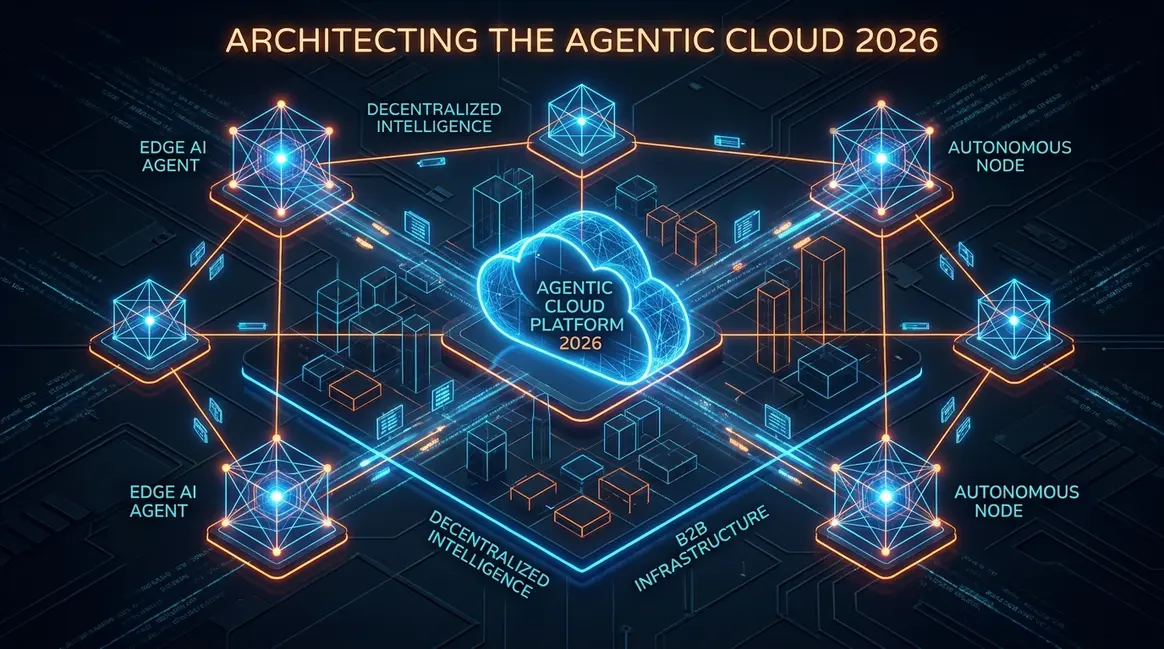
Cloudflare has officially signaled the transition from passive infrastructure to the agentic cloud. Their Agents Week 2026 announcements introduce a comprehensive suite of compute, security, and platform tools. This marks a fundamental shift toward edge-native autonomous systems.
The Architecture Shift
Deploying autonomous agents requires rethinking traditional request-response lifecycles. The new agentic web demands persistent state, dynamic routing, and zero-trust security at the edge. We are moving away from centralized AI orchestration toward distributed, edge-native agent execution.
- Systems Impact: Decouples agent logic from centralized monolithic backends, pushing compute to the network edge.
- Performance: Drastically reduces latency by executing agentic workflows within milliseconds of the end user.
- Scalability: Enables massively parallel execution of autonomous tasks without bottlenecking central databases.
Implementation Pattern
Migrating to an agentic cloud architecture requires a phased, edge-first approach. Engineering teams must prioritize state management and secure tool access. Follow this deployment pattern to integrate Cloudflare's agent toolbox.
- Compute Provisioning: Deploy agent logic using edge-native serverless functions to ensure global availability.
- Toolbox Integration: Connect agents to internal APIs using secure, zero-trust tunnels to prevent unauthorized access.
- State Management: Utilize distributed edge storage to maintain agent context across asynchronous workflows.
- Security Enforcement: Implement strict rate limiting and identity verification for all machine-to-machine interactions.
Fractional CTO Perspective
The agentic cloud is a massive lever for B2B engineering teams. By offloading agent orchestration to the edge, organizations can significantly reduce cloud egress costs and middleware OPEX. This architecture accelerates time-to-market for AI features, directly driving MRR growth.
Furthermore, standardizing on a unified agentic platform reduces technical debt. Teams spend less time building custom orchestration layers and more time refining core business logic. This is a high-ROI architectural pivot for any AI-driven enterprise.
System Telemetry Source: Original Engineering Report
Related Growth Blueprints
All Blueprints →Need this architecture deployed in your pipeline?
Skip the synchronous sales cycle and endless discovery calls. Submit your core acquisition or conversion bottleneck for a deep-dive asynchronous growth diagnostic.