Automated usage warnings that prompt plan upgrades: The zero-touch expansion engine
Human-driven account expansion is an operational liability. Relying on Customer Success managers to review usage dashboards and manually pitch tier upgrades ...
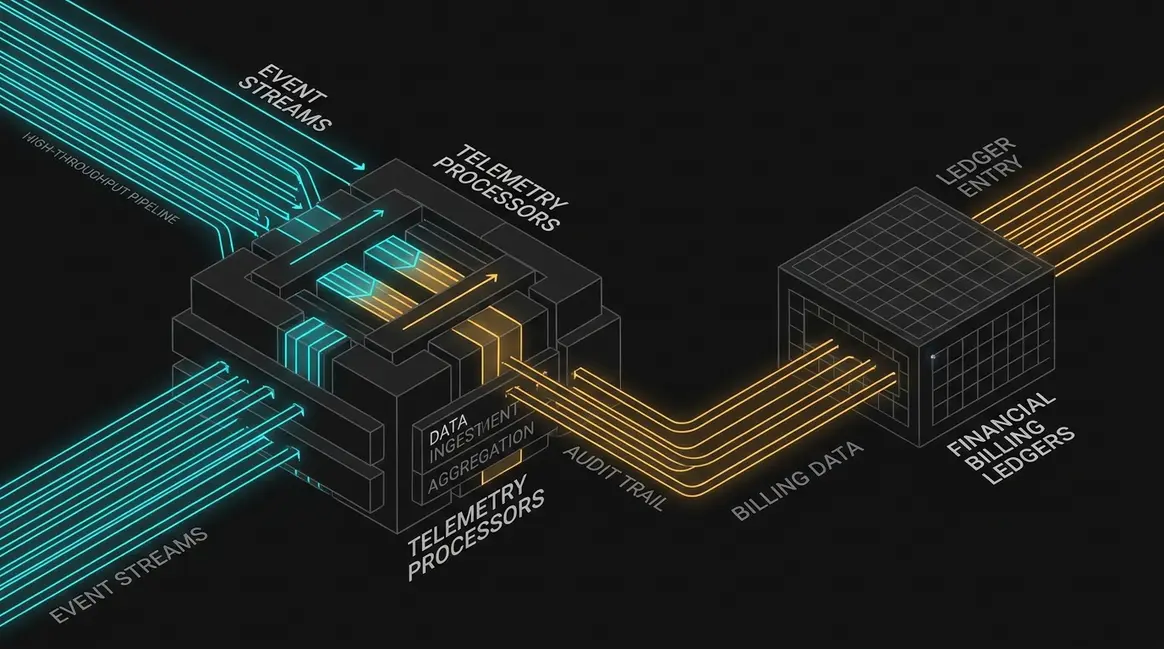
Table of Contents
- The structural failure of reactive customer success and static thresholds
- Decoupling usage metering from application runtime via event streams
- Mathematical modeling of consumption velocity to calculate upgrade inflection points
- Stateful rate-limiting architectures: Transforming HTTP 429 into monetization vectors
- In-app progressive disclosure and transactional micro-commitments
- The zero-touch billing reconciliation engine
- Cost governance, soft-caps, and enterprise safety valves
- Measuring the macroeconomic impact on net revenue retention and expansion CAC
The structural failure of reactive customer success and static thresholds
The standard SaaS playbook for revenue retention relies heavily on reactive interventions: a customer success manager scans a weekly health dashboard, notes elevated platform activity, and schedules a call to pitch an enterprise upgrade. Concurrently, product infrastructure fires a hard-coded transactional email the moment a database counter crosses an arbitrary milestone, typically when a customer reaches 80% or 90% of their provisioned tier. This decoupled, legacy operational model fails systematically because it treats dynamic infrastructure consumption as a linear, static variable.
The Mathematical Flaw of Static Thresholds
Static thresholds ignore consumption velocity completely. A workspace consuming 5% of its seat or compute allocation every single day will breach an 80% notification ceiling within four business days of normal operations. Conversely, an enterprise executing an automated batch sync might spike from 40% to 98% within twelve minutes, completely bypassing the utility of an 80% warning email. In the first scenario, the alert creates immediate friction and alert fatigue; in the second, the system abruptly cuts off API access or drops background jobs before any stakeholder can respond.
Alert fatigue is intensified by seasonal usage patterns and bursty computational workloads. When an engineering team runs end-of-month data reconciliations, a naive usage_ratio >= 0.80 query triggers panic notifications for predictable cyclical variances that require no architectural intervention. When blunt hard limits are enforced without predictive telemetry, applications crash downstream, disrupting operational workflows and converting a natural moment of product value into an engineering incident.
The Telemetry-Billing Chasm
The core vulnerability stems from an architectural divide between distributed engineering telemetry and financial billing engines. Engineering infrastructure monitors execution through real-time log aggregates (e.g., vector ingestion rates, compute runtimes, API invocations recorded in ClickHouse or Kafka topics). Conversely, monetization systems reside inside isolated billing ledgers like Stripe, Chargebee, or custom ERP databases, synchronizing asynchronously via stale batch webhooks.
-
Engineering logs: Capture high-frequency, sub-second usage metrics (
events_per_second,tokens_consumed,active_threads) with zero contextual awareness of contract overage terms or commercial uplift opportunities.- Billing ledgers: Track subscription statuses and invoice periods while remaining completely blind to real-time ingestion velocity and immediate capacity bottlenecks.
This decoupling generates extensive revenue leakage. Workspaces run past contracted allowances without triggering immediate commercial events, forcing sales teams into adversarial retrospective billing conversations. Alternatively, organizations implement blunt rate-limiting that throttles adoption, actively penalizing power users who extract outsized value from the platform.
Transitioning to Deterministic Account Expansion
Modern engineering platforms bridge this state gap by deploying an automated consumption telemetry pipeline that treats capacity limits not as operational brick walls, but as programmatic gateways for account expansion. Instead of static triggers, consumption engines calculate real-time run rates using rolling regression windows: velocity = delta(usage) / delta(time) alongside seasonal trend variables.
When telemetry engines detect that time-to-exhaustion (T_exhaust = (limit - current_usage) / velocity) falls below specific operational thresholds (such as 48 hours), the orchestration layer executes deterministic programmatic pathways. The application dynamically adjusts rate limits, provisions temporary burst capacity at the edge, and renders context-aware upgrade prompts directly within the administrative control plane, converting raw resource consumption into non-disruptive, frictionless expansion.
Decoupling usage metering from application runtime via event streams
Executing quota checks and usage increments within the synchronous request-response lifecycle degrades system availability. In legacy architectures, incrementing usage metrics relied on atomic transactional updates directly against relational operational databases, such as UPDATE organizations SET api_hits = api_hits + 1 WHERE id = tenant_id. Under high concurrency, row-level locking on hot tenant records creates severe lock contention, degrading p99 API latencies from 18ms to over 600ms and risking connection pool starvation across core microservices.
Modern AI and compute-heavy platforms in 2026 cannot treat consumption as a simple scalar value. Metering requires tracking multi-dimensional parameters across every interaction, including prompt and completion tokens, vectorized embedding generations, GPU inference milliseconds, and dynamic seat state mutations. Binding this operational telemetry to synchronous database transactions forces the runtime application layer to absorb the overhead of billing logic, introducing point-of-failure vulnerabilities directly into critical customer paths.
High-Throughput Event Streaming Ingestion
To decouple telemetry from core application execution, edge nodes and application services must treat usage metrics as immutable domain events. When a consumption action occurs, the runtime layer dispatches an asynchronous, fire-and-forget payload containing non-blocking metadata:
{
  "event_id": "evt_9f82c3a1",
  "tenant_id": "org_58204",
  "metric": "llm_tokens_generated",
  "units": 1420,
  "timestamp": 1774396800
}
The application client offloads this event to an ingestion buffer via non-blocking I/O, completely isolating customer runtime latency from billing computations. The ingress layer routes the telemetry into distributed Kafka event streams or Redpanda clusters configured with partition keys mapped to tenant_id. Partition-key routing preserves strict chronological ordering per customer while maintaining horizontal scale across broker clusters, allowing the infrastructure to ingest millions of discrete usage events per second without dropping packets during traffic surges.
Real-Time Aggregation and Ledger Materialization
Downstream stream processing engines (such as Apache Flink or lightweight Rust-based consumers) read from these event streams to perform stateful, tumbling-window aggregations. The processor updates two distinct data layers:
-
Real-Time Fast Path: Incrementing atomic cache structures inside Redis clusters using
HINCRBYorHINCRBYFLOATto track near-instantaneous usage states against plan ceilings.- Persistent Ledger Path: Flushing immutable micro-batches into columnar storage engines like ClickHouse to retain tamper-proof audit trails for downstream invoicing.
This separation enables deterministic policy evaluation. When the fast path detects a tenant crossing critical thresholds—such as 80% or 95% of allocated capacity—it triggers threshold webhooks to orchestration frameworks like n8n without introducing latency into the underlying API call.
By removing billing calculations from the synchronous database thread, platforms prevent infrastructure cascade failures during usage spikes and establish accurate, near-real-time telemetry. This continuous consumption accuracy provides the foundation for programmatic upgrade warnings, driving predictable account expansion exactly when tenant utilization reaches natural operational thresholds.
Mathematical modeling of consumption velocity to calculate upgrade inflection points
Static threshold notifications—such as alerting an organization when they hit 80% of their provisioned tier—fail because they treat dynamic software workloads as linear systems. A tenant processing batch migrations can consume the remaining 20% of their quota in minutes, crashing integrations before billing stakeholders react. Conversely, a steady team might float at 81% utilization for three quarters without ever needing additional headroom. Engineering an infrastructure engine for account expansion requires continuous mathematical modeling of consumption velocity rather than static threshold monitoring.
Multi-Horizon Velocity and Time-To-Exhaustion Modeling
To eliminate linear blind spots, the metering engine must compute an exponential moving average (EMA) across three distinct temporal windows: short-term burst (EMA_1h), diurnal operational pace (EMA_24h), and systemic baseline consumption (EMA_7d). The mathematical weighting factor alpha is calculated as:
alpha = 2 / (N + 1)
Where N represents the discrete measurement epochs within the respective observation window. The EMA update equation evaluates incoming raw telemetry metrics in real time:
EMA_t = alpha * C_t + (1 - alpha) * EMA_{t-1}
Here, C_t is the metric volume consumed in interval t. The engine derives the dynamic Time-To-Exhaustion (TTE) metric by dividing the unconsumed allocation by the blended effective velocity vector v_effective:
v_effective = (0.50 * EMA_1h) + (0.35 * EMA_24h) + (0.15 * EMA_7d)
TTE = (Quota_allocated - Quota_consumed) / v_effective
If TTE is computed purely against short-term spikes, automated warnings will flood platform administrators with false alarms. To isolate transient anomalies from organic growth, the system calculates a velocity delta score (Z_v):
Z_v = (EMA_1h - EMA_7d) / sigma_7d
Where sigma_7d is the standard deviation of consumption recorded over the preceding seven days.
Velocity Vector Classification and Dynamic Routing
Telemetry nodes route events through a deterministic state machine based on the divergence between transient variance and persistent expansion:
-
Transient Spike Anomaly (
Z_v > 3.0andTTE < 12h): Indicates an atypical system event (e.g., misconfigured retry loops, unannounced data imports). The system suppresses upsell messaging, fires an operational webhook, and displays an in-app rate-limit safeguard banner.-
Authentic Enterprise Expansion (
1.0 <= Z_v <= 2.5sustained for > 72 hours): Confirms systemic baseline growth. The system triggers predictive account expansion workflows, sending an asynchronous notification to financial stakeholders that illustrates their projected exhaustion date and provides automated single-click tier adjustments. -
Sub-Critical Drift (
Z_v < 1.0andQuota_consumed > 85%): Normal operational pacing. The platform suppresses notifications untilTTE <= 72h, preventing notification fatigue.
-
Notification Horizon Automation
Legacy billing systems execute rigid chronological alerts. In contrast, predictive 2026 growth telemetry calculates dynamic notification horizons (H_notify in hours) tailored to consumption velocity:
H_notify = max(MIN_HORIZON, min(MAX_HORIZON, TTE * theta))
Setting MIN_HORIZON = 2, MAX_HORIZON = 168 (seven days), and the scaling scalar theta = 0.25 ensures that fast-moving enterprise accounts receive rapid, high-context operational upgrade options before breaking their contract terms, while sustainable compound workloads convert via low-friction, high-conversion commercial messaging.
Stateful rate-limiting architectures: Transforming HTTP 429 into monetization vectors
Legacy rate-limiting implementations treat traffic spikes as hostile anomalies. Traditional reverse proxies like NGINX or basic Envoy configurations enforce hard token-bucket or leaky-bucket algorithms that immediately drop out-of-quota packets. Returning a bare HTTP 429 Too Many Requests status code without metadata breaks client-side execution loops, degrades user trust, and completely blinds revenue teams to clear signals of impending customer churn or uncaptured scale.
Dynamic Edge Evaluation via Distributed In-Memory State
In modern high-throughput architectures, rate-limiting middleware operates as an intelligent edge gateway. When an inbound request hits an edge worker or ingress controller, the proxy extracts tenant metadata from the decoded JWT and queries an in-memory Redis cluster. Rather than checking a static integer counter, an atomic Lua script evaluates both absolute consumption and instantaneous velocity:
local key = KEYS[1]
local limit = tonumber(ARGV[1])
local current = tonumber(redis.call('get', key) or "0")
local burst_allowance = tonumber(ARGV[2])

if current + 1 > limit + burst_allowance then
    return {0, current}
elseif current + 1 > limit then
    redis.call('incrby', key, 1)
    return {2, current + 1}
else
    redis.call('incrby', key, 1)
    return {1, current + 1}
end
By contrasting pre-AI static throttling with modern 2026 telemetry, this stateful pipeline dynamically classifies spikes. If velocity indicates sustained workload scaling rather than a malicious DDoS pattern, the system avoids instantaneous dropping. Instead, it activates a 15-minute soft-burst grace window, allocating temporary overflow capacity while routing usage data directly into real-time pipeline telemetry to trigger Account Expansion sequences.
Monetization Ingestion via RFC 7807 Problem Details
When the tenant ultimately exhausts their soft-burst allowance, the system issues a fully contextualized, machine-readable payload adhering to the RFC 7807 Problem Details specification. This turns what was historically a fatal infrastructure error into an active transactional interface:
{
  "type": "https://api.domain.com/errors/quota-exceeded",
  "title": "Monthly Quota Limit Reached",
  "status": 429,
  "detail": "Usage reached 108% of tier capacity. Grace window exhausted.",
  "instance": "/v1/inference/generate/req_98a7cf2e",
  "telemetry": {
    "current_velocity_rpm": 4200,
    "allocated_limit_rpm": 2500,
    "grace_period_expired_at": "2026-03-31T14:22:00Z"
  },
  "upgrade_action": {
    "recommended_tier": "Scale-Enterprise",
    "instant_checkout_url": "https://billing.domain.com/checkout?session=sess_9823f&token=eyJh..."
  }
}
Integrating actionable data into high-scale gateways demands advanced orchestration. Implementing low-latency, distributed API rate-limiting allows infrastructure to safeguard downstream microservices while executing synchronous business logic at the ingress boundary.
The checkout URL contains an ephemeral, pre-authenticated cryptographically signed token. The client engineering team or autonomous integration agent can follow this hypermedia link to adjust plan ceilings instantly without manual procurement friction. By maintaining a deterministic 5% to 15% burst threshold above contractual limits, platform operators preserve backend infrastructure health while converting high-velocity API consumption into net-retention pipeline acceleration.
In-app progressive disclosure and transactional micro-commitments
Disruptive modal takeovers represent an anti-pattern in modern product-led growth. Forcing a hard interruption upon reaching an arbitrary tier boundary shatters user workflow, spikes task abandonment, and degrades upgrade conversion rates below 2.8%. Modern account expansion engineering relies instead on telemetry-driven progressive disclosure: a staged notification pipeline that shifts dynamically based on consumption velocity and administrative authority.
The Mechanics of Progressive Elevation
Rather than blocking execution threads when usage limits approach exhaustion, client applications should transition through non-blocking states:
-
75% Quota (Ambient Awareness): Ephemeral, non-blocking toast notifications that auto-dismiss after four seconds without stealing focus.
-
85% Quota (Contextual Inline Notice): Persistent, non-intrusive inline banners mounted directly within the active functional view (e.g., above an ingestion pipeline dashboard or API key manager).
-
95% to 100% Quota (Dynamic Overdraft): Temporary resource overdraft allowances (typically 10% to 15% above hard limits) paired with a persistent workspace banner. This allows uninterrupted mission-critical execution while explicitly visualizing the grace-period burn rate.
-
This multi-phase elevation preserves operational momentum while laying the groundwork for frictionless micro-commitments, allowing workspace owners to authorize micro-tier allocations without navigating away to disconnected billing settings.
Role-Segmented Telemetry and Security Filtering
Exposing financial transaction mechanisms to technical operators who lack purchasing authorization creates friction and leaks organizational metadata. Client-side state managers must enforce strict role segmentation: software engineers receive functional alerts detailing technical mitigation (such as payload pruning, rate-limiting configurations, or query optimization), while workspace administrators receive economic expansion pathways.
To guarantee zero metadata leakage across multi-tenant infrastructures, enforce authorization boundaries using PostgreSQL row-level security policies. When fetching real-time telemetry or triggering expansion dialogues, the API layer evaluates session tokens directly against secure database policies:
CREATE POLICY tenant_usage_read ON workspace_telemetry
FOR SELECT
USING (
  tenant_id = (SELECT current_setting('app.current_tenant_id')::uuid)
);

CREATE POLICY billing_expansion_access ON subscription_ledger
FOR UPDATE
USING (
  tenant_id = (SELECT current_setting('app.current_tenant_id')::uuid)
  AND (SELECT current_setting('app.user_role')) = 'workspace_admin'
);
Pre-AI Static Thresholds vs. 2026 Autonomous Workflows
Legacy expansion architectures relied on daily batch crons and rigid threshold checks, resulting in lagging notifications that failed to catch dynamic workload spikes. Modern infrastructures combine local reactive client state with event-driven agents. Streaming event buses pipe granular consumption events to backend microservices, which continuously compute consumption velocity vectors (dV/dt).
By orchestrating event evaluations with n8n autonomous upgrade triggers, predictive inference engines forecast capacity exhaustion windows up to 72 hours in advance. If an enterprise team initiates a parallel ingestion run that threatens a compute ceiling, the agent bypasses standard static banners. It immediately computes an optimized micro-tier pricing bundle based on historic runtimes and presents an in-workflow, single-click capacity patch directly within the admin's active operational console.
The zero-touch billing reconciliation engine
Traditional billing systems decouple usage tracking from payment processing, creating a high-friction gap where accounts hit hard limits, sales teams exchange manual amendments, and developers wait days for provisioning. In a modern growth infrastructure, frictionless tier shifts require an automated pipeline that synchronizes distributed usage counters, external payment gateways like Stripe or Lago, and application permission layers in sub-second runtimes.
Executing real-time account expansion demands total transactional integrity across asynchronous boundaries, ensuring that billing states and service limits never drift out of alignment.
Transactional State Reconciliation and Idempotency
When an organization's resource consumption crosses a configured threshold (such as 90% of allocated API calls or compute credits), the billing engine initiates an in-app upgrade path. Selecting an upgrade must avoid race conditions caused by network retries or concurrent team actions through strictly scoped idempotency keys:
idempotency_key = sha256(tenant_id + ":" + target_tier + ":" + billing_period_start)
This key is passed directly to the billing provider API to prevent double billing during transient HTTP drops. The webhook listener ingests customer.subscription.updated events, processes prorated invoice calculations natively in Stripe or Lago, and executes atomic writes to the core database using our event-driven stripe sync engine architecture. Proration calculations run instantly against the remaining seconds in the billing cycle:
UPDATE subscriptions
SET tier = 'enterprise_scale',
    rate_limit = 50000,
    updated_at = NOW()
WHERE tenant_id = 'org_98234ab'
  AND status = 'active';
Cryptographic Authorization and Edge Cache Invalidation
Enterprise grade self-serve upgrades bypass manual contract generation by leveraging client-side cryptographic authorization. When an authorized workspace owner approves an upgrade within the application interface, the client signs an upgrade payload containing the tier_id, max_budget, and timestamp using their web credential assertion or an Ed25519 session key.
Once the signature is verified at the API gateway:
-
The external provider updates the billing subscription object asynchronously.
-
The internal Postgres database commits the new tier limits inside a serialized transaction.
-
A distributed cache invalidation command publishes across Redis clusters via
PUBLISH cache:invalidate tenant_id. -
Edge reverse proxies (such as Cloudflare Workers or Envoy sidecars) purge the tenant's rate-limiting token bucket in under 50 milliseconds.
-
2024 Manual Reconciliation vs 2026 Autonomous Account Expansion
Legacy expansion flows relied on batch sync cron jobs, detached billing tables, and manual customer success intervention:
| Operational Metric | Legacy Billing Architecture | 2026 Autonomous Expansion Engine |
|---|---|---|
| Provisioning Latency | 24 to 72 hours (sales review + manual invoice) | < 150 milliseconds (edge cache invalidation) |
| State Integrity | Eventual consistency via nightly CSV cron jobs | Strong transactional consistency via signed webhooks |
| Proration Execution | Manual finance calculations and credit adjustments | Deterministic gateway proration via API parameters |
| Admin Friction | DocuSign signatures and contract renegotiation | Single-click cryptographically verified payload |
Eliminating operational latency between usage warnings and quota provisioning transforms plan upgrades from an administrative barrier into a seamless background utility, driving sustainable account expansion without human intervention.
Cost governance, soft-caps, and enterprise safety valves
Enterprise procurement stalls when pricing transparency breaks down. While product-led growth teams celebrate exponential consumption curves, finance executives face unpredictable compute overhead—a friction point that halts burnless API cost reduction initiatives and stalls enterprise tier transitions. Solving this requires shifting from punitive overage billing to deterministic cost governance.
Programmable Guardrails and Tier Escalation
Traditional SaaS architectures relied on retroactive billing, invoicing customers 30 days after an accidental query explosion or recursive webhook loop. In a modern runtime environment handling parallel inference pipelines and dynamic edge operations, delayed feedback creates churn risks rather than account expansion.
Deterministic governance decouples budget authorization from raw resource exhaustion. Platform administrators configure tiered spend thresholds directly inside tenant settings:
-
Soft-Cap Telemetry (80% allocation): Asynchronous event emitters trigger webhooks to customer Slack channels, alerting engineering leads that ingestion rates will require an infrastructure upgrade within 48 hours.
-
Administrative Throttle (95% allocation): In-app banners notify administrators that low-priority pipelines will enter queuing state unless capacity limits are bumped via one-click self-service workflows.
-
Hard Enforcement Valve (100% allocation): The system rejects unbounded batch operations while keeping synchronous query execution and dashboard analytics fully operational.
Eliminating invoice volatility turns billing conversations into planned infrastructure investments. When enterprise procurement teams see hard guarantees that operational budgets cannot exceed strict margins without administrative sign-off, procurement friction disappears and account expansion velocity accelerates.
Architectural Degradation and Queue Throttling
Safely enforcing spend limits requires intelligent request orchestration rather than blunt network-level circuit breakers. When a tenant crosses their pre-configured spend boundary, the ingestion layer partitions workloads based on operational criticality.
interface TenantBudgetValve {
  tenantId: string;
  monthlyCeilingUsd: number;
  currentSpendUsd: number;
  enforcementMode: "permissive" | "degrade_background" | "hard_stop";
}

export function routeIncomingPayload(
  payload: IngestionRequest,
  policy: TenantBudgetValve
): RouteDecision {
  const utilizationRatio = policy.currentSpendUsd / policy.monthlyCeilingUsd;

  if (utilizationRatio >= 1.0) {
    if (payload.tier === "critical_sync") {
      return { status: "allow_with_emergency_buffer", targetWorker: "priority_pool" };
    }
    return { status: "drop_or_dlq", error: "Monthly compute quota exhausted" };
  }

  if (utilizationRatio >= 0.95 && payload.tier === "bulk_async") {
    return { status: "defer_to_backlog", retryAfterSeconds: 3600 };
  }

  return { status: "execute_standard", targetWorker: "default_pool" };
}
Under this architectural pattern, telemetry ingestion and synchronous user read operations retain zero latency degradation. High-compute asynchronous background workers—such as automated model fine-tuning, bulk vector recalculations, and reporting exports—are paused or routed into a delayed queue. By preserving core uptime while gracefully shedding non-critical compute load, the application protects both customer budgets and infrastructure margins simultaneously.
Measuring the macroeconomic impact on net revenue retention and expansion CAC
Quantifying the unit economics of autonomous growth infrastructure requires decoupling expansion telemetry from blended acquisition metrics. In legacy go-to-market motions, revenue expansion relies on quota-carrying account executives monitoring CRM dashboards, resulting in bloated customer acquisition costs (CAC) and protracted sales friction. Implementing automated, telemetry-driven usage notifications converts capacity bottlenecks into instantaneous upgrade triggers, directly compounding Net Revenue Retention while compressing expansion CAC toward zero.
Core Telemetry and Expansion Unit Economics
Evaluating the direct ROI of automated capacity-triggered upgrades demands precise tracking of four interdependent financial and operational metrics:
-
Expansion CAC (eCAC): Calculated as
eCAC = Total Expansion Sales & Marketing Expenses / Total Net New Expansion ARR. Autonomous workflows drop human variable costs out of the equation, slashing eCAC from historical enterprise SaaS averages of$0.70 - $0.90per dollar down to< $0.08per dollar.-
Mean Time to Upgrade (MTTU): The elapsed latency between a tenant crossing a utilization threshold (e.g., 85% allocated compute or seats) and the execution of an upgraded tier contract. Deterministic event routing reduces MTTU from 42 days in human-mediated cycles to under 4 hours via automated self-serve workflows.
-
Net Revenue Retention (NRR): Telemetry-driven upsells insulate the balance sheet against churn by automating structural account expansion across top-quartile cohorts, shifting baseline NRR from typical median ranges (102-108%) into elite infrastructure-tier performance (125-140%).
-
Upgrade Pipeline Drop-Off Rate: The percentage of accounts breaching critical thresholds that fail to convert within a 30-day window. Automated threshold alerts eliminate the deal slippage inherent to manual SDR/AE outreach cadences.
-
Autonomous Engine vs. Human-Mediated Pipelines
Traditional B2B customer success playbooks schedule quarterly business reviews (QBRs) to renegotiate contracts after an overage occurs. This reactive protocol creates billing friction, contract disputes, and multi-week approval deadlocks. By contrast, an automated infrastructure couples real-time usage monitoring at the API gateway layer directly to dynamic checkout endpoints and billing microservices.
| Vector | Legacy Sales-Assisted Expansion | Zero-Touch Telemetry Expansion (2026 Engine) |
|---|---|---|
| CAC Payback Period | 9 to 18 months | Immediate (< 14 days) |
| Friction Surface | High (Security reviews, sales calls, redlines) | Low (In-app one-click Stripe/Orb tier adjustments) |
| Trigger Timing | Scheduled/Lagging (End-of-month audit) | Predictive/Real-time (Breach trajectory modeling) |
| Operational Overhead | Linear headcount scaling (AE:Tenant ratio) | Zero marginal headcount cost (Log volume scaling) |
By automating the consumption trigger, engineering teams bypass the human bottleneck entirely. Enterprises running high-throughput pipelines convert overage liabilities into predictable, high-margin software upgrades that scale synchronously with workload consumption.
Manual contract renegotiations and reactive CS intervention have no place in a headless, AI-driven software economy. Deterministic account expansion requires treating usage metrics as financial primitives rather than passive logs. By embedding consumption velocity algorithms, automated rate-limiting bypasses, and continuous billing synchronization into your core architecture, your product secures net revenue retention autonomously. To audit your telemetry infrastructure and deploy a zero-touch monetization pipeline, schedule a technical diagnostic through my growth engineering audit.
Memo Strategici Correlati
Tutti i Memo →Dead-letter queue management in RabbitMQ and BullMQ: Engineering zero-loss event pipelines
In high-throughput distributed systems, unhandled message failures are silent financial liabilities. Most engineering teams treat Dead-Letter Queues (DLQs) a...
Engineering high-intent exit interception: Beyond client-side popups in modern architectures
The traditional exit-intent modal is dead. In modern headless web stacks, relying on legacy JavaScript mouseleave event listeners to blast generic 10% discou...
Vuoi implementare questa architettura nella tua pipeline?
Evita i lunghi cicli di vendita e le infinite call di scoperta. Invia il tuo collo di bottiglia di acquisizione o conversione per una diagnosi tecnica approfondita in asincrono.