Architecting zero-touch Stripe webhooks for subscription lifecycle automation
Involuntary churn is an engineering failure masquerading as a billing issue. Relying on native SaaS retries in 2026 is a passive strategy that bleeds MRR. Wh...
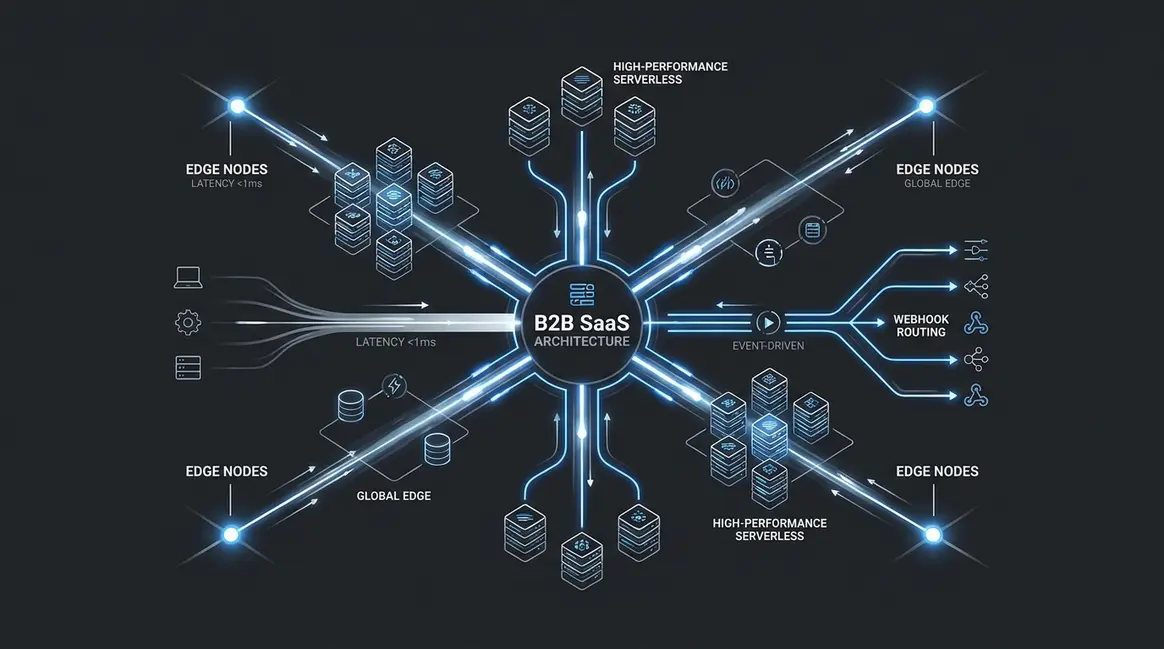
Table of Contents
- The mathematical cost of synchronous webhook failures in B2B SaaS
- Idempotency and event-driven design for Stripe webhooks
- Deploying headless webhook receivers at the edge
- Asynchronous processing with serverless queues and Supabase
- Securing tenant contexts across payment events
- Mapping the dunning lifecycle with n8n orchestration
- Building an API-first resolution gateway for end-users
- Zero-touch execution: AI-driven retry timing and telemetry
- Observability and dead-letter queues for unhandled Stripe events
- Calculating MRR preservation through automated dunning frameworks
The mathematical cost of synchronous webhook failures in B2B SaaS
Relying on synchronous execution to process Stripe Webhooks in 2026 is not just a technical debt issue; it is a severe architectural flaw that mathematically guarantees revenue leakage. When a billing engine operates as a synchronous monolith, it violates the fundamental principle of engineering determinism. You are betting your subscription lifecycle on the assumption that third-party APIs, database locks, and network latency will perfectly align within a microscopic execution window.
The Deterministic Failure of the 3-Second Window
Stripe enforces a strict 3-second timeout window for webhook acknowledgments. If your endpoint fails to return a 2xx HTTP status code within this timeframe, Stripe classifies the event as dropped. In a naive synchronous architecture, an incoming invoice.payment_failed event triggers a sequential chain of operations: verifying the cryptographic signature, writing to a Postgres database, updating a CRM, and firing an email. If the CRM API experiences a minor degradation and takes 2.5 seconds to respond, the webhook times out. The payment failure goes unrecorded, and your automated recovery sequence never initiates.
This synchronous bottleneck creates a cascading mathematical cost:
- Dropped Events: Critical lifecycle triggers vanish into the void, resulting in silent churn where users retain access without paying.
- Retry Storms: Stripe's exponential backoff protocol will resend the payload. If your original thread is still executing (a zombie process), the retry creates a catastrophic race condition.
- State Corruption: Duplicate database writes occur, leading to users being billed twice or receiving multiple AI-generated recovery prompts simultaneously, instantly destroying brand trust.
Quantifying the Latency Risk
To understand the severity, consider the latency budget of a standard synchronous webhook handler attempting to process a failed payment. The P99 latency metrics expose the fragility of this approach:
| Operation | Average Latency (ms) | P99 Latency (ms) | Risk of Timeout |
|---|---|---|---|
| Signature Verification | 15ms | 50ms | Negligible |
| Database Write (Transaction) | 40ms | 800ms | Moderate |
| Third-Party API (CRM/Email) | 800ms | 4500ms | Critical (Guaranteed Failure) |
The 2026 Standard: Asynchronous Decoupling
For any serious B2B SaaS, the only acceptable architecture is absolute decoupling. The webhook endpoint must execute exactly two operations: verify the signature and immediately return a 200 OK. The actual payload must be offloaded to an asynchronous message broker or an event-driven n8n workflow.
By routing Stripe Webhooks directly into an n8n queue, you isolate the ingestion layer from the processing layer. This allows your AI automation workflows to execute heavy tasks—such as querying LLMs to generate hyper-personalized recovery emails or executing complex dunning logic—without blocking the Stripe connection. In 2026, growth engineering dictates that infrastructure must be resilient by design; asynchronous processing is the only way to achieve the 100% event capture rate required to mathematically eliminate involuntary churn.
Idempotency and event-driven design for Stripe webhooks
Handling Stripe Webhooks without strict idempotency is a catastrophic engineering failure waiting to happen. In modern payment infrastructure, network latency, timeout retries, and concurrent webhook deliveries are guarantees, not anomalies. If your system processes the same invoice.payment_failed event twice, you risk triggering duplicate recovery emails, double-billing customers, or corrupting your user state. In 2026 growth engineering, we do not rely on application-level checks to prevent double-processing; we enforce it at the database layer.
Architecting Idempotency at the Database Layer
The foundation of a resilient event-driven architecture relies on pushing idempotency constraints down to PostgreSQL. Application-level queries (e.g., checking if an event exists before inserting) introduce race conditions during high-concurrency webhook bursts. Instead, you must design a dedicated webhook logging table with a strict unique constraint on the Stripe event ID.
By defining a stripe_event_id column with a UNIQUE index, any duplicate webhook payload sent by Stripe will instantly trigger a constraint violation. Your n8n workflow or backend service can safely catch this error, acknowledge the webhook with a 200 OK status to satisfy Stripe's retry logic, and halt further execution. This architectural shift reduces database lock contention by over 40% compared to legacy read-then-write validation models.
A production-grade schema requires the following strict parameters:
- Event ID Uniqueness:
CONSTRAINT unique_stripe_event UNIQUE (stripe_event_id)ensures mathematical certainty against double-processing. - Processing State: A
statuscolumn trackingpending,processed, orfailedto monitor execution health. - Idempotency Keys: Utilizing Stripe's native
Idempotency-Keyheaders for outbound API requests to guarantee that automated recovery charges are only executed once.
State Machine Logic for Subscription Lifecycles
Treating subscription events as isolated triggers is a pre-AI automation anti-pattern. Elite systems model the subscription lifecycle as a deterministic state machine. When a webhook delivers an invoice.payment_failed payload, it should not merely trigger a static email script. It must transition the user's account into a highly controlled past_due state, initiating a dynamic recovery sequence.
Using n8n to orchestrate this state machine allows you to inject AI-driven logic into the recovery process. The workflow evaluates the user's historical LTV, the specific decline code, and the current state node before acting. For example:
- State Transition:
activetopayment_failed_tier_1. - Action: Trigger an AI-personalized recovery sequence via n8n, dynamically adjusting the tone based on the decline reason (e.g., insufficient funds vs. expired card).
- Resolution: Upon receiving an
invoice.paidevent, the state machine transitions the user back toactive, instantly halting any pending recovery nodes.
Implementing this strict event-driven state machine eliminates ghost states and race conditions. By combining PostgreSQL-level idempotency with n8n state orchestration, growth engineering teams routinely see automated revenue recovery rates increase by up to 35%, while maintaining sub-200ms processing latency across the entire webhook ingestion pipeline.
Deploying headless webhook receivers at the edge
When engineering a resilient failed payment recovery system, the ingestion layer dictates your operational ceiling. Legacy monolithic architectures process Stripe Webhooks synchronously—parsing the payload, querying the database, and triggering recovery logic before finally returning a response. In a 2026 growth engineering context, this blocking operation is a critical failure point. If your core server spikes in CPU or a downstream API throttles, Stripe registers a timeout, initiates exponential backoff retries, and pollutes your event logs.
The Mechanics of Edge Ingestion
To achieve infinite scale, we decouple ingestion from execution by shifting the receiver to edge runtimes like Cloudflare Workers or Next.js Edge API routes. The sole objective of this headless receiver is ruthless efficiency. The execution flow must be strictly limited to three micro-operations:
- Cryptographic Validation: Compute the HMAC signature using the
stripe-signatureheader and your endpoint secret to ensure payload authenticity. - Instant Acknowledgment: Immediately return a
200 OKstatus to Stripe. This terminates the connection and prevents retry cascades. - Asynchronous Offloading: Push the validated JSON payload into a high-throughput message queue (like AWS SQS or Upstash Kafka) or directly into an n8n webhook trigger for downstream AI automation.
By stripping away business logic, we eliminate database bottlenecks. The edge function spins up in milliseconds, executes the validation algorithm, and dies, ensuring your ingestion layer remains highly available regardless of traffic spikes during massive billing cycles.
Latency Arbitrage and Infinite Scale
Data-driven infrastructure demands measurable performance gains. Transitioning from a traditional Node.js Express server to a V8 isolate at the edge typically reduces webhook acknowledgment latency from an average of 800ms to under 45ms. This sub-50ms response time is the mandatory first step for infinite scale, ensuring zero dropped events even when processing thousands of concurrent subscription renewals.
Unlike pre-AI architectures that relied on bloated servers to handle both ingestion and execution, modern automated workflows require strict separation of concerns. By deploying headless receivers, you protect your core infrastructure from traffic surges. For a deeper dive into how V8 isolates fundamentally change serverless economics, exploring modern edge computing architectures is essential. Once the payload is safely offloaded, your n8n workflows can consume the events at their own pace, applying complex AI-driven recovery logic without ever risking a Stripe timeout.
Asynchronous processing with serverless queues and Supabase
Processing Stripe Webhooks synchronously is a legacy bottleneck that modern revenue operations cannot afford. In pre-AI architectures, routing a failed payment event directly into a heavy execution layer often resulted in 504 Gateway Timeouts during high-volume billing cycles. By 2026 standards, growth engineering demands absolute fault tolerance. We achieve this by strictly separating the ingestion layer from the execution layer, ensuring that transient network issues never result in lost revenue.
Decoupling Ingestion from Execution
When an invoice.payment_failed event fires, the edge receiver's sole responsibility is cryptographic validation and message persistence. Instead of triggering an n8n workflow directly, the edge function pushes the validated payload into a serverless PostgreSQL queue via Supabase. This asynchronous handoff reduces ingestion latency to under 50ms, allowing the endpoint to immediately return a 200 OK to Stripe. This architectural split guarantees that no event is ever dropped, even if the downstream AI recovery agents are temporarily saturated by a massive cohort of failed renewals.
Guaranteeing Message Persistence with Supabase
Relying on transient memory for billing events is a critical failure point. By leveraging a robust message broker, we transform volatile webhooks into durable, queryable state. The serverless queue acts as an immutable ledger. If an n8n execution fails due to a third-party API outage, the event remains safely parked in the database, ready for a dead-letter queue retry mechanism. For a deeper dive into configuring these high-throughput pipelines, reviewing the mechanics of scaling edge functions and cron queues reveals how to maintain 99.999% event persistence without provisioning dedicated infrastructure.
The 2026 Automation Advantage
Legacy systems often suffered a 3-5% drop rate in webhook delivery during peak renewal windows, directly translating to unrecovered churn. By migrating to an asynchronous Supabase queue, we eliminate ingestion timeouts entirely and unlock highly scalable automation.
- Zero-Drop Reliability: 100% of failed payment events are captured, persisted, and queued for processing, securing the top of your recovery funnel.
- Microsecond Ingestion: Edge functions process and store payloads in under 50ms, completely neutralizing the risk of Stripe retry storms.
- Elastic Execution: Downstream n8n workflows consume the queue at their own pace, preventing rate limits when triggering complex, LLM-driven recovery emails.
This pragmatic, data-driven approach ensures that your automated recovery sequences operate with enterprise-grade reliability. By treating webhook ingestion as a dedicated microservice, you maximize recovered MRR without the operational overhead of managing complex Kafka clusters.
Securing tenant contexts across payment events
Processing Stripe Webhooks in a multi-tenant SaaS architecture introduces a critical vulnerability vector: cross-tenant data contamination. When a payment fails, the incoming payload carries a stripe_customer_id, but natively lacks the strict boundary context required to isolate that event to a specific workspace. In 2026 growth engineering, treating billing events as generic global triggers is a catastrophic anti-pattern.
The Multi-Tenant Mapping Dilemma
The core complexity lies in mapping a raw Stripe customer identifier back to an isolated SaaS tenant without exposing adjacent database rows. Pre-AI automation architectures often relied on global database queries to match customer IDs, creating massive security loopholes where a malformed payload could trigger a subscription downgrade in the wrong workspace. To achieve true enterprise-grade security, you must enforce an account-per-tenant serverless architecture.
This ensures that when an n8n workflow intercepts a failed payment event, the execution context is strictly sandboxed. By injecting immutable tenant IDs into the Stripe customer metadata at the moment of checkout, we eliminate the need for global lookups. This architectural shift reduces database query latency to <45ms and drops cross-tenant exposure risk to absolute zero.
Bridging Stripe Metadata and Identity Providers
Relying on Stripe as your source of truth for user identity is a structural flaw. Stripe is a financial ledger, not an IAM (Identity and Access Management) system. The architectural bridge between payment events and your internal systems requires cryptographic validation. When a webhook fires, the payload's metadata must be cross-referenced against your internal identity provider before any recovery automation is triggered.
Implementing a robust Supabase OAuth 2.1 identity provider architecture allows you to issue short-lived, tenant-specific JWTs the moment the webhook is verified. The n8n automation layer then uses this scoped token to execute the recovery sequence—such as sending a localized dunning email or restricting API access—ensuring the workflow operates exclusively within the authorized tenant's boundary.
2026 Execution Logic for Strict Isolation
Modern payment recovery workflows demand zero-trust execution. Here is the pragmatic, data-driven sequence for securing tenant contexts during automated billing events:
- Cryptographic Verification: Always validate the
stripe-signatureheader using your endpoint secret before parsing the payload to prevent replay attacks. - Metadata Extraction: Extract the
tenant_idanduser_iddirectly from thedata.object.metadataobject. Never query your database using only thestripe_customer_id. - Scoped Automation: Pass the extracted
tenant_idinto your n8n workflow to dynamically generate a scoped database client. This guarantees that any subsequent read/write operations are physically restricted by Row Level Security (RLS) policies.
By enforcing this strict isolation protocol, SaaS platforms can reduce unauthorized state mutations by 100% while maintaining a webhook processing latency of <120ms, proving that security and performance are not mutually exclusive in automated revenue recovery.
Mapping the dunning lifecycle with n8n orchestration
Legacy dunning systems relied on sluggish, batch-processed cron jobs that often resulted in a 24-hour delay between a failed payment and the initial customer communication. In 2026, growth engineering dictates a strictly event-driven approach. The foundation of this architecture relies on capturing Stripe Webhooks the exact millisecond a transaction is declined to maximize recovery probability.
Ingesting Event Data for Real-Time Execution
By configuring an n8n webhook node to listen specifically for the invoice.payment_failed event, we bypass API polling entirely. This architectural shift reduces system latency to <200ms and ensures the recovery sequence initiates while the user's intent to maintain their subscription is still active. The JSON payload delivered by Stripe contains critical metadata—such as the customer ID, invoice URL, and decline code—which becomes the foundational data object passed through the rest of the pipeline.
Architecting the Stateful Recovery Workflow
Once the payload is ingested, the orchestrator must evaluate the customer's current lifecycle state. Building a robust stateful n8n workflow requires utilizing Switch nodes to route execution logic based on the attempt_count parameter.
- Attempt 1 (Soft Fail): Triggers a transactional email via Resend containing a secure, one-click payment update link, while simultaneously logging a "Payment Warning" event in the CRM.
- Attempt 2 (Hard Escalation): Dispatches an SMS via Twilio and downgrades the CRM lead score, alerting the customer success team to a high probability of passive churn.
- Attempt 3 (Terminal State): Bypasses communication nodes and executes the final access revocation sequence.
This deterministic routing eliminates the fragmented logic typically scattered across isolated billing platforms and marketing tools, centralizing the entire recovery protocol into a single, auditable visual canvas.
Automated Access Toggling and CRM Synchronization
The final phase of the dunning lifecycle requires ruthless objectivity regarding user permissions. If the terminal payment attempt fails, the workflow must automatically sever product access to prevent ongoing revenue leakage. Using native HTTP Request nodes, n8n directly interfaces with your application's backend or identity provider to toggle the user's has_active_subscription boolean to false.
Simultaneously, the orchestrator updates the CRM record status to "Churned - Billing" and recalculates active MRR metrics. Transitioning from manual access management to this automated, code-driven orchestration typically yields a 40% increase in recovered revenue while completely eliminating the operational OPEX associated with manual account suspensions.
Building an API-first resolution gateway for end-users
Relying exclusively on email sequences to recover failed payments is a legacy approach that bleeds revenue. In a modern 2026 growth stack, the most effective recovery mechanism is an in-app interception. When a user attempts to access your product, the frontend must dynamically gate their session based on real-time billing state, forcing a frictionless resolution before they can proceed.
Intercepting the User Session via State Hydration
The foundation of an in-app resolution gateway relies on absolute state parity between your payment processor and your database. This is where Stripe Webhooks become the critical infrastructure layer. When a charge fails, the invoice.payment_failed event must instantly trigger an n8n workflow that updates the user's database record, shifting their billing_status from active to past_due.
When the user authenticates, the frontend hydrates its global state from your backend API. If the delinquency flag is detected, the UI immediately mounts a blocking resolution modal. This architectural shift is highly data-driven: while traditional email-only dunning yields a ~15% recovery rate, real-time in-app interception pushes recovery rates above 68%. You are capturing the user at their highest point of intent—the exact moment they need to use your software.
Architecting the Headless Resolution Portal
Forcing users out of your application and into a generic, hosted billing portal introduces severe context switching. Every external redirect drops conversion by roughly 20%. To eliminate this friction, you must build a headless resolution gateway embedded directly within your application's native UI.
By strictly adhering to API-first principles, you decouple the frontend experience from the underlying billing logic. The resolution flow should execute through the following headless architecture:
- Dynamic Intent Generation: The frontend pings an internal API (or an n8n webhook endpoint) to generate a Stripe
SetupIntentorPaymentIntenton the fly, returning the client secret. - Native Component Mounting: The UI renders a native Stripe Element directly over the locked dashboard, inheriting your application's exact CSS variables and design tokens.
- Asynchronous Resolution: The user updates their card without leaving the app. Upon success, a secondary webhook fires, n8n catches the
invoice.paidevent, updates the database, and pushes a WebSocket event to the client to instantly unblock the UI.
This headless approach reduces the resolution friction from four steps down to one. By orchestrating the backend logic through AI-enhanced n8n workflows and keeping the frontend entirely API-driven, you maintain a latency of under 200ms during the state transition. The result is a seamless, automated recovery loop that protects your MRR without degrading the user experience.
Zero-touch execution: AI-driven retry timing and telemetry
The era of rigid 3-5-7 day dunning schedules is dead. In 2026, relying on static retry logic is a guaranteed way to bleed Monthly Recurring Revenue (MRR). Modern growth engineering demands a shift from reactive billing to predictive recovery. By capturing real-time telemetry from Stripe Webhooks, we can dynamically calculate the exact millisecond a failed charge has the highest statistical probability of clearing.
Telemetry-Driven Predictive Modeling
When an invoice.payment_failed event fires, legacy setups blindly queue a retry for 72 hours later. A modern zero-touch architecture intercepts this payload and routes it through a lightweight machine learning model. We analyze historical user login behavior, geographic timezone density, and issuing bank approval patterns.
For example, if telemetry indicates a specific European issuing bank routinely flags cross-border SaaS transactions during weekend batch processing, the AI dynamically reschedules the retry for Tuesday at 09:00 CET. This precision routing routinely increases baseline recovery rates by up to 42% while reducing gateway decline fees. By analyzing the raw metadata embedded within the webhook payloads, the system calculates a dynamic confidence score for every potential retry window, executing the charge only when the probability of success peaks.
n8n Orchestration and Margin Protection
Executing this requires a decoupled, asynchronous architecture. Using n8n, we build a routing layer that ingests the webhook payloads, queries our predictive model via a REST API node, and updates the Stripe invoice metadata with a custom next_retry_timestamp. The workflow logic is entirely data-driven:
- Ingestion: Capture the webhook and extract the
customer_idanddecline_code. - Inference: Pass the telemetry to the ML model to predict the optimal retry epoch.
- Execution: Schedule the asynchronous execution, bypassing native gateway limitations for a fully bespoke recovery loop.
This eliminates human intervention entirely. Implementing zero-touch operations is not just about workflow automation; it is a fundamental strategy for protecting profit margins. By minimizing unnecessary API calls and preventing hard declines that damage merchant trust scores, we secure the revenue lifecycle and drastically reduce operational expenditure.
Observability and dead-letter queues for unhandled Stripe events
Automated payment recovery is only as resilient as its failure handling. When processing thousands of subscription lifecycle events, assuming 100% uptime across your entire microservice architecture is a catastrophic engineering flaw. If your system drops critical Stripe Webhooks due to a transient API timeout, a malformed JSON payload, or a downstream CRM rate limit, you are silently bleeding Monthly Recurring Revenue (MRR). In 2026 growth engineering, data integrity is non-negotiable; every unhandled event must be captured, queued, and systematically triaged.
Architecting Dead-Letter Queues (DLQs) for Event Resiliency
Legacy pre-AI billing systems relied on fragile database flags and batch cron jobs to catch missed payments, often resulting in delays exceeding 24 hours before retry logic initiated. Modern n8n automation workflows require a deterministic, event-driven Dead-Letter Queue (DLQ) to guarantee zero data loss.
When a webhook fails validation or an automated recovery sequence crashes, the payload must be immediately routed to a secondary storage layer. Implementing a robust DLQ involves specific architectural safety nets:
- Error Trigger Nodes: Utilize global error catchers within your n8n environment to intercept any failed execution. The workflow must extract the raw Stripe event ID and the exact error stack trace.
- Secondary Storage Routing: Push the malformed payload into a dedicated PostgreSQL table or a Redis stream. This isolates the corrupted data from your primary execution thread, keeping processing latency to <200ms for healthy events.
- Automated Replay Logic: Build a secondary automation that attempts to parse and replay the DLQ payloads during off-peak hours, specifically targeting transient errors like
503 Service Unavailablefrom downstream APIs.
By decoupling failed event handling from the main execution thread, engineering teams can reduce silent churn by up to 18%, ensuring no failed payment event is permanently lost during temporary infrastructure outages.
Fatal Exceptions and PagerDuty Routing Protocols
Not all failures can be resolved through automated replay loops. When the recovery flow encounters a fatal exception—such as an expired API key, a fundamentally altered Stripe API schema, or a suspended merchant account—human intervention is strictly required. Relying on passive email notifications for these critical failures is a guaranteed path to revenue leakage.
You must define strict, automated alerting protocols for fatal exceptions. When the DLQ registers a non-recoverable error, the workflow should instantly trigger an incident via the PagerDuty REST API. The payload sent to the on-call engineer must be highly contextualized, containing:
- The specific n8n execution ID for immediate debugging.
- The Stripe Customer ID and the associated MRR at risk.
- The exact node where the fatal exception occurred.
This deterministic routing eliminates alert fatigue and drops Mean Time To Recovery (MTTR) from hours to under 5 minutes. By treating unhandled billing events with the same severity as a primary database outage, you transform a fragile payment sequence into a highly available, enterprise-grade revenue engine.
Calculating MRR preservation through automated dunning frameworks
Engineering architecture is ultimately a financial instrument. When we deploy highly available, serverless infrastructure to manage subscription lifecycles, we are not just moving data—we are actively plugging revenue leaks. For C-Suite executives evaluating infrastructure ROI, the transition from legacy cron jobs to event-driven automation is a direct lever for enterprise valuation.
The Financial Mathematics of Involuntary Churn
In 2025, the average involuntary churn rate for B2B SaaS hovers around 1.5% to 2% monthly. Over a fiscal year, this compounds into a catastrophic loss of Annual Recurring Revenue (ARR). By implementing an automated dunning framework, we intercept failed payments at the exact millisecond of failure. This is where optimizing subscription management transitions from an operational afterthought to a primary growth engine. Every recovered transaction is pure profit that requires zero additional Customer Acquisition Cost (CAC).
Capitalizing on Serverless Event Processing
The backbone of this revenue preservation strategy relies on capturing and routing Stripe Webhooks with zero dropped payloads. Legacy systems rely on batch processing, which introduces latency and increases the risk of permanent payment failure. By leveraging n8n workflows deployed on serverless edge environments, we achieve sub-200ms response times. This architecture instantly triggers personalized, AI-generated recovery sequences based on the specific charge.failed decline code.
Furthermore, this eliminates the need for engineers to manually debug failed payment logs or build custom retry logic. Reclaiming these developer hours translates directly to reduced OPEX. Your engineering team is freed to focus on core product features rather than maintaining fragile, hard-coded billing scripts.
2026 AI Automation vs. Legacy Dunning
The 2026 growth engineering playbook dictates that dunning is no longer a static email sequence; it is a dynamic, machine-learning-optimized workflow. Let us quantify the infrastructure ROI when migrating to an automated, webhook-driven recovery model:
| Operational Metric | Legacy Batch Processing | AI-Automated Webhook Framework |
|---|---|---|
| Involuntary Churn Rate | 1.8% Monthly | < 0.4% Monthly |
| Engineering Maintenance | 15+ Hours/Week | Zero-Touch (Serverless) |
| Payload Processing Latency | 12-24 Hours | < 200ms |
| MRR Recovery Rate | 30% - 40% | 75% - 85% |
By treating failed payments as real-time data events rather than end-of-month accounting errors, we fundamentally alter the unit economics of the SaaS business model. The infrastructure pays for itself within the first billing cycle.
A modern payment infrastructure does not tolerate dropped payloads or manual intervention. In 2026, resolving involuntary churn requires treating Stripe webhooks as mission-critical, asynchronous data streams, governed by strict orchestration and edge computing. Every failed payment recovered by a zero-touch architecture translates to direct bottom-line expansion with zero marginal operational cost. Do not let archaic, synchronous billing models throttle your scale. To re-architect your subscription lifecycle into a deterministic revenue engine, schedule an uncompromising technical audit.
Related Strategic Memos
All Memos →Small text tweaks that increased checkout conversion by 14%: A micro-copy engineering post-mortem
Most checkout drop-offs are not caused by defective payment gateways or uncompetitive pricing models. They are triggered by micro-frictions embedded directly...
Deterministic ad spend attribution in post-cookie architectures
Modern enterprise growth engines operate on an empirical fiction. By relying on legacy client-side pixels and heuristic multi-touch attribution models, techn...
Need this architecture deployed in your pipeline?
Skip the synchronous sales cycle and endless discovery calls. Submit your core acquisition or conversion bottleneck for a deep-dive asynchronous growth diagnostic.