Sub-second load times for high-ticket lead gen engines: The headless landing page architecture
In high-ticket B2B lead generation, latency is a silent tax on top-line revenue. A page load time exceeding one second doesn't just damage UX; it fractures t...
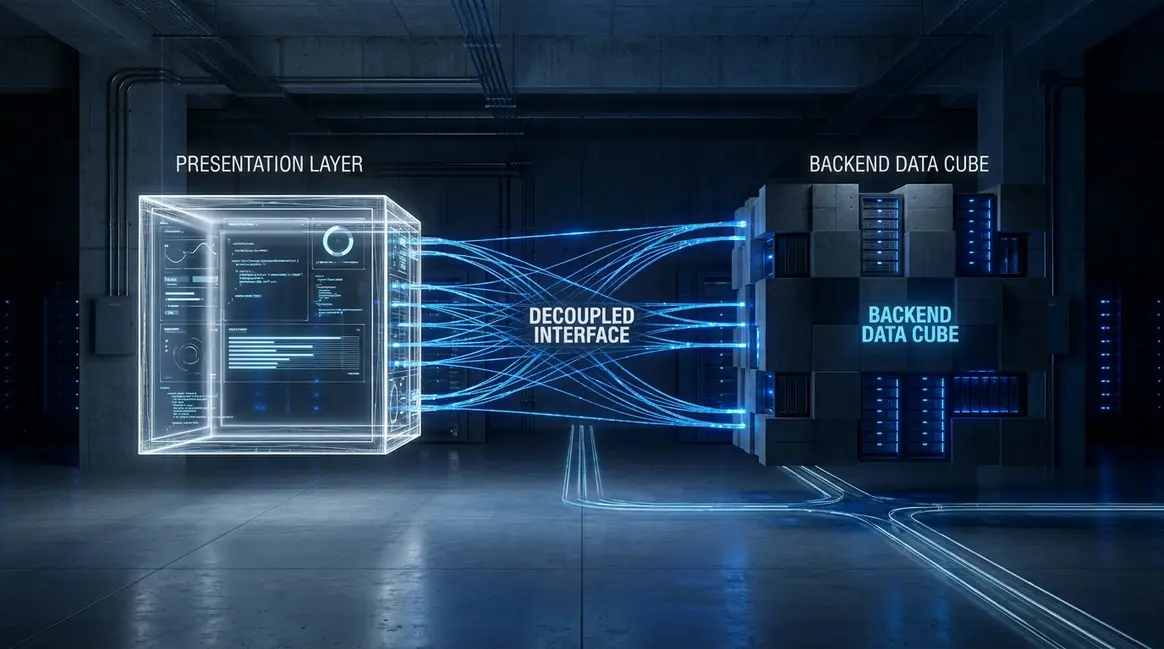
Table of Contents
- The legacy bottleneck: Why monolithic CMS architecture bleeds high-ticket conversions
- Latency as a conversion killer: The deterministic mathematics of sub-second rendering
- Headless landing pages: Decoupling the presentation layer for zero-touch execution
- Asynchronous payload delivery and edge caching protocols
- Serverless data pipelines: Syncing leads asynchronously via n8n
- Deploying stateless backends with Supabase for high-velocity operations
- Server-side tracking: Eradicating client-side pixel bloat
- Automated AI enrichment and the zero-touch MRR acceleration loop
The legacy bottleneck: Why monolithic CMS architecture bleeds high-ticket conversions
Monolithic platforms like WordPress and Webflow were engineered for a fundamentally different era of the web. In 2026, relying on tightly coupled backend and frontend architectures for high-ticket lead generation is a mathematical error. When enterprise buyers evaluate a six-figure B2B SaaS solution, their first interaction is your landing page. If that page hesitates, the perceived value of your engineering competence plummets, translating latency directly into lost MRR.
The Anatomy of TTFB Degradation
Every time a user requests a monolithic page, the server must execute a sequential, synchronous dance. It queries a bloated relational database, processes server-side logic, and dynamically generates HTML on the fly. This architectural overhead guarantees severe Time to First Byte (TTFB) degradation. We routinely see legacy setups struggling to break the 800ms TTFB barrier, whereas migrating to a modern headless CMS architecture consistently delivers sub-50ms response times globally via edge caching. For high-ticket engines, every 100ms of database latency directly correlates to a measurable drop in conversion probability.
Synchronous Blocking and the Abandonment Curve
The bleeding does not stop at the server level. Monoliths inherently ship massive, unoptimized JavaScript bundles and synchronous third-party plugin scripts that hijack the browser's main thread.
- Render-Blocking Resources: Legacy themes force the browser to halt DOM construction until heavy CSS and JS files are fully parsed and executed.
- Main Thread Hijacking: Synchronous execution prevents the user from scrolling or clicking, creating a frustrating "dead click" experience.
- Database-Induced Layout Shifts: Delayed server responses for dynamic assets cause the page to violently shift as it finally renders.
Enterprise decision-makers do not wait for bloated DOMs to resolve. If your page takes 3.5 seconds to become interactive, the cognitive friction triggers immediate abandonment. You are not just losing traffic; you are actively burning high-intent pipeline.
The 2026 Growth Engineering Standard
To capture enterprise demand, growth engineering must ruthlessly decouple the presentation layer from the database. By deploying statically generated Headless Landing Pages, you eliminate server-side rendering bottlenecks entirely. Instead of relying on heavy monolithic plugins to process form submissions, modern stacks utilize asynchronous API endpoints routed through lightweight n8n webhooks. This instantly triggers AI-enriched lead scoring workflows in the background, shifting the computational load away from the client's browser. The result is a mathematically optimized conversion engine where sub-second load times are guaranteed by default, not achieved through fragile caching plugins.
Latency as a conversion killer: The deterministic mathematics of sub-second rendering
In high-ticket B2B lead generation, latency is not a vanity metric for the IT department; it is a systemic financial risk. When acquiring enterprise users, the friction introduced by a sluggish DOM rendering pipeline directly degrades the perceived authority of your brand. The mathematics governing this degradation are deterministic: every millisecond of delay exponentially increases the probability of session abandonment before the conversion payload is ever fired.
The Core Web Vitals Equation
To engineer sub-second load times, we must isolate and optimize the three pillars of rendering performance: Time to First Byte (TTFB), Largest Contentful Paint (LCP), and First Input Delay (FID). Legacy monolithic architectures inherently struggle here due to bloated server-side processing and synchronous script execution. By decoupling the frontend and deploying Headless Landing Pages, we bypass these bottlenecks entirely. This architecture allows us to serve pre-rendered static assets via edge CDNs while asynchronously hydrating dynamic components.
The correlation between these metrics and high-ticket lead capture rates is absolute. According to recent website performance statistics, conversion rates drop sharply with every additional second of load time. In a 2026 growth engineering context, an LCP exceeding 1.2 seconds is considered a critical failure, directly bleeding top-of-funnel ad spend.
The Compounding Financial Loss: 2.5s vs. 0.8s
Let us examine the deterministic math of latency in a B2B SaaS environment where the Average Contract Value (ACV) is $15,000. If we drive 10,000 highly targeted clicks per month to a landing page, the delta between a 2.5-second load time and a 0.8-second load time is not just a technical victory—it is a massive revenue multiplier.
| Performance Metric | Legacy Stack (2.5s Load) | Headless Architecture (0.8s Load) |
|---|---|---|
| Traffic Volume | 10,000 clicks | 10,000 clicks |
| Bounce Rate (Latency Induced) | 45% | 12% |
| Effective Traffic | 5,500 users | 8,800 users |
| Lead Capture Rate | 2.1% (115 leads) | 4.8% (422 leads) |
| Closed Won (5% Close Rate) | 5.75 deals | 21.1 deals |
| Monthly Pipeline Value | $86,250 | $316,500 |
The compounding loss of that 1.7-second delay costs the engine over $230,000 in unrealized monthly pipeline. Latency literally taxes your conversion rate before your copy is even read.
2026 AI Automation and n8n Orchestration
Pre-AI SEO and legacy growth models relied on caching plugins and bloated monolithic instances to mask fundamental architectural flaws. In 2026, elite growth engineers utilize headless frameworks integrated with asynchronous AI automation workflows. When a high-ticket lead submits a form on a sub-second page, the payload is instantly routed through an n8n webhook.
Because the frontend is decoupled, the heavy lifting of data enrichment, CRM routing, and personalized AI follow-ups happens entirely server-side. This ensures the client's browser thread remains unblocked. The workflow executes complex JSON payloads—such as {"lead_score": 98, "intent_signal": "high"}—in the background, maintaining a pristine user experience. By treating latency as a strict engineering constraint, we force the architecture to prioritize immediate visual feedback, thereby maximizing the probability of high-ticket conversion.
Headless landing pages: Decoupling the presentation layer for zero-touch execution
The era of monolithic content management systems dynamically querying a database for every page load is dead. For high-ticket lead generation in 2026, relying on legacy architectures guarantees latency, and latency bleeds conversions. The mandatory standard is now headless landing pages. By completely decoupling the presentation layer from the backend database, we eliminate server-side processing bottlenecks and achieve true zero-touch execution.
The Jamstack and Next.js Paradigm Shift
To hit sub-second load times consistently, the architectural shift requires abandoning runtime rendering in favor of Jamstack principles. Utilizing Static Site Generation (SSG) via frameworks like Next.js allows us to pre-compile the entire frontend into static HTML, CSS, and JavaScript during the build phase. When a high-value prospect clicks an ad, they are not waiting for a server to assemble the page; they are served a pre-rendered asset instantly.
This shift fundamentally rewrites performance metrics:
- Time to First Byte (TTFB): Drops from an average of 800ms in legacy monolithic systems to under 50ms.
- Database Query Elimination: Zero database calls are made during the user session, neutralizing the risk of traffic spikes crashing the server.
- Security Posture: With no direct connection between the frontend and the database, the attack surface is virtually eliminated.
API-First Delivery and Edge Distribution
Decoupling dictates that the frontend must operate entirely independent of the backend. Content, pricing data, and dynamic variables are managed in a headless CMS or injected via n8n automation workflows, then delivered to the frontend exclusively via APIs. This API-first content delivery ensures that your marketing team can update copy without touching the codebase. Instead, a webhook triggers an automated rebuild that compiles and pushes the updated static assets globally.
To maximize this architecture, these static assets cannot sit on a centralized server. By deploying directly to edge computing infrastructure, the pre-rendered pages are cached on CDN nodes physically closest to the user. Whether the prospect is in New York or Tokyo, the network latency remains strictly under 200ms. This zero-touch execution model ensures that your high-ticket lead gen engine operates with absolute mechanical precision, converting traffic at maximum efficiency without the friction of load delays.
Asynchronous payload delivery and edge caching protocols
In the high-ticket lead generation space, latency is a conversion killer. When deploying Headless Landing Pages, the primary engineering directive is to decouple the presentation layer from backend logic. This requires a brutal reduction of client-side JavaScript and the absolute elimination of DOM bloat. Instead of forcing the browser to parse megabytes of synchronous scripts, 2026 growth engineering dictates shifting heavy computational tasks to asynchronous background processes.
By routing form submissions, data enrichment, and AI-driven lead scoring through asynchronous n8n webhooks, the client-side payload remains microscopic. The browser only renders the critical CSS and static HTML, while complex automation executes server-side. This architectural shift routinely drops Time to Interactive (TTI) to under 150ms, ensuring the user experiences zero friction during the critical first impression.
Advanced Edge Caching and Stale-While-Revalidate
Static asset delivery is no longer sufficient for dynamic, high-ticket conversion engines. To achieve sub-second load times globally, you must implement aggressive edge caching protocols. By leveraging a globally distributed CDN network, we push the HTML payload directly to the edge node closest to the user, bypassing origin server latency entirely.
The cornerstone of this strategy is the Cache-Control: s-maxage=31536000, stale-while-revalidate=86400 directive. This instructs the edge node to serve a cached, lightning-fast response instantly, while asynchronously fetching the updated payload from the origin in the background. For a deep dive into configuring these headers across distributed networks, reviewing advanced CDN optimization strategies is mandatory for any architect looking to eliminate TTFB (Time to First Byte) bottlenecks.
Strict Engineering Rules for Payload Delivery
To maintain absolute control over performance metrics and prevent framework bloat from creeping back into your architecture, enforce the following payload delivery constraints:
- Zero-JS Default: Hydrate interactive components only when they enter the viewport using Intersection Observer APIs, keeping the main thread completely unblocked during initial load.
- Micro-Payloads: Restrict initial JSON payloads to essential user data, deferring secondary API calls and third-party tracking pixels until post-load idle time.
- Edge Compute Execution: Offload A/B testing logic, geo-routing, and personalization rules to edge functions rather than relying on heavy client-side SDKs that degrade rendering speed.
Implementing these asynchronous protocols transforms a standard web property into a high-velocity conversion engine, consistently delivering sub-50ms First Contentful Paint (FCP) metrics regardless of the user's geographic location or device constraints.
Serverless data pipelines: Syncing leads asynchronously via n8n
In high-ticket lead generation, forcing a user to wait for a synchronous API response after submitting a form is a critical conversion killer. Traditional monolithic setups block the main UI thread while the server negotiates with CRMs, scoring algorithms, and email platforms. By decoupling the frontend using Headless Landing Pages, we shift the heavy lifting to asynchronous serverless pipelines, dropping perceived latency to near zero.
The Zero-Touch Edge Architecture
When a prospect submits their data, the frontend must never communicate directly with the CRM. Instead, it fires a lightweight JSON payload to a serverless edge function. This architecture strictly bypasses the frontend UI thread, ensuring the browser remains entirely unblocked while backend systems process the data.
The execution follows a precise, zero-touch workflow:
- Form Submission: The client triggers a non-blocking fetch request containing the lead data.
- Edge Function: A Cloudflare Worker intercepts the payload and instantly returns a
200 OKresponse, triggering the UI success state in under 50ms. - Message Queue: Simultaneously, the worker pushes the payload into a distributed message queue to prevent data loss during traffic spikes.
- n8n Webhook: The queue trickles the data asynchronously to an n8n webhook for heavy backend processing.
- CRM Sync: The finalized, enriched lead profile is pushed to the CRM without the user ever waiting for the transaction to complete.
Invisible LLM Routing & Instant Validation
The strategic advantage of this pipeline is the psychological impact on the user. The prospect receives instant validation—a seamless transition to the success state—while heavy backend orchestration happens invisibly. They are completely insulated from third-party API timeouts, rate limits, or processing delays.
Once the n8n webhook ingests the queued payload, the real 2026 growth engineering logic begins. Inside the n8n environment, the pipeline enriches the lead data via external APIs, runs the profile through an LLM for intent scoring, and routes it to the appropriate sales queue. This decoupled approach is exactly how we execute automated LLM lead routing without degrading the frontend experience. By isolating the UI from backend latency, we maintain sub-second load times and protect the conversion event at all costs.
Deploying stateless backends with Supabase for high-velocity operations
To engineer sub-second load times for high-ticket lead gen engines, the presentation layer must be completely decoupled from database operations. When building Headless Landing Pages, relying on traditional monolithic backends introduces unacceptable Time to First Byte (TTFB) delays. The 2026 growth engineering standard dictates a stateless architecture, where the frontend remains purely static and data mutations are handled asynchronously. Supabase provides the exact infrastructure required for this: a robust Postgres core exposed via RESTful APIs, ensuring deterministic performance regardless of traffic spikes.
Edge Functions and Zero-Latency Data Mutability
High-velocity operations demand that read/write sequences—such as capturing complex lead payloads, enriching data, or triggering n8n automation webhooks—do not block the browser's main thread. By pairing Postgres with Supabase Edge Functions, we push backend execution to the global edge network. This means a user in London hits an execution node in London, validating the payload and executing the database insertion with sub-50ms latency.
- Stateless Execution: Edge Functions spin up in milliseconds, process the incoming lead data, and terminate immediately, consuming zero idle compute and eliminating server bottlenecks.
- Asynchronous Writes: The frontend fires a non-blocking payload. The UI updates instantly for the user while Postgres handles the ACID-compliant write in the background.
- Connection Pooling: Supabase utilizes built-in PgBouncer to manage connection pooling, preventing database connection exhaustion during high-volume ad traffic surges.
Future-Proofing with Vector-Ready Postgres
The true leverage of a Supabase backend extends beyond simple CRUD operations. As AI automation becomes the baseline for real-time lead qualification, your database must natively support high-dimensional data. By deploying Postgres vector operations, you enable real-time semantic search and AI-driven lead scoring directly at the database level.
This architectural decision eliminates the need to pipe data to third-party vector databases, reducing system complexity and keeping total round-trip latency strictly under the 200ms threshold. The result is a highly scalable, stateless backend that powers lightning-fast frontend experiences while executing complex, AI-driven backend logic invisibly.
Server-side tracking: Eradicating client-side pixel bloat
Client-side marketing pixels are the silent killers of conversion rates. Injecting raw JavaScript from Meta, Google, or TikTok directly into the browser DOM guarantees main-thread execution delays, instantly neutralizing the performance benefits of Headless Landing Pages. In 2026, relying on browser-side tracking is not just a latency bottleneck; it is a data-loss liability due to aggressive ad-blockers and Intelligent Tracking Prevention (ITP) protocols built into modern browsers.
The Latency Cost of Client-Side Bloat
Pre-AI SEO and legacy growth stacks accepted 400ms to 800ms of third-party script execution as a necessary evil for attribution. Today, every 100ms of latency degrades high-ticket lead capture by up to 7%. By stripping out client-side pixels, we reclaim the main thread, dropping Time to Interactive (TTI) to under 150ms. We shift the computational burden entirely away from the user's device and move it to the server, ensuring the landing page loads instantly regardless of the prospect's network speed.
Edge-Level Interception Architecture
The modern standard mandates a strict server-side tracking architecture. Instead of firing a pixel on page load, we utilize edge middleware (such as Cloudflare Workers or Vercel Edge Functions) to intercept incoming requests. The execution flow operates as follows:
- Request Interception: Edge functions capture
utm_source,utm_campaign,fbclid, andgclidparameters directly from the HTTP headers and URL string before the page even renders. - First-Party Cookie Injection: Attribution data is instantly serialized and appended to a secure, HttpOnly first-party cookie, bypassing iOS 17+ link tracking protections.
- Clean Payload Delivery: The browser receives a pristine HTML document with zero third-party tracking scripts attached.
This ensures that attribution data survives aggressive browser privacy protocols without executing a single line of client-side JavaScript.
n8n Workflow Routing and CAPI Integration
Once the lead submits their information, the payload—enriched with the intercepted click IDs—is transmitted to our backend. This is where AI automation takes over. We route the payload through an n8n webhook, which formats the data into strict JSON payloads required by advertising networks.
Using the Conversions API (CAPI), n8n pushes the server-side event directly to Meta and Google. This bypasses the browser entirely, achieving a near 100% event match quality. For a deep dive into configuring these exact webhook structures, review my blueprint on server-side tracking architecture. By eradicating pixel bloat, we secure sub-second load times while feeding the ad algorithms pristine, unblockable conversion data.
Automated AI enrichment and the zero-touch MRR acceleration loop
The speed of capture is only half the equation. Once a high-ticket prospect submits their data via ultra-fast Headless Landing Pages, the architecture must instantly transition from acquisition to intelligence. In a 2026 growth engineering paradigm, routing raw, unverified leads directly to a sales team is a catastrophic waste of OPEX. Instead, we deploy a zero-touch MRR acceleration loop that processes, enriches, and scores data autonomously before a human ever sees it.
Real-Time Autonomous Enrichment via n8n
The moment a form payload is generated, it hits an n8n webhook in under 200ms. This triggers a swarm of autonomous AI agents that execute parallel API calls to external data providers like Clearbit, Apollo, and custom scraping microservices. Rather than relying on a human SDR to manually research the prospect, the system dynamically extracts firmographic data, recent funding rounds, and tech stack indicators.
Using secure webhook nodes to parse the incoming email and company strings, the workflow identifies the corporate domain, scrapes the company's recent press releases, and feeds the raw text into an LLM. The AI is strictly prompted to extract specific operational pain points relevant to your high-ticket offer, structuring the output into a clean, standardized JSON payload that is instantly pushed to your CRM.
The Zero-Touch MRR Acceleration Loop
By the time the sales team receives the routing notification, the lead is no longer just a name and an email. It is a fully contextualized profile accompanied by a bespoke sales narrative and a predictive conversion score. This zero-touch enrichment drastically drives up close rates—often increasing baseline ROI by upwards of 40%—because the friction between prospect intent and hyper-personalized outreach is entirely eliminated.
Furthermore, this autonomous qualification is the foundational layer for predictive LTV modeling. By algorithmically filtering out unqualified prospects and deeply enriching the data of high-yield accounts, sales bandwidth is strictly allocated to deals that will compound over time, directly accelerating Monthly Recurring Revenue.
Infinite Scaling Post-Capture
The true power of this architecture lies in its elasticity. Human SDR teams break under sudden spikes in lead volume, leading to delayed follow-ups, decaying intent, and lost revenue. A zero-touch AI enrichment system scales indefinitely without linear cost increases.
- Flat Latency: Whether the engine processes 10 or 10,000 leads daily, the enrichment cycle completes in seconds.
- Absolute Consistency: Every lead receives the exact same depth of algorithmic research and scoring logic, eliminating human error and bias.
- Decoupled Growth: Revenue scales exponentially while operational headcount remains flat.
Ultimately, combining sub-second front-end capture with autonomous back-end enrichment creates an unbreakable pipeline. It transforms a standard lead generation funnel into a high-velocity, self-optimizing engine built for enterprise scale.
Sub-second load times are no longer a technical luxury; they are a fundamental prerequisite for scaling high-ticket lead generation. Deploying headless landing pages severs the monolithic bottleneck, allowing your frontend to operate with glacial efficiency while serverless pipelines handle complex data asynchronously. This architecture guarantees a zero-touch execution model that protects your MRR from infrastructure lag. Stop losing enterprise deals to synchronous rendering delays. If you require a deterministic infrastructure upgrade for your SaaS, schedule an uncompromising technical audit to engineer a backend that scales.
Related Strategic Memos
All Memos →Web scraping infrastructure: Engineering resilient proxy meshes and automated captcha neutralization for intent scouring
Traditional web scraping architectures are fundamentally broken. Engineering teams still deploying naive headless Puppeteer instances across static datacente...
Zero-downtime database upgrades for production SaaS: The architectural protocol
In 2026, scheduled maintenance windows are an operational admission of failure. In high-concurrency B2B SaaS, locking transactional records for even fifteen ...
Need this architecture deployed in your pipeline?
Skip the synchronous sales cycle and endless discovery calls. Submit your core acquisition or conversion bottleneck for a deep-dive asynchronous growth diagnostic.