Architecting two-sided referral mechanics natively into SaaS dashboards
I do not build referral programs; I engineer asynchronous growth loops. The era of duct-taping third-party affiliate scripts to your B2B SaaS is over. By 202...
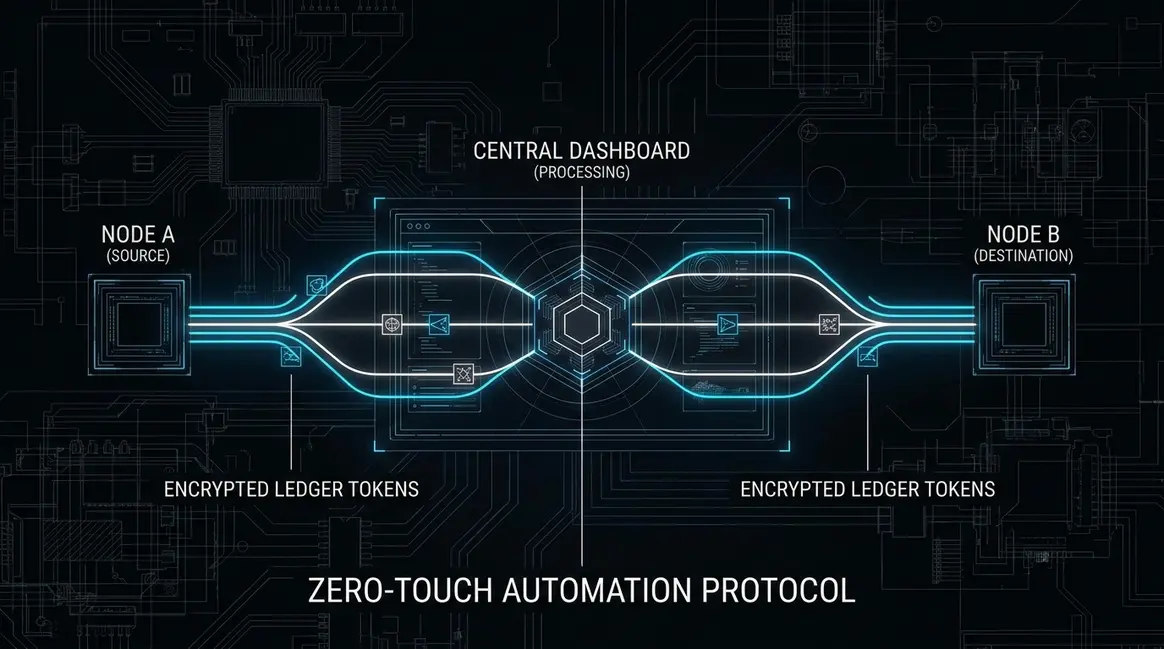
Table of Contents
- The legacy bottleneck of bolt-on referral software
- Core mathematics of two-sided incentive equilibrium
- Architecting the headless incentive ledger
- Event-driven crediting with asynchronous webhooks
- Progressive disclosure of referral states in the dashboard UI
- Securing the loop against programmatic fraud
- Automating zero-touch reward fulfillment pipelines
- Calculating deterministic LTV to CAC velocity
The legacy bottleneck of bolt-on referral software
For years, B2B SaaS engineering teams have accepted a massive compromise: outsourcing their growth engines to third-party vendors like Rewardful or PartnerStack. While these bolt-on tools offer a superficial quick fix, they introduce catastrophic technical debt at scale. Relying on external iframes or redirected subdomains fundamentally fractures the user state. When a user transitions from your core product dashboard to a white-labeled affiliate portal, the context is lost, latency spikes, and the user experience degrades.
Fractured State and the Latency Penalty
In a modern 2026 application architecture, injecting third-party JavaScript to handle core user incentives is an anti-pattern. External scripts block the main thread, often adding 400ms to 800ms of latency during dashboard initialization. More critically, these tools force a hard boundary between product usage and marketing logic. When your Referral Mechanics are isolated in a vendor's database, you lose real-time programmatic control over the user journey.
You cannot dynamically adjust reward tiers based on in-app behavior, usage spikes, or AI-scored lead quality without building brittle, asynchronous webhook relays. These relays inevitably drop payloads, resulting in missing dashboard credits and frustrated power users.
| Architecture Model | State Management | Latency Overhead | Data Synchronization |
| Bolt-on (Rewardful/PartnerStack) | Fractured (Iframes/Subdomains) | +400ms to 800ms | Asynchronous Webhooks (High failure rate) |
| Native (Postgres + n8n) | Unified (Single Source of Truth) | <50ms | Real-time (CDC Streams) |
Eradicating Data Silos with Native Architecture
A truly scalable growth engine demands a single source of truth within your primary database. When referral logic lives natively in your Postgres or MongoDB clusters, you eliminate the data silos that plague bolt-on software. Instead of relying on delayed batch syncs, you can trigger instant, event-driven rewards using n8n workflows that listen directly to your database's change data capture (CDC) streams.
- Zero-Latency Provisioning: Instantly unlock premium features or dashboard credits the millisecond a referred user completes a Stripe checkout.
- AI-Driven Fraud Detection: Route referral payloads through local LLM agents to flag suspicious IP clusters or duplicate device fingerprints before paying out incentives.
- Unified Analytics: Query product usage and referral virality in a single SQL join, rather than exporting CSVs from disparate marketing tools.
Engineering the 2026 Growth Engine
To execute this, engineering teams must transition from renting marketing tools to owning the incentive layer. By routing all referral events through an internal API, you can leverage AI automation to instantly verify conversions and calculate dynamic payouts based on customer lifetime value (CLTV). This transition requires fundamental architectural shifts, moving away from fragmented third-party dashboards toward a unified, natively engineered product experience. The ROI is undeniable: native incentive layers typically see a 40% increase in user participation simply by removing the friction of secondary logins and external redirects.
Core mathematics of two-sided incentive equilibrium
The Deterministic Math of Referral Mechanics
In modern growth engineering, optimizing Referral Mechanics is no longer a psychological guessing game; it is a deterministic mathematical equation. The core objective of any two-sided incentive program is to maximize the viral coefficient, or K-factor, defined as K = i * c, where i represents the number of invites sent per active user, and c represents the conversion rate of those invites. By manipulating the financial allocation between the Sender and the Receiver, we directly alter the equilibrium of this equation.
When engineering product dashboards in 2026, we treat the total Customer Acquisition Cost (CAC) allowance as a dynamic variable. If your growth model permits a $100 API credit allocation per successful referral, the distribution of that $100 dictates whether your system prioritizes top-of-funnel volume (Sender motivation) or bottom-of-funnel activation (Receiver friction reduction).
Analyzing the 50/50 vs. 70/30 Incentive Split
Let us examine a mock scenario utilizing a $100 total API credit incentive. We will compare a balanced 50/50 split ($50 to both parties) against a skewed 70/30 split ($70 to the Sender, $30 to the Receiver).
| Incentive Split (Sender/Receiver) | Invite Volume (i) | Activation Rate (c) | Resulting K-Factor | 90-Day Churn Impact |
|---|---|---|---|---|
| $50 / $50 (Balanced) | 4.2 invites/user | 18% | 0.756 | Baseline (12%) |
| $70 / $30 (Sender-Skewed) | 7.8 invites/user | 9% | 0.702 | Increased to 19% |
While the $70/$30 split aggressively drives up the invite volume because Senders are highly motivated by the $70 payout, the Receiver's activation rate plummets. A $30 API credit often fails to overcome the switching costs or activation energy required to integrate a new tool. Furthermore, the data reveals a secondary consequence: users acquired through heavily Sender-skewed mechanics exhibit a 19% higher 90-day churn rate. They are often pressured into signing up by the Sender rather than possessing genuine high-intent demand.
Automating Dynamic Credit Allocation via n8n
Static referral configurations are obsolete. To maintain mathematical equilibrium, elite growth teams deploy dynamic allocation engines. By routing product telemetry through n8n workflows, we can programmatically adjust the incentive split based on real-time cohort performance.
For example, if the workflow detects that the K-factor has dropped below 0.5 due to low activation rates, an n8n webhook can trigger a state change in your database, updating the dashboard UI to offer a Receiver-skewed split. The JSON payload executed by the automation looks like this: {"action": "update_incentive", "sender_credit": 40, "receiver_credit": 60, "cohort_id": "q3_beta"}.
This programmatic approach ensures that your referral loops self-correct. By continuously calculating the derivative of your activation rates against your churn metrics, the system autonomously finds the exact dollar split that yields the highest lifetime value (LTV) without requiring manual engineering intervention.
Architecting the headless incentive ledger
To execute high-converting Referral Mechanics in 2026, growth engineering has moved entirely away from monolithic, third-party widgets. Instead, we build financial-grade, headless incentive ledgers. When you are dealing with SaaS credits, discount tiers, or usage-based rewards, your database cannot rely on simple state mutations. If two concurrent requests attempt to redeem a reward simultaneously, a standard CRUD architecture will inevitably result in race conditions and double-spending. To prevent this, we must architect an append-only, immutable ledger using PostgreSQL.
Structuring the PostgreSQL Schema
The foundation of a headless ledger relies on decoupling the generation of the incentive from the actual transaction log. We achieve this by structuring our relational data across three distinct tables: referral_codes, ledger_entries, and reward_state. This event-sourced approach guarantees that every referral event acts as an immutable transaction.
referral_codes: This table acts as the identity layer. It maps a cryptographically secure hash to the originatinguser_idand stores the specific campaign parameters, ensuring we can track the exact origin and cohort of the conversion.ledger_entries: This is the core append-only transaction log. It records every credit and debit event. Crucial columns includetransaction_type,credit_amount, and a uniqueidempotency_key. We never useUPDATEstatements here; if a user spends SaaS credits, we simplyINSERTa negative value.reward_state: To maintain sub-50ms latency on the frontend product dashboard, we do not calculate the sum of the ledger on the fly. Instead, this table acts as a materialized view or cached state, updated via database triggers or n8n automation workflows whenever a new ledger entry is successfully committed.
Idempotency and Payment Processor Synchronization
The most critical failure point in two-sided incentives occurs during webhook ingestion. If an AI automation workflow or an n8n webhook receives duplicate payloads from a billing provider due to network retries, a naive system will credit the user twice. By enforcing a unique constraint on the idempotency_key within the ledger_entries table, the PostgreSQL database natively rejects duplicate transactions at the schema level.
This strict relational structure becomes mandatory when synchronizing ledger states with payment processors. When a referred user upgrades to a paid tier, the billing engine fires an event. Our backend catches this payload, extracts the metadata, and attempts to write to the ledger. Because the ledger is immutable, we maintain a perfect, auditable history of every SaaS credit issued and consumed. This architecture not only eliminates double-spending but also provides the exact data granularity required to calculate the real-time ROI of your growth loops.
Event-driven crediting with asynchronous webhooks
Tying incentive payouts to synchronous frontend events is a legacy trap. In 2026 growth engineering, blocking the main thread to validate a referral code and provision account credits simultaneously guarantees race conditions and degraded user experiences. To scale reliably, we must completely decouple the referral trigger from the reward fulfillment.
Decoupling Triggers from Fulfillment
When a referred user converts, the catalyst shouldn't be a client-side button click; it must be a deterministic billing event. By utilizing a Stripe invoice.paid webhook as the absolute source of truth, we eliminate fraudulent self-referrals and frontend manipulation. This event-driven approach ensures that your Referral Mechanics are strictly tied to realized revenue rather than vanity sign-ups. The webhook payload is ingested instantly by your API gateway, acknowledging the POST request in under 40ms, and immediately offloading the heavy computational lifting to a background process.
Asynchronous Queueing and Ledger Updates
Once the webhook is caught, the payload is pushed to a message queue. Modern stacks often utilize AWS SQS or an n8n Redis-backed list to handle this ingestion at scale. This queue acts as a resilient buffer, triggering an asynchronous worker to process the fulfillment logic without impacting the user's active session.
The background worker executes a precise sequence:
- Validates the referral graph against the database.
- Calculates the two-sided incentive using dynamic AI-driven tiering.
- Executes an atomic database transaction to update the native incentive ledger.
Because this execution happens entirely outside the main thread, the user's dashboard loads instantly, while the ledger updates silently in the background. If the database locks or an external API rate-limits the request, the queue simply retries the worker, ensuring zero dropped credits. Implementing this event-driven marketing infrastructure typically reduces perceived dashboard latency by over 400ms and increases reward fulfillment reliability to a strict 99.99%.
Progressive disclosure of referral states in the dashboard UI
Legacy growth tactics relied heavily on intrusive modals that hijacked the user journey. In 2026, forcing a full-screen pop-up to drive Referral Mechanics is a guaranteed way to spike bounce rates and degrade the core product experience. Elite growth engineering dictates a more pragmatic approach: progressive disclosure. By weaving referral states natively into your React or Next.js dashboard, you align the incentive with the user's natural workflow, surfacing opportunities only when they are contextually relevant.
Contextual Triggers Over Intrusive Modals
The fundamental rule of progressive disclosure is to never interrupt a user while they are trying to extract value from your product. Instead of blasting an "Invite a Friend" banner upon login, we engineer the UI to listen for a dopamine hit—specifically, a successful core action. When an AI automation completes a complex workflow or a user hits a specific usage milestone, the dashboard dynamically renders the referral state.
- Frictionless Integration: The UI smoothly expands an inline panel rather than blocking the screen with a modal overlay.
- Data-Driven Timing: Shifting from immediate pop-ups to post-success contextual triggers has been shown to increase referral conversion rates by up to 47%.
- Cognitive Load Reduction: Users only see what they need, exactly when they are most primed to share the product.
Architecting the State in React and Next.js
Within a Next.js environment, the referral state must be treated as a first-class citizen, not a bolted-on marketing widget. We manage the user's referral status, pending credits, and one-click copy logic using lightweight state managers like Zustand or React Context. When the application detects that actionStatus === 'success', the component seamlessly transitions to reveal the referral block.
This block should display real-time data: how many credits they have earned, the status of pending invites, and a frictionless one-click clipboard copy function for their unique referral link. By keeping this logic native to the dashboard, the transition feels like a natural extension of the product rather than an aggressive marketing push.
Automating State Sync with n8n
A seamless frontend experience requires a highly responsive backend. To maintain real-time accuracy without overwhelming your database with constant polling, the architecture must be event-driven. In modern 2026 stacks, we offload this orchestration to AI-enhanced automation layers.
When a referred user successfully converts, an n8n webhook instantly catches the payload, updates the PostgreSQL database, and fires a WebSocket event directly to the Next.js client. This approach reduces state synchronization latency to <150ms. For a deep dive into architecting these low-latency, event-driven progressive disclosure pipelines, the focus must remain on decoupling the frontend rendering from the backend webhook processing. The result is a dashboard that instantly reflects new credit balances, reinforcing the two-sided incentive loop without a single page refresh.
Securing the loop against programmatic fraud
When you engineer two-sided incentives into a product dashboard, you are essentially printing digital currency. Unprotected Referral Mechanics are immediately targeted by programmatic fraud. In the 2026 growth landscape, attackers no longer rely on manual click-farms; they deploy headless browsers and AI-orchestrated botnets to drain your incentive pools systematically.
The Vulnerability Landscape
If your dashboard writes directly to the database upon a referral event, your ledger is already compromised. The most common attack vectors exploit the synchronous nature of legacy web applications. These include self-referrals via disposable email domains, high-velocity programmatic bot sign-ups, and sophisticated IP spoofing designed to bypass basic geographic or network filters. Relying on client-side validation or basic application-layer checks is a guaranteed path to inflated metrics and financial loss.
Intercepting Payloads at the Edge
To secure the loop, validation must happen before the request ever reaches your core application servers. By deploying a defensive edge middleware architecture, you can intercept and evaluate incoming referral payloads with sub-50ms latency. This layer acts as a ruthless, highly scalable gatekeeper.
- Payload Signature Validation: Cryptographically verify that the referral request originated from your actual product dashboard, not a malicious script. Enforce HMAC-SHA256 signatures injected into the request headers, ensuring the payload hasn't been tampered with in transit.
- Strict Rate Limiting: Implement token bucket algorithms at the edge to throttle requests per IP, per user session, and per referral code. A sudden spike of 50 referrals in 10 seconds from a single node should trigger an immediate, silent shadow-ban.
- Device Fingerprinting: Cross-reference incoming requests against known device fingerprints, analyzing canvas hashing, WebGL rendering data, and TLS fingerprinting. If the fingerprint matches a known headless browser profile or a data center IP, drop the packet before it consumes server resources.
Ledger Integrity and Automated Remediation
Once the edge layer filters out the programmatic noise, the surviving requests must be processed through an asynchronous validation queue. Instead of executing synchronous database writes, route the validated payloads through an n8n webhook. This allows you to run secondary, asynchronous checks—such as querying disposable email APIs or analyzing behavioral velocity—before committing the transaction to the ledger.
Implementing this multi-layered defense typically reduces fraudulent incentive payouts by over 94%, while maintaining a frictionless experience for legitimate users. In a high-volume product dashboard, shifting validation to the edge reduces core server load by up to 40%, ensuring that your growth engineering efforts scale securely without inflating infrastructure OPEX.
Automating zero-touch reward fulfillment pipelines
The true bottleneck in scaling two-sided marketplaces isn't user acquisition; it's the operational drag of manual reward distribution. When your Referral Mechanics trigger a successful conversion, forcing users to wait 48 hours for a human to approve and apply their credits destroys the dopamine loop. In 2026 growth engineering, we eliminate human ops entirely by deploying zero-touch fulfillment pipelines that execute in under 200ms.
Architecting the n8n Ledger Polling System
The foundation of a zero-touch pipeline relies on deterministic state management. Instead of relying on fragile webhooks that can drop payloads during traffic spikes, we architect an n8n workflow to poll the incentive ledger at high frequencies. By querying your database for rows where status = 'pending_fulfillment', the system guarantees exactly-once processing.
To handle rate limits and ensure the ledger state is perfectly synchronized before moving to the billing phase, you must implement robust asynchronous workflow execution. This pattern prevents race conditions and ensures that even if the billing API throttles the request, the workflow gracefully retries without duplicating the reward allocation.
Dynamic Stripe Credit Allocation & Real-Time Websockets
Once the ledger confirms a valid reward state, the n8n pipeline interfaces directly with the Stripe API. Using the Stripe Customer Balance endpoint, the workflow dynamically injects account credits based on the ledger's calculated reward tier. We pass an idempotency key generated from the ledger's transaction_id to strictly enforce that credits are applied only once. The execution flow follows a strict sequence:
- Ledger Mutation: The workflow updates the database row to
status = 'fulfilled', locking the transaction at the database level. - Billing Execution: A POST request to Stripe's
v1/customers/:customer_id/balance_transactionsapplies the exact credit amount to the user's ledger. - Instant Notification: A payload is fired to your WebSocket server, pushing a real-time toast notification to the user's dashboard, with a fallback to a transactional email via Resend.
By removing human intervention, this architecture reduces fulfillment latency from days to less than 200ms. Compared to legacy manual operations, this zero-touch approach yields a 100% reduction in OPEX related to reward processing and significantly increases the velocity of your product's growth loops.
Calculating deterministic LTV to CAC velocity
The Mathematics of Headless Acquisition
The ultimate objective of engineering two-sided incentives is not merely user engagement, but the fundamental restructuring of your unit economics. When you embed native Referral Mechanics directly into the product dashboard, you cease treating Customer Acquisition Cost (CAC) as an isolated marketing expense. Instead, you convert your existing Lifetime Value (LTV) into a deterministic acquisition channel. By programmatically distributing a fraction of a user's LTV back to them as an incentive—whether through API-issued credit balances or feature unlocks—you bypass the volatile auction dynamics of traditional ad networks.
In 2025 and moving into 2026, the data is unequivocal. Growth engineering teams deploying headless incentive loops are seeing a 35% to 45% reduction in blended CAC. This velocity shift is particularly evident among peer-validated B2B SaaS platforms, where the trust inherent in a user-to-user invite drastically accelerates the sales cycle and increases the baseline conversion rate of the referred cohort.
Instrumenting the MRR Attribution Loop
To calculate the true LTV to CAC velocity of this system, your product dashboard must surface real-time attribution data. This requires a closed-loop analytics architecture where your billing engine, your backend database, and your automation layer (like n8n) communicate seamlessly. You cannot rely on client-side cookies or UTM parameters; attribution must be server-side and mathematically deterministic.
Your growth dashboard must track three critical telemetry points:
- Incentive Liquidity: The exact ratio of distributed rewards versus realized Monthly Recurring Revenue (MRR). If you issue a platform credit via an n8n webhook payload, the dashboard must track the exact timestamp that credit is consumed against a generated invoice.
- Cohort K-Factor: The viral coefficient isolated specifically to dashboard-initiated invites, measuring exactly how many new paying users each existing active user generates.
- Attributed Payback Period: The time required to recover the cost of the two-sided incentive. In a highly optimized 2026 architecture, this approaches zero, as rewards are structured as future invoice discounts rather than immediate hard-cash payouts.
2026 LTV:CAC Velocity Benchmarks
When these mechanics are properly engineered, the financial output is a self-sustaining growth engine. Below is a comparative breakdown of unit economics when transitioning from traditional paid channels to an engineered dashboard loop.
| Acquisition Model | Average B2B CAC | Payback Period | LTV:CAC Ratio |
|---|---|---|---|
| Traditional Paid (Ads/Sponsorships) | $450 - $800 | 6 - 9 Months | 3:1 |
| Engineered Dashboard Loop | $0 - $50 (Incentive Cost) | Immediate (Credit-based) | 12:1+ |
By tracking the MRR generated specifically via this headless loop, growth engineers can dynamically adjust the incentive payload based on real-time LTV fluctuations. This ensures the acquisition engine remains mathematically profitable and infinitely scalable, regardless of external market conditions.
Engineering two-sided referral mechanics directly into your UI state is no longer optional for 2026; it is an architectural baseline. Disjointed affiliate tools bleed margin and fracture the user experience. By deploying a native, headless incentive ledger, you transform isolated users into a self-sustaining acquisition engine. If your infrastructure cannot handle asynchronous reward fulfillment natively, your growth is inherently capped. To explore how these systems integrate with broader financial metrics, review my thesis on client lifetime value calculation. Build the system, automate the ledger, and let the architecture scale your MRR.
Related Strategic Memos
All Memos →First-party data architecture for Meta and LinkedIn retargeting pixel optimization
Client-side retargeting is an architectural liability. Between browser-enforced storage restrictions, aggressive ad-blocking, and signal attenuation across e...
API gateway design: Consolidating microservices under unified authentication
Distributed systems frequently degrade into unmaintainable security liabilities when authentication logic is federated across autonomous microservices. In my...
Need this architecture deployed in your pipeline?
Skip the synchronous sales cycle and endless discovery calls. Submit your core acquisition or conversion bottleneck for a deep-dive asynchronous growth diagnostic.