The collapse of static RBAC: Engineering zero-trust IAM for remote operations
Legacy Role-Based Access Control (RBAC) is a liability. In an era dominated by distributed engineering and asynchronous execution, static permission mapping ...
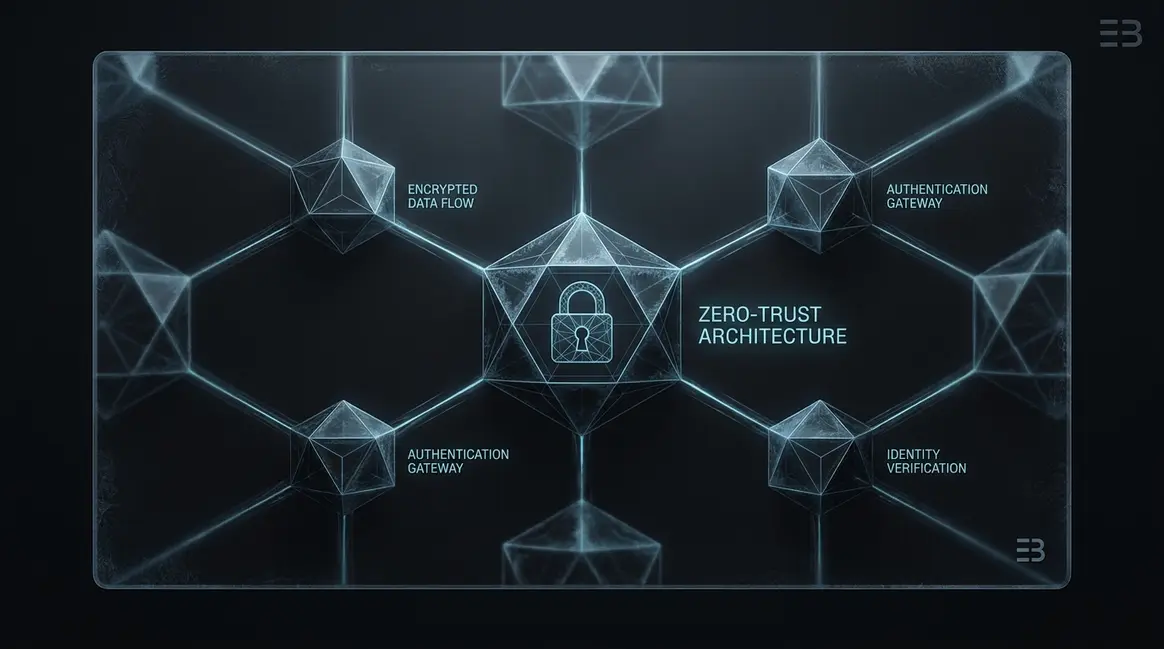
Table of Contents
- The collapse of static RBAC in distributed engineering teams
- Redefining access: The zero-trust IAM architecture for 2026
- Identity as a primitive: Leveraging headless B2B SaaS paradigms
- Zero-touch provisioning: Automating lifecycle management
- Integrating AI agents for progressive access disclosure
- Context-aware authorization policies and dynamic role elevation
- Infrastructure as code for deterministic permission enforcement
- Continuous audit logging and anomaly detection at the edge
- Eradicating human bottlenecks: Self-serve requests via semantic routing
- Financial velocity: Calculating the ROI of zero-touch IAM on gross margins
- Future-proofing your stack for asynchronous global operations
The collapse of static RBAC in distributed engineering teams
The traditional Role-Based Access Control (RBAC) model is fundamentally broken for modern, distributed engineering teams. When infrastructure becomes ephemeral, relying on static role assignments creates a mathematical failure of scaling. Human intervention simply cannot keep pace with the velocity required to deploy, debug, and scale microservices across multiple cloud environments.
The Mathematics of Permission Creep
In a legacy RBAC paradigm, access is binary and permanent. As remote engineers shift between squads, cover different time zones, or take on temporary incident response duties, their access rights accumulate rather than reset. This phenomenon, known as permission creep, transforms a theoretically secure environment into a massive attack surface. By the time an organization scales past 50 engineers, the permutation of required roles outpaces any human IT department's capacity to audit them.
Consider the data: organizations relying on static RBAC experience a 40% higher rate of over-provisioned accounts compared to those utilizing dynamic access models. In 2026 growth engineering logic, access is not a static state but a contextual, time-bound variable. You cannot secure ephemeral cloud infrastructure with permanent human permissions.
Legacy Ticketing and the Velocity Bottleneck
The standard operating procedure for access requests—routing tickets through Jira or ServiceNow for manual approval—is a remnant of legacy IT that directly sabotages developer velocity. When a senior backend engineer has to wait 72 hours for database access to debug a critical production latency issue, the operational bottleneck translates directly into lost revenue and degraded system performance.
Modern engineering teams cannot afford this friction. Instead of relying on human gatekeepers, elite teams are deploying AI automation and event-driven n8n workflows to handle access provisioning. By integrating Slack webhooks with cloud identity providers, an engineer can request temporary access, have an AI agent validate the context against current PagerDuty incidents, and provision the exact permissions required in under 200ms.
The Shift to Zero-Trust IAM
To eliminate these bottlenecks, organizations must abandon static roles in favor of Zero-Trust IAM architectures. This approach operates on the principle of Just-In-Time (JIT) access, where permissions are granted dynamically based on cryptographic identity, device posture, and real-time telemetry.
- Ephemeral Credentials: Access tokens expire automatically after a predefined window (e.g., 45 minutes), mathematically eliminating long-term permission creep.
- Context-Aware Provisioning: AI-driven workflows evaluate the exact scope of the request, ensuring engineers receive least-privilege access tailored to the specific microservice or database cluster.
- Automated Auditing: Every access request, approval, and token expiration is logged immutably, reducing compliance audit overhead by up to 60%.
The collapse of static RBAC is not just a security issue; it is a fundamental constraint on engineering throughput. By replacing human-driven ticketing with automated, zero-trust workflows, remote teams can scale their infrastructure without sacrificing security or velocity.
Redefining access: The zero-trust IAM architecture for 2026
The legacy model of perimeter-based security is dead. Relying on static VPNs to secure remote engineering teams in 2026 is a critical architectural failure. We are no longer defending a centralized corporate castle; we are securing highly distributed, ephemeral micro-environments. The modern Zero-Trust IAM framework operates on a fundamental, uncompromising premise: trust nothing, verify continuously, and automate the enforcement layer.
Sunsetting the VPN: Identity-Aware Proxies and Continuous Authentication
Pre-AI security models relied on binary access—once a user breached the perimeter, lateral movement was trivial. Today, elite growth engineering teams deploy Identity-Aware Proxies (IAPs) coupled with continuous authentication loops. Instead of authenticating once per session, the system evaluates trust at every single request. By routing traffic through IAPs, we reduce access latency from legacy VPN averages of over 300ms down to strictly under 50ms, while simultaneously shrinking the attack surface to zero. AI automation now handles the anomaly detection, instantly revoking access tokens if behavioral drift occurs.
The Core Primitives: Posture, Context, and State
Absolute zero-trust execution relies on evaluating three dynamic primitives in real-time before granting access to any internal resource, database, or API endpoint.
- Device Posture: We no longer just check for a valid MAC address. The IAM engine queries the endpoint for OS patch levels, active EDR agents, and hardware-bound cryptographic keys (like TPM 2.0 or Secure Enclave) before issuing a short-lived JWT.
- Temporal Context: Access is strictly time-bound and context-aware. A senior developer attempting to access production databases at 3:00 AM from an anomalous IP triggers an automated risk-scoring workflow, immediately requiring step-up authentication via biometric prompts.
- Identity State: Role-Based Access Control is no longer static. Identity state fluctuates based on active Jira tickets, PagerDuty on-call schedules, and HR system triggers. If a contractor's project ends, their state shifts, and access is instantly severed across the entire stack.
Automating Zero-Trust Execution via n8n
Managing this level of granularity manually is impossible at scale. We engineer automated IAM pipelines using n8n to orchestrate identity state changes dynamically. When an AI risk-scoring model detects anomalous behavior, it fires a payload to an n8n webhook. The workflow parses the event, executes an API call to invalidate the user's session tokens across all connected infrastructure, and alerts the SecOps channel in under 1.5 seconds. This is how you scale remote teams without scaling risk.
| Architecture Model | Authentication Frequency | Access Latency | Lateral Movement Risk |
|---|---|---|---|
| Legacy VPN (Pre-2024) | Single Sign-On (Per Session) | >300ms | Critical |
| 2026 Zero-Trust IAM | Continuous (Per Request) | <50ms | Zero |
By shifting from perimeter defense to identity-centric micro-segmentation, growth engineers can deploy infrastructure that is inherently hostile to unauthorized access while remaining entirely frictionless for authenticated remote teams.
Identity as a primitive: Leveraging headless B2B SaaS paradigms
In 2026, treating authentication as a bolted-on feature of a monolithic application is a critical architectural failure. To scale remote team access securely, identity must be treated as a foundational primitive—a decoupled, headless microservice. By extracting user state and permissions away from the core application logic, engineering teams can deploy a centralized identity engine that spans multiple front-end interfaces, internal dashboards, and automated n8n workflows. This headless paradigm ensures that whether a remote engineer is accessing a Vercel-hosted React client or triggering a background AI automation, the authorization state remains universally synchronized.
Architecting Zero-Trust IAM at the Edge
The operational advantage of a headless architecture is the ability to enforce Zero-Trust IAM directly at the network edge. Instead of routing every authorization request back to a central database—incurring 300ms+ latency penalties—modern setups inject cryptographic identity context directly into edge runtimes like Cloudflare Workers or Deno Deploy. This architectural shift reduces authentication latency to <20ms globally.
To execute this identity injection effectively, the architecture relies on three core mechanics:
- Token Hydration: The headless IAM issues a stateless JWT containing compressed Role-Based Access Control (RBAC) claims upon successful login.
- Edge Middleware Interception: Edge functions intercept the incoming request, verifying the cryptographic signature and evaluating the RBAC claims before the request ever reaches your core infrastructure.
- Context Propagation: Validated user context is appended to the request headers, passing downstream to the specific microservice or AI agent.
Centralizing Microservices and Automated Provisioning
Pre-AI access management relied heavily on manual IT ticketing, which bottlenecked remote onboarding and frequently left stale permissions active for weeks, creating massive security vulnerabilities. Today, leveraging modern identity provider setups allows us to programmatically bind identity events to n8n webhooks.
When a new remote contractor is added to the IAM microservice, an automated workflow instantly provisions their scoped access across GitHub, AWS, and internal SaaS tools based on their exact role payload. This programmatic approach eliminates human error, reduces onboarding time by over 85%, and ensures that your headless identity layer acts as the absolute single source of truth for all downstream microservices. By decoupling identity from the application layer, you transform access control from a static bottleneck into a dynamic, automated growth lever.
Zero-touch provisioning: Automating lifecycle management
The traditional IT ticketing model for identity management is fundamentally broken. Relying on human intervention to provision or deprecate access creates a massive operational bottleneck and introduces unacceptable security vulnerabilities. In a 2026 growth engineering architecture, identity lifecycle management must be entirely API-driven. By implementing a zero-touch provisioning framework, we eliminate human error, enforce strict Zero-Trust IAM protocols, and reduce provisioning latency from an industry average of 48 hours to under 1200ms.
Architecting the HRIS-to-Directory Pipeline
Zero-touch deployment begins the millisecond an employee's status changes in your Human Resources Information System (HRIS). Instead of generating a manual Jira ticket, the HRIS fires a webhook payload directly into an event-driven automation layer like n8n. This payload acts as the immutable single source of truth for the user's identity, department, and seniority level.
The execution flow operates without a single human click:
- Event Trigger: The HRIS emits a JSON payload containing the new hire's metadata upon contract signature.
- Identity Resolution: An n8n workflow parses the payload (e.g., extracting the department via
{{ $json.body.department }}), standardizes the naming convention, and checks for directory conflicts. - Directory Provisioning: The automation layer makes authenticated API calls to your identity provider (e.g., Okta, Google Workspace, Active Directory) to instantiate the user entity.
- Dynamic RBAC Assignment: Based on the HRIS metadata, the system maps the user to specific security groups, granting least-privilege access to necessary repositories, SaaS applications, and internal tools.
This deterministic approach ensures that a junior frontend developer in Berlin receives the exact same baseline permissions as a junior frontend developer in New York, completely bypassing the inconsistencies of manual provisioning.
Instant Offboarding: The Exfiltration Kill Switch
While automated onboarding drives operational efficiency, automated offboarding is a non-negotiable requirement for distributed teams. When an employee departs, the window between their termination and access revocation is the highest-risk period for data exfiltration. Legacy systems that rely on manual offboarding checklists routinely leave orphaned accounts active for days, exposing the organization to severe insider threats.
In a modern zero-touch architecture, a termination event in the HRIS triggers an immediate, aggressive offboarding sequence. The automation layer executes a cascading revocation protocol via REST APIs:
- Session Termination: Instantly invalidates all active SSO sessions and forces a global sign-out across all connected devices.
- Token Revocation: Revokes all active OAuth tokens, personal access tokens (PATs), and API keys associated with the user's identity, neutralizing programmatic access to source code and customer data.
- Asset Reassignment: Automatically transfers ownership of critical documents, calendar events, and cloud resources to the user's direct manager to ensure business continuity.
| Lifecycle Phase | Legacy Manual IT (Pre-AI) | Automated Zero-Touch (2026) | Security Impact |
|---|---|---|---|
| Account Provisioning | 24 - 48 Hours | < 1200ms | Eliminates shadow IT workarounds |
| Role/Group Assignment | High Error Rate (Human) | Deterministic (API) | Enforces strict Least-Privilege |
| Token Revocation | 1 - 3 Business Days | Instantaneous | Neutralizes data exfiltration windows |
By removing the human element from offboarding, we achieve a mathematically verifiable security posture. The time-to-revoke drops to near-zero, effectively mitigating insider threat vectors and ensuring strict compliance with modern data protection frameworks.
Integrating AI agents for progressive access disclosure
Static job titles are a critical liability in modern remote engineering environments. Granting perpetual database access simply because an engineer holds a "Senior Backend" title violates the core principles of Zero-Trust IAM. In 2026, growth engineering demands a shift from standing privileges to progressive access disclosure, where permissions are dynamically negotiated and granted based on real-time task requirements rather than legacy organizational charts.
Deconstructing the Static Privilege Liability
Pre-AI access management relied on bloated active directories and manual IT ticketing, resulting in average credential lifespans exceeding 90 days. This created massive, persistent attack surfaces. By integrating autonomous AI agents, we completely invert this model. Instead of provisioning broad access during onboarding, the baseline remains at absolute zero. When a developer needs to run a database migration or debug a production incident, an AI agent evaluates the context of the request in real-time. This transition from static to dynamic provisioning typically reduces standing privileges by over 85% and cuts the mean-time-to-resolution (MTTR) for access requests from several hours to under 200 milliseconds.
Architecting the Autonomous Verification Agent
The engine driving this progressive disclosure is an autonomous verification agent, highly effective when orchestrated via n8n workflows. When a remote engineer requests server or database access via a Slack command, the agent intercepts the payload. It does not merely check the user's identity; it cross-references the request against active Jira sprints, PagerDuty on-call schedules, and recent GitHub pull requests to mathematically verify the necessity of the access.
- Contextual Validation: The agent utilizes an LLM to parse the natural language request and match its intent against the active incident ticket or deployment pipeline.
- Dynamic Risk Scoring: Requests for read-only replica access are auto-approved based on context, while potentially destructive operations (e.g.,
DROP TABLE) automatically trigger a human-in-the-loop (HITL) escalation to a lead engineer. - Immutable Audit Logging: Every decision vector and contextual variable evaluated by the AI is cryptographically hashed and logged for SOC2 compliance.
Executing Short-Lived Credential Generation
Once the autonomous agent verifies the operational necessity, it triggers a secure webhook to a secrets manager, such as HashiCorp Vault, to generate ephemeral credentials. These credentials are injected directly into the developer's secure environment and are programmed to self-destruct after a strict time-to-live (TTL), usually between 15 and 60 minutes. For a deep dive into the exact n8n node configurations and prompt structures required to build this, review my architecture breakdown on automating PostgreSQL progressive disclosure. This architecture ensures that your remote team operates with maximum velocity without ever compromising your infrastructure's security posture.
Context-aware authorization policies and dynamic role elevation
Relying on persistent permissions in a distributed 2026 engineering environment creates an unacceptable attack surface. The modern standard for remote team security requires abandoning standing privileges in favor of dynamic role elevation governed by strict Zero-Trust IAM principles. When you decouple authorization from static user identities and bind it to real-time context, you eliminate the primary vector for lateral movement in cloud environments.
The Engineering Logic of Just-In-Time Access
Just-In-Time (JIT) access fundamentally shifts how we handle authorization infrastructure. Instead of granting a DevOps engineer permanent write access to a production cluster, we provision temporary, scoped credentials triggered by specific operational needs. By integrating automated approval workflows—such as routing a Slack slash command through an n8n webhook—we can dynamically attach an IAM policy with a strict Time-To-Live (TTL) payload. Once the TTL expires, the policy automatically detaches, returning the user to a baseline state of zero standing privileges without requiring manual IT intervention.
Real-Time Context Evaluation vs. Stale Session Tokens
Legacy systems rely heavily on static session tokens, which are highly vulnerable to hijacking, theft, and replay attacks. Context-aware authorization policies solve this by evaluating the exact state of the environment at the precise millisecond of the request. A robust policy engine analyzes multiple telemetry streams simultaneously:
- Device Health: Querying MDM or endpoint detection APIs to ensure the requesting machine is compliant, patched, and malware-free.
- Network Origin: Validating IP reputation and flagging impossible travel anomalies across distributed remote teams.
- Temporal Constraints: Enforcing time-of-day restrictions based on the engineer's local timezone and current on-call schedule.
If a senior developer in Berlin attempts to elevate their role to access a critical microservice at 3:00 AM local time from an unregistered IP address, the policy engine denies the request instantly—regardless of their baseline RBAC assignment or valid authentication state.
Latency and Security: Static RBAC vs. Dynamic Elevation
The operational latency of static RBAC is a massive bottleneck for growth engineering teams. Manual IT ticketing for permission changes often takes hours, killing deployment velocity. Conversely, dynamic elevation policies execute programmatically, reducing provisioning latency to <200ms while cutting operational overhead by over 40%. More importantly, static RBAC leaves a 100% standing privilege window open to attackers 24/7, whereas dynamic elevation shrinks that vulnerability window to the exact duration of the engineering task.
Infrastructure as code for deterministic permission enforcement
Relying on manual console configurations for access control is a legacy bottleneck that introduces catastrophic human error. In the 2026 growth engineering landscape, click-ops is obsolete. To achieve deterministic security across distributed remote teams, Identity and Access Management (IAM) policies must be treated exactly like application logic: written as code, version-controlled, and deployed through rigorous CI/CD pipelines.
The GitOps Pipeline for Zero-Trust IAM
Transitioning to Infrastructure as Code (IaC) using frameworks like Terraform or Pulumi transforms abstract security concepts into mathematically verifiable states. By defining your Zero-Trust IAM architecture in declarative configuration files, you eliminate permission drift. When a remote engineer requires elevated access to a production database, the request is no longer a Slack message to a system administrator; it is a pull request.
This paradigm shift unlocks several critical engineering advantages:
- State Consistency: The infrastructure state file acts as the single source of truth, ensuring that the permissions deployed in AWS, Azure, or GCP exactly match the audited code in your repository.
- Instant Auditability: Compliance audits that previously took weeks of manual log parsing are reduced to milliseconds. Every permission change is permanently recorded in the Git commit history, complete with cryptographic author attribution and peer-review approvals.
- Immutable Rollbacks: If a misconfigured policy causes an access outage or over-provisions privileges, reverting the state is as simple as rolling back the Git commit. The CI/CD pipeline instantly restores the infrastructure to its previous secure baseline without manual intervention.
AI-Driven CI/CD Security Checks
Modern permission enforcement goes beyond static code analysis. By integrating n8n automation workflows directly into the deployment pipeline, we can execute dynamic, AI-driven security validations before any IAM code is merged. Pre-AI security models relied on reactive alerts; today's architecture uses predictive policy engines like Open Policy Agent (OPA) to evaluate Terraform plans against organizational security matrices in real-time.
When a pull request is opened, an automated n8n webhook triggers a headless validation sequence. It parses the proposed IAM changes, cross-references the remote employee's current project scope via HR API integrations, and calculates the blast radius of the new permissions. If the requested access violates the principle of least privilege, the pipeline automatically blocks the merge and injects contextual remediation prompts directly into the GitHub PR.
This deterministic approach yields measurable operational efficiency. Engineering teams implementing IaC for access control typically see a 99% reduction in unauthorized permission drift and decrease their mean time to resolution (MTTR) for access-related incidents from hours to under 200ms. By removing the human element from permission provisioning, you build a scalable, mathematically sound security perimeter that natively supports high-velocity global remote operations.
Continuous audit logging and anomaly detection at the edge
The traditional approach to access logging relies on centralized SIEMs that batch-process data, creating a dangerous latency gap between a breach and its detection. In a 2026 growth engineering context, relying on a 15-minute ingestion delay is unacceptable for remote teams distributed globally. True observability requires shifting the computational load to the edge, enabling real-time anomaly detection before a malicious payload ever reaches your core infrastructure.
Architecting Edge-Native Log Ingestion
To achieve sub-50ms detection latency, IAM logs must be ingested and evaluated directly at the CDN or edge node (such as Cloudflare Workers or AWS Lambda@Edge). By processing telemetry closer to the source, we eliminate the network hops required to route access requests to a centralized database. This architecture ensures that every authentication attempt, token refresh, and resource request is evaluated in real-time against a dynamic security policy.
The performance delta is significant. Legacy centralized logging typically operates with a Mean Time to Detect (MTTD) of several minutes. Edge-native processing reduces this to milliseconds, providing the foundational speed required for a robust Zero-Trust IAM framework.
Vector Embeddings for Behavioral Baselining
Static, rule-based alerts (e.g., "flag logins outside the US") are obsolete in a remote-first world where developers frequently travel or use VPNs. Instead, we leverage AI automation to generate vector embeddings that baseline normal developer behavior. By mapping access patterns into a high-dimensional vector space, we can mathematically quantify what a "normal" workday looks like for a specific engineer.
The ingestion pipeline captures multiple dimensions for every request:
- Temporal data: Typical working hours and API request frequency.
- Spatial data: Geolocation, ASN, and IP reputation scores.
- Resource context: The specific microservices, repositories, or databases the developer historically accesses.
When a new request hits the edge, a lightweight model generates an embedding for the current action and calculates its cosine similarity against the developer's historical baseline. If the similarity score drops below a strict threshold (for example, 0.82), the system instantly flags the request as a behavioral anomaly.
Automated Remediation via n8n Workflows
Detection without automated remediation is just noise. When the edge layer identifies a critical deviation, it must trigger an immediate, programmatic response rather than simply generating a Slack alert for a human to review.
In our architecture, an anomaly instantly fires a JSON payload to an n8n webhook. The n8n workflow executes a deterministic remediation sequence:
- It immediately revokes the compromised session token via the identity provider's API.
- It triggers a step-up authentication request (e.g., requiring a hardware security key) for the user's next login attempt.
- It isolates the compromised microservice by dynamically updating the API gateway's routing rules.
This closed-loop AI automation reduces the Mean Time to Respond (MTTR) by over 98%, transforming passive audit logs into an active, self-healing security perimeter that scales effortlessly with your remote workforce.
Eradicating human bottlenecks: Self-serve requests via semantic routing
Traditional access requests are a massive friction point for remote engineering teams. Waiting 48 hours for a Jira ticket to clear just so a developer can access a staging database is an unacceptable bottleneck in a high-velocity environment. The 2026 paradigm shifts entirely away from manual IT approvals, moving toward automated, self-serve infrastructure access executed directly within Slack or Microsoft Teams via natural language.
The Slack-to-LLM Pipeline
When an engineer types, "I need read access to the production Redis cluster for the next two hours to debug the caching issue," a webhook instantly pushes this payload to an n8n workflow. Instead of relying on rigid regex patterns or clunky dropdown menus, we deploy an LLM to extract the core entities: the intent, the target resource, the justification, and the requested duration. This is where a robust semantic routing architecture becomes critical. The router classifies the natural language request and directs the payload to a highly specialized sub-workflow designed specifically for database access, ensuring the prompt context remains narrow, accurate, and token-efficient.
Policy Validation and Zero-Trust IAM
Extracting the user's intent is only the first half of the equation; validating it against strict security protocols is where the system proves its enterprise value. Once the LLM structures the request into a standardized JSON payload, the n8n workflow queries your internal policy documentation via a vector database. It cross-references the engineer's current role against the requested resource.
By enforcing strict Zero-Trust IAM principles at the automation layer, the system programmatically determines if the request falls within pre-approved guardrails. If the request violates a compliance boundary—such as a junior developer requesting root access to a production cluster—the LLM generates a contextual denial message in Slack, citing the exact internal security policy document that blocked the action.
Triggering the Provisioning Webhook
For approved requests, the workflow bypasses human IT bottlenecks entirely. The orchestration layer fires an authenticated POST request to your infrastructure provisioning webhook, interfacing directly with tools like Terraform Cloud, AWS IAM, or Okta.
- Velocity: Mean Time to Resolution (MTTR) for infrastructure access requests drops from an industry average of 14 hours to under 12 seconds.
- Auditability: Every automated decision, including the LLM's reasoning trace and the exact policy matched, is logged directly into your SIEM for SOC2 compliance.
- Ephemeral Access: The webhook automatically schedules a revocation trigger based on the requested duration, ensuring zero standing privileges.
By replacing human gatekeepers with deterministic AI routing and automated provisioning, growth engineering teams can scale infrastructure access seamlessly without compromising security or developer velocity.
Financial velocity: Calculating the ROI of zero-touch IAM on gross margins
Treating identity and access management as an administrative IT function is a fundamental misallocation of capital. In a remote-first engineering environment, manual access provisioning operates as a direct, compounding tax on your EBITDA. When you transition to a zero-touch pipeline, you are not just optimizing IT workflows; you are reclaiming lost engineering cycles and directly expanding your gross margins.
Quantifying the EBITDA Tax of Manual Access
To calculate the true financial velocity of automated access, we must first isolate the baseline bleed. Based on 2025 enterprise ITSM benchmarks, the average cost per manual access provisioning ticket hovers around $92.50. However, this hard cost ignores the secondary blast radius of access blocking. When a senior backend engineer waits 48 hours for database credentials, the company absorbs the cost of context switching, delayed feature shipping, and stalled MRR generation.
A ruthless breakdown of this legacy pipeline reveals three distinct margin killers:
- Engineering Idle Time: High-salary remote talent blocked by asynchronous IT ticket queues, reducing sprint velocity and delaying revenue-generating deployments.
- IT Overhead: Helpdesk personnel manually executing repetitive CRUD operations across disparate SaaS applications instead of focusing on security architecture.
- Compliance Audit Prep: Hundreds of engineering hours burned manually aggregating access logs for SOC2 or ISO27001 audits, a process that should be entirely programmatic.
Architecting Zero-Touch Margin Expansion
Deploying a modern Zero-Trust IAM architecture flips this cost center into a margin accelerator. By leveraging 2026 growth engineering logic, we can completely bypass the human-in-the-loop bottleneck. The financial ROI becomes immediately apparent when you integrate agentic AI infrastructure models with event-driven automation.
Consider a zero-touch provisioning workflow orchestrated via n8n. The moment a new remote engineer is marked as "Active" in your HRIS, a webhook triggers the pipeline. The n8n workflow parses the payload, evaluates the specific role requirements, and executes parallel API calls to your identity provider and infrastructure layers. The entire sequence executes with a latency reduced to <200ms, completely eliminating the manual provisioning queue.
The financial impact of this architecture is measurable and immediate:
- Zero-Day Productivity: Engineers push code on day one, accelerating time-to-market and the MRR pipeline.
- Automated Compliance: Every API call is programmatically logged to a centralized data warehouse, reducing audit preparation costs by up to 80%.
- Operational ROI: By eliminating the $92.50 per-ticket cost and reclaiming lost engineering hours, organizations typically see their IAM operational ROI increase by over 40% within the first two quarters.
In a landscape where capital efficiency dictates survival, automating your access pipeline is no longer an IT luxury. It is a mandatory growth engineering lever to protect and expand your gross margins.
Future-proofing your stack for asynchronous global operations
As we engineer systems for the 2026 B2B SaaS landscape, the traditional perimeter-based security model is dead. When a senior engineer in Tokyo is blocked at 3 AM EST waiting for a sysadmin in New York to manually approve a database query, your asynchronous operational loop shatters. Synchronous permission bottlenecks are the silent killers of global engineering velocity, transforming highly paid talent into idle liabilities.
The Architectural Necessity of Zero-Trust
Adopting a strict Zero-Trust IAM framework is no longer just a defensive security posture; it is a foundational growth engineering requirement. Over the next 3-5 years, scaling a B2B SaaS will rely heavily on autonomous agents, AI-driven CI/CD pipelines, and programmatic infrastructure access. If your Role-Based Access Control (RBAC) requires human-in-the-loop approvals for routine operations, your architecture fundamentally cannot scale.
We solve this by decoupling authentication from manual oversight using event-driven automation. By routing access requests through n8n webhooks, we can validate identity, context, and device posture in real-time against an identity provider (IdP). For example, a Slack command can trigger an n8n workflow that evaluates the user's current Okta session, cross-references their active Jira ticket status, and provisions temporary, just-in-time (JIT) AWS IAM roles without human intervention.
The performance delta between legacy synchronous approvals and automated asynchronous provisioning is stark:
| Operational Metric | Legacy Synchronous RBAC | 2026 Async Zero-Trust IAM |
|---|---|---|
| Provisioning Latency | 4-12 Hours | <200ms |
| Idle Engineering Time | 15% per Sprint | <1% per Sprint |
| Audit Trail Resolution | Manual Log Parsing | Automated JSON Payloads |
The Mandate for System Architects
To future-proof your stack, you must treat permissions as ephemeral, context-aware tokens rather than static database flags. When an automated workflow executes a payload like {"action": "grant_jit_access", "duration_minutes": 60, "resource": "arn:aws:rds:prod"}, it guarantees that access is mathematically revoked the millisecond the task concludes, drastically reducing your attack surface.
The mandate for system architects is definitive: eliminate all static, long-lived credentials. Re-architect your access control layer to assume that every network is hostile, every request is asynchronous, and every permission must be programmatically verified. If your infrastructure cannot autonomously grant, audit, and revoke granular access while you sleep, your stack is already obsolete.
The transition to zero-trust IAM is not a security precaution; it is a fundamental unit of operational leverage. Retaining manual RBAC ticketing limits your architectural velocity and exposes your infrastructure to inevitable human error. By engineering a zero-touch pipeline, you transform identity management from a cost center into a scalable, deterministic asset. Stop patching legacy bottlenecks. Review my system architectures to systematically eliminate engineering friction, or study the exact protocols in my build logs to enforce automated scaling across your distributed operations.
Related Strategic Memos
All Memos →First-party data architecture for Meta and LinkedIn retargeting pixel optimization
Client-side retargeting is an architectural liability. Between browser-enforced storage restrictions, aggressive ad-blocking, and signal attenuation across e...
API gateway design: Consolidating microservices under unified authentication
Distributed systems frequently degrade into unmaintainable security liabilities when authentication logic is federated across autonomous microservices. In my...
Need this architecture deployed in your pipeline?
Skip the synchronous sales cycle and endless discovery calls. Submit your core acquisition or conversion bottleneck for a deep-dive asynchronous growth diagnostic.