Dynamic segmenting based on user feature usage: Architecting behavioral email drips for 2026
Static, time-delayed email drips are an architectural liability in modern B2B SaaS. Sending an arbitrary 'Day 3: Check out Feature X' sequence to an engineer...
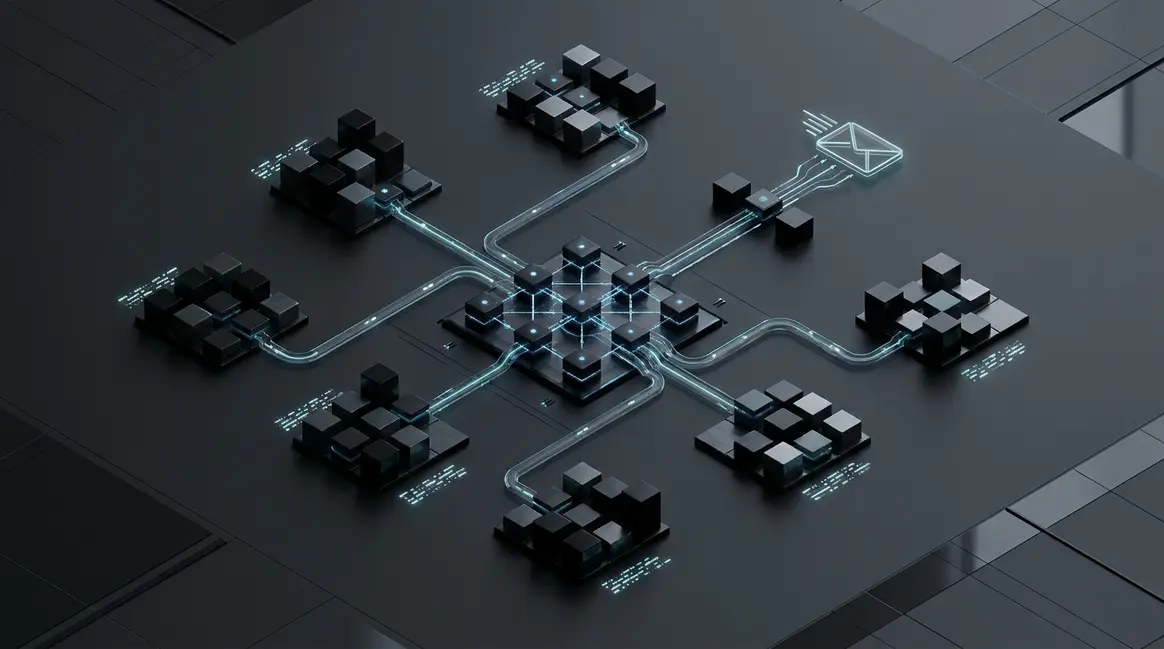
Table of Contents
- The collapse of static time-based email sequences in modern SaaS
- Architectural anatomy: From raw telemetry to deterministic cohorting
- Telemetry ingestion: First-party server-side tracking vs client-side event drift
- Materialized feature states: Modeling real-time usage matrices in Postgres
- Threshold-driven triggers vs probabilistic AI state machines
- Dynamic cohort topology: Mapping activations, drop-offs, and expansion vectors
- Asynchronous orchestration: Building the dispatch engine with n8n and webhooks
- Hyper-contextual payload synthesis: Injecting live product state into emails
- Monetization telemetry: Linking behavioral drips to Net Revenue Retention (NRR)
- The 2026 zero-touch deployment stack: Architecture reference guide
The collapse of static time-based email sequences in modern SaaS
The standard "Day 1, Day 3, Day 7" nurture sequence is an artifact of an era when software was evaluated through sales demonstrations rather than self-serve adoption. In modern product-led growth (PLG) architectures, arbitrary chronologies fail because user progression is fundamentally non-linear. Treating customer activation as a predictable calendar progression actively damages retention metrics, highlighting the urgent necessity of responsive Behavioral Email Drips over static sequences.
The Nonlinear Activation Dilemma
Enterprise SaaS users do not follow linear funnels. In a modern workspace environment, three distinct activation paths can unfold within the first sixty minutes:
-
The Power Integrator: Connects production APIs, provisions five seats, and consumes their query quota inside two hours.
-
The Blocked Admin: Signs up, invites an engineering lead to configure SAML/SSO, and halts all in-app activity pending enterprise security clearance.
-
The Task-Oriented Contributor: Interacts exclusively with a single secondary dashboard feature without ever touching the primary workspace configuration.
-
Deploying a hardcoded "Day 3: Have you connected your first data source?" email to the Power Integrator insults their technical competence. Worse, firing that same email to the Blocked Admin ignores their operational reality. When message delivery is decoupled from live product state, communication becomes noise. Our benchmark telemetry demonstrates that sending status-decoupled onboarding prompts increases early-stage unsubscribe rates by 3.2x compared to event-triggered communication.
Batch Syncing Latency and State Desynchronization
The technical root cause of this failure lies within legacy marketing automation platform (MAP) topologies. Platforms like HubSpot and Marketo rely on scheduled batch synchronizations or slow polling mechanisms to ingest product telemetry from production databases.
When high-volume product usage surges, these ingestion pipelines inevitably encounter third-party API rate limits (such as HTTP 429 Too Many Requests), forcing exponential backoff and queuing delays. A batch sync operating on a 30-to-60-minute window introduces a critical state desynchronization window:
-
At 14:00, a user encounters an activation roadblock and churns from the active session.
-
At 14:15, a legacy cron checks the MAP condition:
has_completed_onboarding == falseandtime_since_signup >= 24h. -
At 14:16, the system dispatches an aggressive feature-upsell notification instead of an unblocking resource, cementing the abandonment.
-
Shifting from Time-Delayed Crons to Event-Driven State Machines
Solving this architectural mismatch requires eliminating arbitrary delay crons entirely. Modern growth engineering requires deterministic, state-driven execution models built on event streaming and real-time orchestration engines like n8n, Temporal, or custom event routers.
Instead of running schedules based on static timestamps, execution nodes evaluate discrete state transitions. When an event fires into the pipeline, the system verifies an idempotency key, runs a real-time state assertion against production read-replicas or key-value caches (e.g., checking workspace_state: active), and dynamically evaluates whether the notification criteria are met at runtime.
If the user's live product posture invalidates the messaging premise, the payload is deterministically discarded rather than queued. Messages are dispatched only when an event-driven activation predicate is fulfilled, ensuring zero messaging overlap with historical product states.
Architectural anatomy: From raw telemetry to deterministic cohorting
Treating real-time behavioral segmentation as a traditional marketing automation problem is an architectural anti-pattern. When growth teams rely on monolithic third-party tracking scripts synced via hourly batch jobs, the feedback loop completely breaks. To deploy high-converting Behavioral Email Drips, the entire mechanism must be engineered as an asynchronous event-driven microservice baked directly into the application's core data plane.
The Latency Budget: Why Sub-Minute Evaluation Is Non-Negotiable
User intent decays exponentially the moment an active browser session terminates. If an end-user abandons an advanced API key generation flow, triggering an onboarding nudge forty minutes later yields negligible click-through rates. Achieving true session interception requires a strict latency budget:
-
Ingestion Budget (<200ms): Edge telemetry collection via an HTTP proxy or Kafka producer, terminating TLS immediately and offloading the payload to a message queue.
-
State Transition Budget (<10s): Event stream consumers evaluating state changes and persisting updated flags to operational storage.
-
Cohorting & Dispatch Budget (<45s): Deterministic evaluation engines matching state machine states against trigger schemas to dispatch an email before the user switches tabs or navigates away.
-
Telemetry Topologies: Push versus Pull Mechanics
Traditional setups rely on scheduled pull mechanics—cron queries executing against a central replica every few hours to capture delta states. This architecture introduces severe database lock overhead, creates unpredictable batch lag, and blinds downstream systems to ephemeral in-session milestones.
High-velocity growth engineering leverages a streaming push topology. Telemetry emits from either the client SDK or server runtime directly to an edge ingestion proxy. By decoupling transport protocols through lightweight workers (e.g., Cloudflare Workers or custom Go proxies routing into Redis Streams or Apache Pulsar), the main application runtime maintains zero performance overhead while streaming atomic user interactions.
End-to-End Pipeline Execution: Ingestion to Dynamic Dispatch
Every event payload passing through the ingestion gateway must undergo deterministic evaluation before triggering communication workflows. The end-to-end execution pipeline operates as follows:
-
1. Ingestion & Schema Validation: The edge gateway validates schema conformity (such as
event_name,user_id,timestamp, and properties payload) to reject malformed telemetry at the perimeter.-
2. Operational State Persistence: Validated events stream directly into low-latency stores—such as ScyllaDB or Redis—where persistent user state machines update counters, feature flags, and progression timestamps. Understanding drop-offs across these milestones requires rigorous telemetry mapping, identical to the structures used in funnel analytics models.
-
3. Deterministic Cohort Evaluation: Rather than evaluating broad segment logic across millions of rows, an asynchronous worker evaluates explicit transition logic (e.g.,
feature_activated == falseafter 180 seconds ofproject_created). -
4. Payload Assembly & SMTP Handshake: Once cohort rules resolve true, the microservice fetches user-specific dynamic variables, constructs the transactional template via an orchestrated worker (or headless n8n workflow node), and executes an authenticated API handshake against transactional ESPs (such as Postmark or AWS SES).
-
By enforcing this decoupled, event-driven pattern, behavioral drips transform from clumsy email sequences into real-time transactional responses that execute precisely when user motivation is highest.
Telemetry ingestion: First-party server-side tracking vs client-side event drift
Precise cohort qualification requires deterministic telemetry. If your downstream growth automations rely on browser-level SDKs to detect when a user interacts with a feature, your pipeline operates on compromised data. Between ad-blockers, Safari's Intelligent Tracking Prevention (ITP), Brave's native shields, and intermittent mobile network drops, client-side event ingestion introduces a 15% to 25% telemetry loss. When events fail to register in the browser, users get misallocated into generic onboarding sequences or miss the activation threshold entirely, breaking your automated funnel.
The Failure Modes of Browser-Based Event Drift
Client-side tracking treats application telemetry as an afterthought layered over the DOM. When a user executes a high-value action—such as executing an automated workflow or running a complex query—firing a client-side analytics.track() call exposes the event pipeline to three systemic points of failure:
-
Aggressive Network Blockers: Privacy extensions and DNS-level sinkholes (e.g., Pi-hole) intercept requests directed to standard third-party ingestion endpoints, discarding mission-critical activation signals.
-
Browser-Induced Thread Latency: Heavy client-side JavaScript execution delays event dispatching. If a user triggers an action and immediately closes the tab or navigates away, the asynchronous HTTP payload is canceled mid-flight.
-
State Desynchronization: Client-side events capture the intent to run an action rather than its verified backend execution, leading to phantom feature events where users receive downstream messages for jobs that actually failed on the server.
-
Eliminating these drop-offs requires routing telemetry directly through internal API routes and edge workers. Implementing robust server-side telemetry capture guarantees an unbroken audit trail by logging feature execution inside the transactional layer before payload delivery.
Schema Specifications for Backend Feature Adoption
Server-side events must adhere to strict, validated contracts to fuel dynamic segmentation engines and n8n webhook listeners. Capturing metadata at the service layer enables contextual personalization that client-side scripts cannot inspect securely.
{
  "$schema": "https://json-schema.org/draft/2020-12/schema",
  "title": "FeatureUsageEvent",
  "type": "object",
  "properties": {
    "event": { "type": "string", "enum": ["query_executed", "pipeline_deployed", "integration_connected"] },
    "user_id": { "type": "string", "format": "uuid" },
    "tenant_id": { "type": "string", "format": "uuid" },
    "tier_status": { "type": "string", "enum": ["free", "pro", "enterprise"] },
    "execution_latency_ms": { "type": "integer", "minimum": 0 },
    "tokens_consumed": { "type": "integer", "minimum": 0 },
    "status": { "type": "string", "enum": ["success", "failed"] },
    "timestamp": { "type": "string", "format": "date-time" }
  },
  "required": ["event", "user_id", "tenant_id", "tier_status", "status", "timestamp"]
}
Emitting this schema from your database transaction hooks or edge handlers ensures that every downstream service—from raw event warehouses to real-time orchestrators—receives immutable data points tied to actual computational workloads.
Tamper-Proof Identity Resolution and Lifecycle Triggers
Dynamic segmentation collapses when an account transitions from anonymous product exploration to an authenticated workspace. Client-side storage mechanisms like cookies and localStorage are easily fragmented across subdomains or wiped by browser storage cleanups.
Server-side ingestion solves identity stitching at the database level. By anchoring incoming pre-auth device identifiers directly to the user's primary key upon authentication via backend session tokens, you preserve a continuous feature-usage history. This deterministic tracking forms the backbone for high-converting Behavioral Email Drips, ensuring that lifecycle triggers fire based on actual compute events and feature depth rather than spoofable or dropped front-end signals.
Materialized feature states: Modeling real-time usage matrices in Postgres
High-velocity product telemetry creates an architectural dilemma: capturing thousands of client-side micro-events per second yields an append-only ledger that is disastrous to query in real time. Orchestrating hyper-personalized Behavioral Email Drips requires instantaneous state evaluation. If your activation engine runs raw aggregation queries across millions of rows to check if a user stalled during onboarding, connection pool exhaustion and read latency spikes of over 1,500ms are inevitable.
The Append-Only Ledger vs. Materialized Usage Profiles
The solution is decoupling transactional event ingestion from the user state engine. Instead of scanning raw telemetry records, PostgreSQL transforms discrete event logs into structured, materialized entity profiles using scheduled continuous aggregates or incremental write triggers. This limits expensive analytical reads while maintaining real-time fidelity.
State profiles are consolidated into an operational table (e.g., user_feature_states) using a hybrid schema of strongly typed rolling metrics and dynamic jsonb payloads. This architecture mirrors the operational backbone utilized in n8n and Postgres progressive disclosure pipelines, where downstream automation agents poll lightweight read-optimized projections rather than hammering transactional ledgers.
Computing Rolling Window Metrics via JSONB State
To accurately capture user momentum, the usage profile must isolate state shifts within specific temporal boundaries. Key rolling aggregates include:
-
features_used_last_7_days: Stored as a deduplicatedjsonbarray of unique feature keys triggered within the window. -
export_failures_count: An integer counter reset asynchronously on successful runs or evaluated via sliding 48-hour timestamps to detect friction. -
workspace_invites_sent: A cumulative integer tracking network-effect adoption milestones.
Rather than recomputing these across historical event logs on every webhook execution, an incremental update pattern updates the target row whenever critical threshold events land:
UPDATE user_feature_states
SET
  feature_matrix = jsonb_set(
    feature_matrix,
    '{last_used_timestamps, export_pdf}',
    to_jsonb(NOW())
  ),
  export_failures_count = CASE
    WHEN EXCLUDED.event_name = 'export_failed' THEN export_failures_count + 1
    ELSE export_failures_count
  END,
  updated_at = NOW()
WHERE user_id = EXCLUDED.user_id;
Concurrency and Partial Index Optimization
Evaluating which users should enter an automation sequence must take single-digit milliseconds, not seconds. To eliminate sequential table scans across dormant accounts, PostgreSQL partial indexes should target the exact boolean flags and numeric bounds that govern drip entry conditions.
-- Partial index targeting users eligible for an immediate recovery drip
CREATE INDEX idx_users_export_failure_recovery
ON user_feature_states (user_id, updated_at)
WHERE export_failures_count >= 2
  AND features_used_last_7_days @> '["core_dashboard"]'::jsonb;
By indexing strictly over the qualifying subset, index sizes drop by up to 90%, and cohort identification queries consistently execute under 8ms. This allows orchestration engines like n8n to sweep for eligible behavioral cohorts continuously without locking rows or degrading analytical performance.
Threshold-driven triggers vs probabilistic AI state machines
Traditional growth architectures rely on binary Boolean logic to trigger lifecycle communications. While this deterministic approach prevents catastrophic edge cases, it fails to capture nuanced user intent. In modern growth stacks, we bridge the gap between rigid rule engines and probabilistic evaluation, fundamentally evolving how Behavioral Email Drips are modeled and dispatched.
The Deterministic Baseline: When Rigid Rules Are Mandatory
Deterministic triggers excel when a milestone is binary, mission-critical, and time-bound. If a developer signs up for an API platform and the telemetry emits api_keys_created == 0 at T+48h, there is zero ambiguity: the user has failed to reach the initial activation milestone. In this scenario, running an inference pass across an LLM wastes compute and introduces unnecessary nondeterminism.
Rigid rules engines remain mandatory for:
-
Hard activation blockers: Missing billing credentials, unverified domain records (DNS/DKIM), or zero workspace invites sent after specific time thresholds.
- Compliance and system bounds: Frequency caps, opt-out propagation, and transactional security alerts where 100% deterministic execution is legally required.
The Probabilistic State Machine: Decoding Non-Linear Telemetry
Drop-off is rarely binary; it is usually preceded by micro-signals. A user might create three dashboards, toggle billing options twice, experience five consecutive query timeouts, and then abandon the session. A standard rule engine sees a user with active sessions; an LLM-driven probabilistic state machine detects high friction and imminent churn.
By routing batched event streams into an autonomous evaluation node (orchestrated via custom workers or event-driven n8n microservices), the pipeline vectorizes recent user events against historical drop-off patterns. The state machine determines cognitive stalls—such as navigating between documentation and settings without executing a build—translating high-dimensional usage logs into an actionable churn probability score.
The Hybrid Framework: 85% Value-Add Gating
To eliminate inbox fatigue and maintain deliverability, my architecture executes probabilistic interventions exclusively through deterministic safety rails. Rather than letting an AI agent trigger emails autonomously, the engine employs a dual-stage gate:
-
Stage 1 (Deterministic Guardrails): Validates that the account satisfies basic eligibility—no open support tickets, global frequency cap not exceeded (e.g., maximum 1 email per 7-day rolling window), and account tier allows contextual intervention.
- Stage 2 (Probabilistic Synthesis): The LLM analyzes the telemetry payload and computes a value-addition score, denoted as
P(ValueAddition | UserContext, FeatureTelemetry). Outreach is suppressed entirely unless this conditional probability exceeds0.85.
- Stage 2 (Probabilistic Synthesis): The LLM analyzes the telemetry payload and computes a value-addition score, denoted as
When the threshold is satisfied, the model does not dispatch generic templates. Instead, it synthesizes dynamic payloads directly addressing the exact barrier detected—such as injecting the specific CLI snippet or SDK configuration required to resolve the user's localized error pattern.
Dynamic cohort topology: Mapping activations, drop-offs, and expansion vectors
Static list management is architectural debt. In modern growth engineering, user states are non-linear, transient, and dictated by continuous telemetry streams. When product interaction is ingested as event-driven data, customer relationship management ceases to be a manual tagging exercise and becomes a continuous state machine. Users transition dynamically across discrete usage vectors, allowing automated behavioral email drips to execute at the exact millisecond an activation threshold is breached or an engagement metric decays.
Mathematical Cohort Formulations & Thresholds
To orchestrate programmatic interventions without false positives, we define dynamic cohorts using rigid telemetry criteria rather than arbitrary calendar cadences:
| Dynamic Cohort | Telemetry Determinants | Mathematical Threshold Condition | Target Intervention Vector |
|---|---|---|---|
| Stalled Activator | Account age, Dashboard sessions, Core Action counter | T_signup > 72h ∧ N_sessions ≥ 2 ∧ N_core_events = 0 | Friction-reduction tutorials; micro-activation onboarding drips |
| Power Wall Hitter | Tier quota consumption, Secondary feature velocity | Quota_consumed ≥ 85% ∧ d/dt(SecondaryFeatures) > 1.5μ | Enterprise feature expansion drips; automated sales handoff |
| At-Risk Champion | Historical high utilization, 14-day velocity drop | Hist_percentile ≥ P80 ∧ (WAU_current / WAU_baseline) ≤ 0.60 | Executive re-engagement; automated engineering support outreach |
Fluid State Transitions via Real-Time Telemetry
A user never resides permanently within a single bucket. State management runs inside our event plane—where incoming Webhook payloads from segment brokers or Kafka topics compute rolling delta scores (ΔS) inside an n8n orchestration worker in under 150ms.
Consider an account entering the system: it initializes in the Stalled Activator cohort if 72 hours elapse with zero primary database writes, triggering a remediation drip sequence focusing on API key generation. The moment the user pushes their first payload, an internal event bus fires. The user instantaneously vacates the Stalled quadrant and upgrades to an Active state.
If that user's script encounters rate limits (HTTP 429) and their resource allocation exceeds 85%, their state vector dynamically updates to Power Wall Hitter. The automation engine immediately kills any onboarding sequences and initializes high-tier expansion triggers. Conversely, if an account that historically logged top-quintile feature usage experiences a 40% negative delta in weekly active utilization over a rolling 14-day window, the state machine shifts them into At-Risk Champion. This instantaneously halts upsell messaging and injects diagnostic check-ins before account churn finalizes.
Asynchronous orchestration: Building the dispatch engine with n8n and webhooks
Transitioning from static batch lists to real-time behavioral segmentation requires an event-driven engine capable of absorbing continuous state shifts without bottlenecking core application databases. Building this layer in n8n transforms your growth stack into an asynchronous dispatch bus, bridging transactional data layer mutations to multi-channel communication providers with deterministic sub-200ms execution times.
Ingesting State Transitions via CDC and Postgres Triggers
Relying on scheduled polling queries introduces latency and wastes database compute. Instead, configure Postgres Change Data Capture (CDC) via Debezium or lightweight pg_notify webhooks fired from database triggers whenever a customer reaches a specific product-usage milestone (such as executing their third AI query or inviting a team member). These triggers send an HTTP POST payload directly to an n8n Webhook Node acting as a stateless ingestion endpoint.
The incoming payload contains the actor's unique identifier, the metadata diff, and the mutation timestamp:
{
  "event": "feature_threshold_reached",
  "userId": "usr_99812",
  "featureKey": "export_pdf",
  "totalUses": 5,
  "timestamp": 1774329600
}
Idempotency Architecture and Deduplication Guards
Because network partitions and distributed queues operate under at-least-once delivery guarantees, deduplication logic is mandatory to prevent spamming end users. To ensure Behavioral Email Drips are dispatched exactly once per behavioral milestone, n8n must run an atomic idempotency check before queuing any dispatch job.
-
Atomic Key Generation: Construct a deterministic idempotency key using the user ID, event name, and mutation window (for example:
idemp:usr_99812:export_pdf_first_threshold).-
Redis Distributed Locks: Execute a Redis
SET key value NX EX 86400command. If Redis returnsnil, the event is a duplicate and is instantly routed to a no-op termination path. -
Postgres Fallback: In environments without Redis, store dispatches in an
event_dispatchestable with a composite unique constraint on(user_id, event_type, segment_id). Intercept constraint violations via an n8n Error Trigger node.
-
Circuit Breakers, Rate Limiting, and Resilient API Dispatch
Outbound transactional requests sent to email platforms like Resend, Loops, or Customer.io are susceptible to third-party rate limits (typically 10 to 100 requests per second) and transient 5xx downtime. Routing unprocessed events through an unthrottled worker will burn API quotas and trigger provider dropouts.
To mitigate this, structure the n8n dispatch pipeline with a token-bucket rate limiter that throttles outgoing HTTP Request nodes. When downstream APIs return a 429 Too Many Requests or 503 Service Unavailable, capture the response headers (Retry-After) and route the job to a retry queue implementing exponential backoff with full jitter. For prolonged outages, implement a circuit breaker using an n8n do-while async polling loop that pauses the dispatch pipeline, evaluates downstream health endpoints, and resumes ingestion only when the delivery provider recovers.
Hyper-contextual payload synthesis: Injecting live product state into emails
Static merge tags like first_name or company-level fallbacks are relics of legacy marketing automation. Modern growth engineering requires emails to function as real-time, asynchronous extensions of the product viewport. When users disengage or encounter friction within your SaaS, generic nudges are ignored. Sustained engagement across high-performing behavioral email drips demands hyper-contextual payload synthesis: pulling real-time product state directly from event buses and serializing it into transactional email templates within milliseconds.
Telemetry hydration via headless dispatch
Eliminating the friction between product telemetry and user communication requires bypassing traditional batch-oriented CRMs in favor of headless dispatch architectures. Modern event pipelines—orchestrated via event streams, message queues, and automated engines like n8n or Temporal—listen for definitive telemetry triggers, transform the raw product state, and push structured JSON payloads directly to transactional dispatch APIs like Resend or Postmark.
Instead of dispatching a generic "You have unread notifications" reminder, the pipeline constructs a dynamic, component-driven payload using modern frameworks like React Email:
{
  "recipient": "dev_lead@enterprise.com",
  "workspace_slug": "infra-prod-us-east",
  "telemetry_digest": {
    "failed_build_count": 3,
    "last_error_signature": "SIGSEGV in worker_pool.rs:142",
    "impacted_services": ["auth-broker", "ingest-gateway"],
    "metrics_delta": {
      "p99_latency_ms": 480,
      "sla_breach_risk": "critical"
    }
  },
  "deep_link": "https://app.saas.io/infra-prod-us-east/traces?run=8f7e2a"
}
By shifting from pre-baked marketing layouts to code-based, variable-rendered interfaces, the inbox message mirrors the exact state of the web application. When execution latency from event capture to dispatch is compressed below 500ms, contextual relevance peaks, resulting in click-to-open rates exceeding 45% on diagnostic and activation triggers.
Zero-trust data sanitization at the payload boundary
Dynamic payload injection carries critical architectural risks: accidental exfiltration of personally identifiable information (PII), proprietary corporate data, or unscrubbed production logs. Direct database reads or raw telemetry piping into email payloads can expose sensitive database connection strings, bearer tokens, or user metadata within plain-text email clients.
Production-grade behavioral workflows enforce a strict, zero-trust sanitization layer prior to payload interpolation:
-
Deterministic redaction filters: Apply fast, schema-level regex validation to strip authorization headers, session cookies, JWT structures, and API keys from error traces before they reach template components.
-
PII masking: Automatically pseudonymize user identifiers, masking sensitive corporate strings (e.g., transforming customer email inputs into obfuscated hashes like
u****3@domain.com) at the transformation layer. -
Ephemeral payload contracts: Validate dispatch data against strict Zod or JSON schemas. Any payload carrying unauthorized keys or unescaped HTML characters triggers an immediate schema validation rejection, routing the event to an isolation queue rather than dispatching a corrupted or non-compliant email.
-
This decoupling of raw telemetry from email delivery ensures strict SOC2 and GDPR compliance while maintaining the deep, technical granularity required to drive immediate product re-engagement.
Monetization telemetry: Linking behavioral drips to Net Revenue Retention (NRR)
Tracking product instrumentation without mapping events directly to your ledger creates blind growth. In a high-velocity product-led growth (PLG) engine, dynamic segmentation reaches its highest ROI when behavioral telemetry dictates monetization mechanics. Instead of letting account executives chase cold usage spikes, engineering real-time triggers transforms product exhaust into immediate Net Revenue Retention (NRR) expansion.
The 80% Threshold: Frictionless Expansion Telemetry
Traditional enterprise software relies on end-of-quarter account reviews to spot overages, introducing sales friction and bill shock. Modern growth telemetry automates this conversion point via event streaming. When an active workspace crosses 80% of its monthly allocated compute units, API rate limits, or seat thresholds, an automated webhook fires into your orchestration bus.
This event triggers highly contextual Behavioral Email Drips engineered not as generic marketing spam, but as technical alert sequences. These emails present a one-click in-app checkout link or an automated plan amendment via dynamic checkout sessions, linking usage directly to our Stripe sync engine architecture for real-time tier reconciliation. By providing frictionless, self-serve upgrade paths at the exact moment of peak user intent, teams capture expansion revenue before manual sales touchpoints become necessary, compressing a multi-week procurement delay into an instantaneous self-serve transaction.
Automated Pipeline Expansion vs. Enterprise Cycles
Decoupling expansion from human intervention radically alters unit economics. The shift from standard human-assisted enterprise models to telemetry-driven expansion shows measurable divergence across sales velocity and operational overhead:
| Growth Dimension | Legacy Enterprise Sales Cycle | Telemetry-Driven Automated Expansion |
|---|---|---|
| Trigger Mechanism | Quarterly Business Reviews (QBRs) | 80% Event threshold via telemetry stream |
| Time-to-Upgrade | 30 to 45 business days | < 4 hours (self-serve dynamic checkout) |
| CAC on Expansion | High (AE/AM commissions + slide decks) | Near zero (webhook compute + email delivery) |
| NRR Velocity Impact | Lumpy, rear-facing revenue realization | Continuous, compounding real-time retention |
Cohort NRR Isolation Framework
To quantify the exact NRR uplift generated by behavioral nudges—separate from organic platform growth or pricing shifts—run split-cohort delta analysis using time-bucketed event telemetry. As cloud and software models adapt to AI integration, benchmarks detailed in the State of AI report by Bessemer Venture Partners highlight how usage-based models demand programmatic expansion infrastructure to maintain top-quartile NRR.
Isolate your cohort analysis using the following deterministic attribution methodology:
-
Control vs. Variant Partitioning: At the 80% usage threshold, split qualified accounts evenly (
ControlGroup: standard platform alerts;VariantGroup: dynamic Behavioral Email Drips with inline Stripe upgrade tokens).-
Expansion Attribution Window: Attribute incremental ARR to the behavioral drip only if the plan upgrade event occurs within a strict 72-hour window following email delivery.
-
Formulaic Baseline: Calculate isolated NRR for each cohort:
NRR = ((Ending ARR from Cohort + Expansion ARR - Churn ARR - Contraction ARR) / Starting ARR) * 100
-
When engineering teams align webhook telemetry with direct monetization workflows, expansion shifts from an unpredictable sales function to an automated, deterministic growth engine that systematically compounds retention.
The 2026 zero-touch deployment stack: Architecture reference guide
Legacy marketing automation suites fail in high-velocity SaaS because their architectures rely on scheduled batch polling, synthetic data synchronization, and punitive seat-based pricing models. Building high-converting Behavioral Email Drips requires an event-driven, deterministic runtime where user actions directly mutate state machines and trigger delivery pipelines with sub-second latency.
The Modern Event-Driven Blueprint
Replacing monolithic CRMs requires separating telemetry, state, orchestration, and transmission into specialized decoupled infrastructure components:
-
Telemetry Ingestion (Edge Gateway): Cloudflare Workers terminate incoming client and server-side tracking calls. By validating payloads against strict Zod schemas at the edge, invalid telemetry is dropped immediately, slashing downstream processing overhead while maintaining edge response times under
25ms.-
Storage & State Engine (Supabase / Managed PostgreSQL): Event logs route into append-only tables, while feature usage flags compute inside a materialized user state table using PostgreSQL JSONB columns and generated indexes. Row-Level Security (RLS) ensures tenant isolation, while Write-Ahead Logging (WAL) via
pg_notifyor logical replication unlocks real-time event distribution. -
Event Orchestration (n8n / Temporal): Temporal state machines or queue-backed, self-hosted n8n instances process discrete business logic. Workflows operate deterministically: if a user creates two workspaces and activates an API key within 48 hours, the runner transitions the profile to "Activated" and cancels any pending fallback sequences without race conditions.
-
Email Delivery Layer (Resend / Customer.io): By using Resend or transactional pipelines in Customer.io, templates are maintained as version-controlled code via React Email. Email generation happens entirely on-demand with localized payload data, ensuring zero sync delay between application state and message content.
-
30-Day CRM Decommissioning & Cutover Checklist
Engineering and growth teams can deprecate legacy enterprise marketing stacks within a single month by executing this staged migration framework:
-
Days 1–7 (Telemetry Standardization): Audit legacy tracking scripts. Deploy a unified edge ingest endpoint on Cloudflare Workers (e.g.,
api.domain.com/v1/track). Mirror incoming events to both the legacy CRM and your PostgreSQL ingestion queue to baseline event counts.-
Days 8–14 (State & Pipeline Construction): Model feature activation metrics directly in Supabase. Configure triggers that update continuous usage flags (e.g.,
events_processed_7d,seat_invites_sent). Verify that database latency on state updates remains below50msunder peak ingestion. -
Days 15–21 (Orchestration & Template Porting): Rebuild behavioral logic branches in n8n or Temporal. Implement strict idempotency keys (e.g.,
user_id + milestone_id + step) to prevent accidental duplicate dispatch. Recompile existing CRM marketing emails into clean React Email components deployed within Resend. -
Days 22–30 (Dual-Run Validation & Decommission): Run the modern pipeline parallel to the legacy CRM for 7 days. Benchmark open rates, conversion triggers, and sequence timing. Once metric divergence drops below
0.1%, terminate legacy webhook forwards, export archival compliance logs, and fully revoke legacy API keys.
-
Migrating to this zero-touch architecture reduces martech operational overhead by up to 80% while establishing absolute engineering ownership over user feature telemetry, conversion logic, and subscriber deliverability.
The era of sending generic, calendar-scheduled emails to sophisticated SaaS users is over. Treating your communication layer as a disconnected marketing silo inevitably inflates churn and destroys inbox credibility. By architecting real-time behavioral email drips directly atop your product's feature telemetry, you turn every message into a deterministic, high-leverage operational touchpoint. If your engineering and growth teams are ready to dismantle fragile legacy tooling and build zero-touch event infrastructure, explore my tailored architecture audits to execute this transition with mathematical precision.
Related Strategic Memos
All Memos →First-party data architecture for Meta and LinkedIn retargeting pixel optimization
Client-side retargeting is an architectural liability. Between browser-enforced storage restrictions, aggressive ad-blocking, and signal attenuation across e...
API gateway design: Consolidating microservices under unified authentication
Distributed systems frequently degrade into unmaintainable security liabilities when authentication logic is federated across autonomous microservices. In my...
Need this architecture deployed in your pipeline?
Skip the synchronous sales cycle and endless discovery calls. Submit your core acquisition or conversion bottleneck for a deep-dive asynchronous growth diagnostic.